






Bohol’s ‘White Nazarene’ shrine offers quiet expression of faith

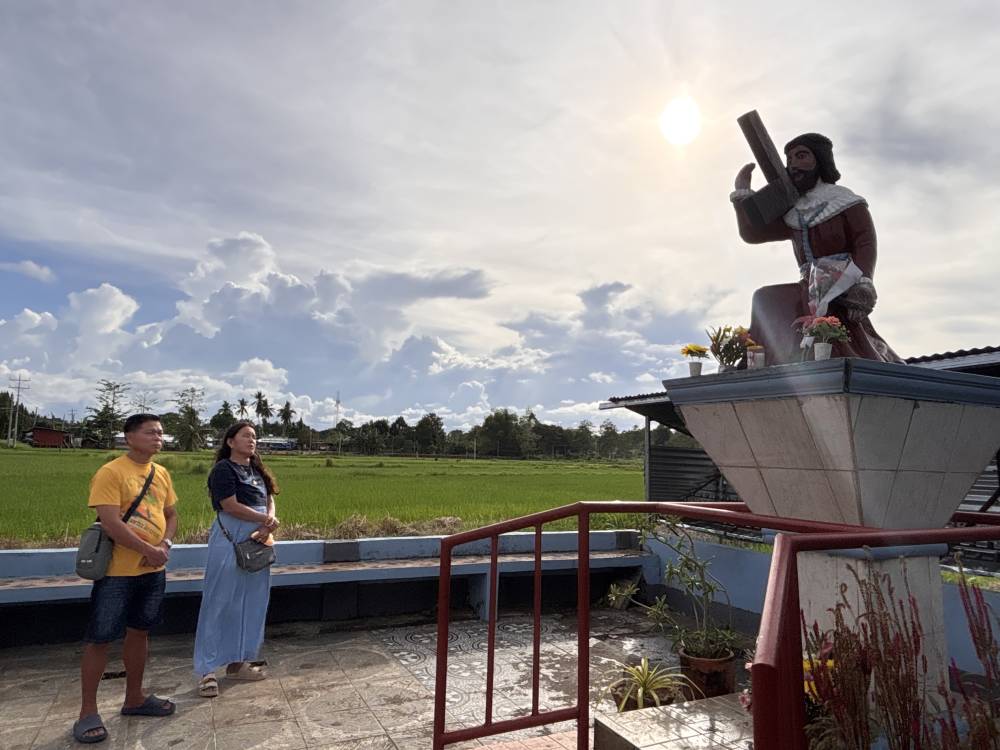
TALIBON, BOHOL—As thousands of devotees flock to Quiapo in Manila or Cagayan de Oro City in Northern Mindanao for the Feast of the Black Nazarene on Friday, pilgrims seeking a quieter expression of their faith streamed into Barangay San Agustin here to pay homage to the “White Nazarene.”
The image of Jesus Christ carrying the cross has drawn generations of devotees seeking healing, hope and thanksgiving. It was called the White Nazarene simply because the image had the face and hands of Jesus set in white paint.
Although locals observe the White Nazarene’s feast every March 21, there are pilgrims who time their traditional rituals with the revered image to coincide with the Black Nazarene feast on Jan. 9, or close to it.
Luz Padin, 65, traveled about 27 kilometers from Ubay town to fulfill a devotion she carried on from her mother Gorgonia. She remembers visiting the image since she was a child, especially when family members were dealing with illnesses or danger, and to spare a moment of gratitude.
Regardless of color
“This devotion has stayed with me all my life,” Padin said, as she offered prayers alongside her grandson.
For Nekolo Gonzales, 40, faith is intertwined with personal experience as he credits the White Nazarene for answering his prayer for securing government employment a decade ago.
“I believe in miracles. And for me, the White Nazarene is truly miraculous,” Gonzales said.
Helen Castaño and her husband Angelito made the 109-km journey from Tagbilaran City just to offer thanksgiving.
Helen said devotion transcends appearances. “Whether the Nazarene is black or white, he is still our Lord. The color does not matter,” she said.
The White Nazarene stands in the open, under the care of the Cresencio family. Family members recount that the image dates back more than 90 years to Eutiquia Cresencio, a purported visionary who said the White Nazarene appeared to her in a dream.
Suffer for humanity
The tale passed on through generations was that Eutiquia kept to herself the “revelation” experience during her lifetime, choosing instead to commission an image for personal devotion.

The first image, carved from wood, was originally placed at Sitio Sudlon, several kilometers from its current location. In the 1970s, it was transferred to Purok 7 in Barangay San Agustin, an act family members say followed the Nazarene’s instruction, as relayed by Eutiquia.
Exposure to the elements eventually led to the deterioration of the wooden statue. It was later replaced with an image cast in concrete, reportedly donated by the family of the late President Carlos P. Garcia who is related to the Cresencios.
Facing east and bearing a Philippine flag at its foot, the White Nazarene stands without the shelter of a chapel. According to relatives, Eutiquia once explained that the image was meant to remain outdoors—exposed to sun and rain—as a symbol of Christ’s suffering for humanity.
No one can explain why the White Nazarene’s feast is celebrated on March 21. But locals marked that day with a Holy Mass celebrated by a Catholic priest, followed by a procession attended by devotees from across Bohol and neighboring provinces.
For those who kneel before the image, the White Nazarene is more than a statue. It is a reminder that faith, forged through hardship and hope, endures, unbound by walls, color or distance.