










Budget scrutiny flags ballooning LGU fund


The government should set clear rules for the allocation of special funds distributed to local government units (LGUs), amounting to almost P60 billion in next year’s proposed budget, to prevent their use as political patronage tools ahead of the 2028 general elections.
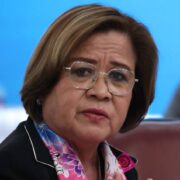
This was according to economist Cielo Magno, former undersecretary of the Department of Finance, who said the growing Local Government Support Fund (LGSF), a recurring annual budget item that funds projects identified by LGUs, should not be distributed at the discretion of the executive branch.
“Instead, Congress should establish a clear framework and parameters for how these funds will be used,” she told the Inquirer.
“And if the LGSF will be used for local government infrastructure, then these projects should be on the development plan of the recipient LGU. They should have implementation-ready major projects, not hyperlocal projects, that can really contribute to economic development,” she added.
Magno’s warning comes as the House of Representatives begins deliberations today on the proposed P7.2-trillion national budget for 2027, considered as “very politically significant” for the Marcos administration.
It will be the last full-year spending plan of President Marcos before the 2028 polls, giving his administration one final year to deliver programs that could shape his political legacy and influence the coming succession.
‘LGU pork’
Budget watchdogs have flagged the LGSF, calling it the “LGU pork,” which they claimed may be used as tools for political patronage and control by the administration.
They argued that assistance to LGUs should be reduced, given the 2019 Mandanas ruling by the Supreme Court that expands their share of the national government’s tax collections.
The LGSF is on top of the automatic appropriation of the P1.32-trillion share of LGUs from national tax collections, or National Tax Allotments, for 2027.
The Marcos administration is proposing a record-high LGSF of P58.32 billion under the 2027 National Expenditure Program (NEP).
This amount exceeds the P57.88-billion LGSF in the 2026 budget, which was more than double the P23 billion in 2025.
Based on data from the Department of Budget and Management, P35.45 billion or 61 percent of the LGSF this year has already been released as of May 31.
The President and Executive Secretary Ralph Recto, among other high-ranking Cabinet members, have been going across the country to distribute the funds under the administration’s “Bawat Bayan Makikinabang” program launched in February.
“Obviously, that’s campaigning in favor of the administration, or at least making the administration look good to our local governments,” Magno said.
Menu of programs
In general, the LGSF funds projects identified and implemented by LGUs, based on a menu of programs, including food security, health, education, infrastructure and livelihood.
The bulk of the proposed LGSF in 2027 is allotted for the P37.49-billion Financial Assistance to Local Government Units to finance a wide array of projects, including the construction and rehabilitation of different infrastructure projects.
A total of P10.3 billion is earmarked for the Growth Equity Fund, which is disbursed as financial assistance for poor, disadvantaged, lagging and low-income LGUs, and those that experience fiscal gaps due to the ongoing devolution process.
Another P9.74 billion is allotted for the Support to the Barangay Development Program of the National Task Force to End Local Communist Armed Conflict; and P1 billion for Support and Assistance Funds to Participatory Budgeting, mainly for the construction, expansion and upgrading of water supply systems and climate-smart evacuation centers.
Looming petition
Political coalition 1Sambayan, meanwhile, has threatened to file a new petition before the Supreme Court if the Marcos administration will not secure a definite funding allocation for the return of P107.23 billion to the Philippine Deposit Insurance Corp. (PDIC).
Under the 2027 NEP, P57 billion has been allocated under unprogrammed appropriations (UA) specifically for the “Restoration of the Fund Balances of the PDIC.”
This represents 53.2 percent of the total that the PDIC remitted to the national treasury in January 2025 as “unrestricted retained earnings.” This was pursuant to a special provision in the 2024 budget law for government corporations to move idle or excess funds to the national treasury—a provision that the high court already struck down as unconstitutional.
Magno, who is also 1Sambayan convener, said the return of the PDIC funds should be included in the programmed appropriations that have definite funding, and not under UA.
“We, the coalition led by retired Supreme Court Senior Associate Justice Antonio Carpio, are preparing to go to court if the administration will not put the restoration of PDIC funds under the programmed part of the national budget,” she said.
“We are already accommodating the government’s plan to return the PDIC funds in two tranches. But they should respect the commitment and place it under the portion of the budget that has actual funding,” she added.
According to Magno, putting the funds under UA would mean that their return to the state firm remains uncertain, even if the government already decided that it is a priority.
UAs are standby spending authority that are not automatically released. Funding for programs and projects under UAs may be released only when specified conditions are met, such as the availability of excess or new revenue collections or loans.
Magno said if the government would not accede to their demand, they would ask again the Supreme Court to intervene, similar to the case of the Philippine Health Insurance Corp., which remitted P60 billion to the national treasury in several tranches in 2024.
******
Get real-time news updates: inqnews.net/inqviber


