




Budget watchdogs flag increase in ‘UA, ayuda’

Congress still pushed through billions of pesos in politically sensitive spending that exceeded proposals by Malacañang, the House of Representatives and the Senate.
This was the main finding of the People’s Budget Coalition (PBC) and Right to Know, Right Now! groups, which noted that the panel tasked to reconcile the differences between the Senate and House versions of the 2026 general appropriations bill instead authorized higher allocations for several “ayuda” and unprogrammed appropriations (UA).
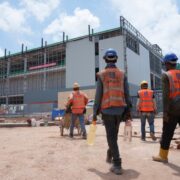
Meanwhile, the budget of the Department of Public Works and Highways (DPWH) was basically left hanging while the technical staff of the bicameral conference committee still had to complete its final computations.
According to PBC coconvenor AJ Montesa, the DPWH still had no final budget. The P529.6 billion touted by committee chairs Sen. Sherwin Gatchalian and Nueva Ecija Rep. Mikaela Suansing was a tentative number, he said.
Contentious items
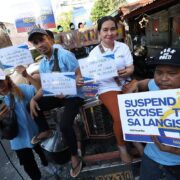
Montesa said among the most contentious items were the sharp increases to what it called “soft pork” programs which are implemented at the discretion of lawmakers or elected officials—particularly the Department of Social Welfare and Development’s Assistance to Individuals in Crisis Situations (AICS), the Department of Labor and Employment’s Tulong Panghanapbuhay sa Ating Disadvantaged/Displaced Workers (Tupad) and the Department of Health’s Medical Assistance to Indigent and Financially Incapacitated Patients (Maifip) programs.
All three programs saw their budgets more than double from the original proposal under the National Expenditure Program (NEP): Maifip, from P24 billion to P51 billion; AICS, from P27 billion to P63 billion; and Tupad, from P12 billion to P25 billion.
Alliance of Health Workers convenor Dr. Antonio Dans said the entire amount for Maifip could have gone instead to the Philippine Health Insurance Corp., especially since the government’s total shortfall for the state insurer was actually around P357 billion.
Other kinds of “soft pork,” like the Commission on Higher Education’s Tulong Dunong scholarship program and the Department of Agriculture’s Presidential Assistance to Farmers and Fisherfolk, did not have an allocation in the NEP but were given P2 billion and P10 billion by the bicam, respectively.
These programs, Montesa said, were considered soft pork because lawmakers “exercised [a] large degree of influence in the distribution of these programs. They are likely to choose to give them to political allies.”
Tentative estimate
Public Works Secretary Vince Dizon initially requested the reinstatement of P45 billion slashed by the Senate from the House version due to reductions based on the agency’s Construction Materials PricE Data (CMPD).

On the last day of the bicam, Gatchalian said the panel managed to generate P20.7 billion in “savings” after recomputing the costs for 10,000 infrastructure projects that Dizon said were negatively affected by the construction materials pricing.
But the bicam did not give an itemized list of the modified projects, and the P529.7 billion was only a tentative estimate of the final budget, Montesa pointed out.
“So, we have to be vigilant … we’re very worried,” he said. “We hope that they would give live updates rather than just coming out at the end of this process with a final number. I think the only thing we’re sure with the DPWH is that there is P20.7 billion subtracted from the proposal but other than that we don’t really know what to expect.”
“This time around, their explanation is at least they reconciled the differences and then the crossing of the Ts and dotting of the Is will happen afterward. But that’s difficult because this means it’s still possible to have changes [in] the budget,” Montesa added.