



Cabral, who set DPWH ‘allocables,’ called to ICI

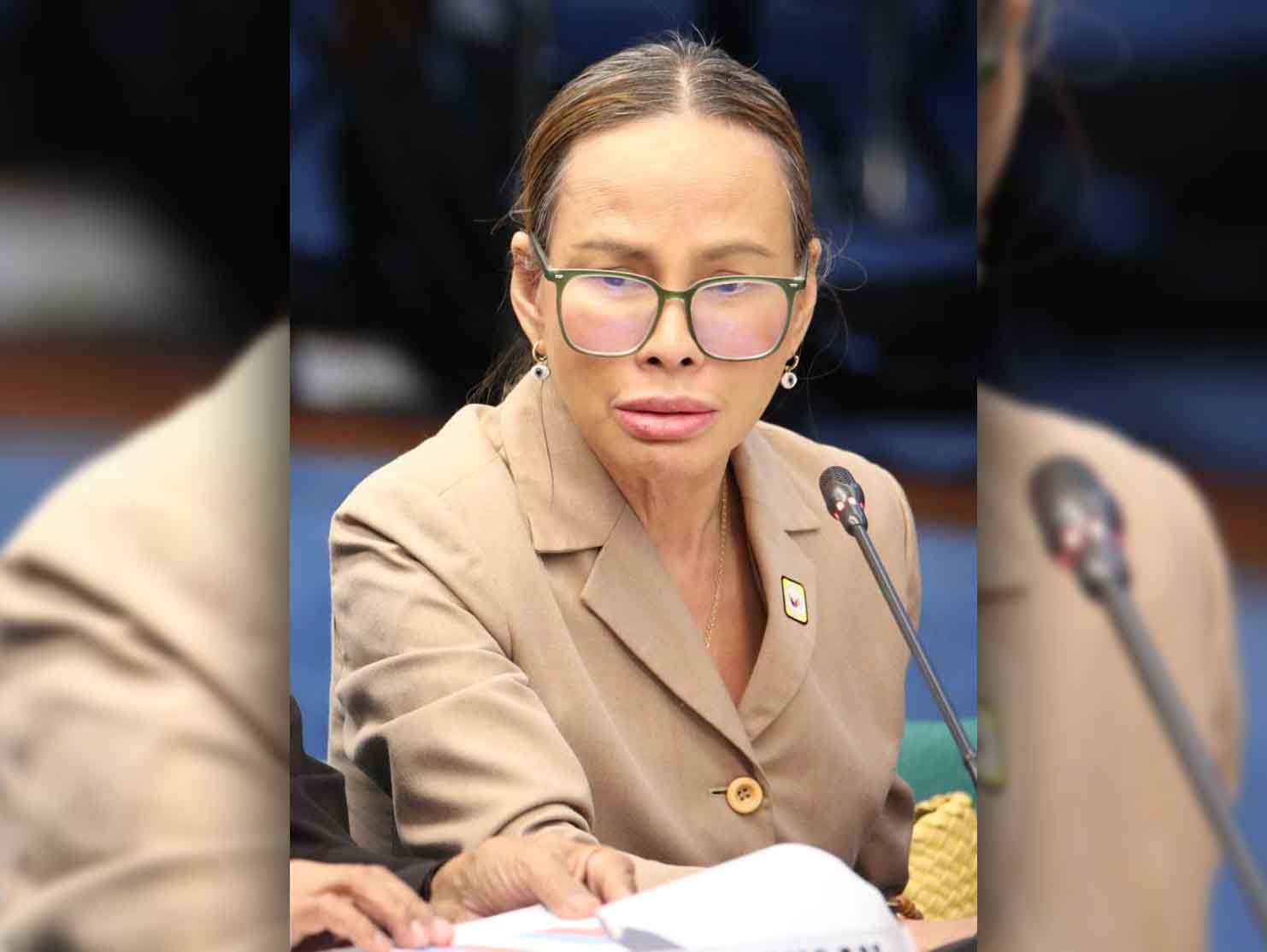
With an uncertain future and one of its officials on his way out, the Independent Commission for Infrastructure (ICI) will hold its last hearing for the year next week, with former Public Works Undersecretary Maria Catalina Cabral summoned to appear.
ICI Executive Director Brian Hosaka on Thursday said that the commission wanted to verify “certain information” from Cabral, which he declined to specify.
Cabral, who resigned in September, has not confirmed her attendance for the Dec. 15 hearing.
She has not appeared in any previous hearing called by the fact-finding body but had been recommended for possible administrative charges for violating the Code of Conduct and Ethical Standards for Public Officials and Employees in various alleged irregular infrastructure projects, including one amounting to P95.04 million for flood control in Bocaue town in Bulacan province.
Hosaka told the Inquirer that a subpoena had been issued to Cabral, who would be the only person invited for next Monday’s hearing.
Cabral, a civil engineer who chalked up a 30-year career in public works, resigned as undersecretary for planning and public-private partnership of the Department of Public Works and Highways (DPWH), on Sept. 14 after attending several Senate hearings on the flood control scandal earlier that month.
In charge of ‘allocables’
During one of those hearings, she washed her hands of any involvement in irregularities, saying that she had no idea about the ghost projects because her office was not involved in project implementation.
Cabral was implicated in alleged budget insertions and kickbacks from flood control projects by former Public Works Undersecretary Roberto Bernardo.
On Nov. 14, Bernardo told a Senate hearing that Cabral was the one who apportioned the budget ceiling for the DPWH “allocable” in the National Expenditure Program (NEP) every year, including 2023 to 2025.
He said Cabral allegedly reserved a substantial percentage of the “allocables” for her and former Public Works Secretary Manuel Bonoan’s preferred projects, while she would make it appear that 100 percent of the allocable NEP had been apportioned.
“Usec. Cabral would tell me that she would communicate and meet legislators to inform them of the amount of their allocations and ask them for titles of projects that they want to include in the DPWH budget,” Bernardo said in a recent Senate hearing.
Cabral, Bonoan and Bernardo were referred by the ICI to the Office of the Ombudsman for case buildup in connection with “ghost” flood control projects.
Singson’s last day
The ICI said that Cabral and Bernardo—as public works undersecretaries—respectively had responsibilities over planning and operations, making them “intimately in the know of the activities of senior DPWH officials and responsible for the overall economical, efficient and effective administration of public funds entrusted to DPWH.”
Commission member and former Public Works Secretary Rogelio Singson will spend his last day in the fact-finding body also on Dec. 15 and participate in the hearing that day.
The commission would decide whether it would continue conducting hearings in the absence of one of its three members, Hosaka said.
He said that for him, the ICI could still continue its work even with two of the three commissioners remaining. “But it would be best if we have a complete commission,” he added.
In any case, building up cases against those involved in corruption and kickbacks in flood control will proceed as the ICI still had boxes of documents to review, Hosaka said.
President Marcos has yet to endorse a replacement, if any, for Singson, who announced last week that he was stepping down due to health and security risks.
Looking back on the ICI’s work since it was created in September, Singson said that strengthening its powers and authority could make it more effective in investigating those behind the kickback scheme and make them accountable.
ICI officials welcomed Mr. Marcos’ push for the passage of the Independent People’s Commission (IPC) Act, which would institutionalize an investigating body with more robust powers.
ICI Chair Andres Reyes Jr. called the President’s move “good news” for the commission.
Priority projects
Hosaka said the creation of an IPC could be “complementary, and not redundant” to existing judicial bodies, such as the Office of the Ombudsman and Department of Justice.
He said that public works comprise a “very big universe” of about 238,000 projects just from 2016 to 2025.
“So, if the mandate is to look into these, then the more people looking at it, the better,” Hosaka said.
The ICI is narrowing down its priority to the 421 allegedly anomalous projects involving 15 contractors who supposedly cornered about 20 percent of government contracts from 2022 to 2025 amounting to over P500 billion.
On Tuesday, the Philippine National Police turned over 48 boxes of documents containing 11 reports on flood control projects in seven cities and towns.
These are Masinloc town, Zambales; the cities of Imus and General Trias, and Noveleta town in Cavite; and the towns of San Agustin in Romblon; San Jose in Occidental Mindoro; and Rodriguez in Rizal province.
This is a result of the inspections conducted by the PNP after the ICI sought its help in verifying the existence of the flagged public works projects.
Hosaka said the ICI on Wednesday requested from the Anti-Money Laundering Council (AMLC) documents on several construction companies that were allegedly involved in anomalous infrastructure projects, but he declined to give details.
The AMLC is a member of the technical working group that the ICI recently created to restitute public funds stolen through infrastructure anomalies.