




Cabral’s death leaves questions unanswered

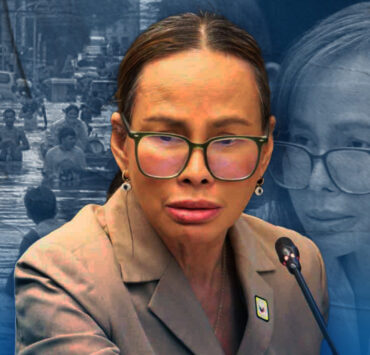
Officials on Friday scrambled to recover whatever evidence of corruption may have been left behind by former Public Works Undersecretary Maria Catalina Cabral, who died on a riverside below a mountain road, leaving many questions about her role in the flood control scandal still unanswered.
Interior Secretary Jonvic Remulla said the Philippine National Police sought to retrieve Cabral’s cell phone and other electronic devices from her family for forensic analysis a day after she was found lifeless close to Bued River, about 30 meters below Kennon Road in Tuba, Benguet province.
Assistant Ombudsman Mico Clavano said he had requested authorities in the province to preserve and retrieve all of Cabral’s gadgets “at all cost,” expressing fears that the data contained in the devices might soon be altered or even deleted.
“Time is of the essence now. We need to acquire these gadgets as soon as possible, at the risk of them being altered, erased by family members or friends,” Clavano said during a press conference on Friday.
“We offer all the respect and the condolences to the bereaved family, but there is an interest that has to keep moving and that is the investigation of the flood control,” he added.
According to a report by the Cordillera regional police office, Cabral’s driver, Ricardo Muños Hernandez, left her on the side of Kennon Road at Purok Maramal, Sitio Camp 5, Barangay Camp 4 in Tuba, around 3 p.m. on Thursday at her request.
Returning to the place about two hours later, Hernandez said she was nowhere to be found. He then drove to a hotel in Baguio City where they had been earlier in the day but she wasn’t there either. By 7 p.m., he reported her missing to Baguio City’s Police Station 8 at the Kennon Road Viewdeck.
Police officers and rescuers found her in the dark near the Bued riverbank “unconscious and unresponsive” around 8 p.m. But it took four more hours to get her body up the road where a doctor declared her dead at 12:03 a.m. Friday.’’
Brian Hosaka, executive director of the Independent Commission for Infrastructure (ICI), which was tasked by President Marcos with investigating corruption in the government’s flood control projects, on Friday said Cabral was “one of the central figures” in the kickback scheme amounting to billions of pesos allegedly for lawmakers and other officials.
“She was no doubt privy to vital information,” Hosaka said in a statement to reporters.
He urged law enforcers to investigate her death thoroughly to rule out foul play.
“Should authorities determine one, it is possible that those responsible may also be connected to the anomalous infrastructure projects,” Hosaka said in a statement to reporters.
As Remulla and Clavano had said, Cabral’s computers, cell phones and other gadgets, as well as documents in her possession, should be subjected to a digital forensic examination, according to Hosaka.
Lapses in investigation
Cabral was summoned by the ICI for a second round of questioning last Monday, but she did not show up.
Acting PNP chief Jose Melencio Nartatez Jr. said that despite concerns that evidence may have been contaminated while in the family’s custody, usable data could still be obtained through forensic means.
“This is for the sake of justice,” he said. “We want to find out the truth.”
It was still unclear as of Friday evening whether Cabral’s family would be willing to turn over her cell phones and computers to the investigators, and to consent to an autopsy and a DNA test ordered by Remulla to rule out foul play.
Remulla acknowledged lapses in the handling of the investigation of Cabral’s death, pointing out that the site where her body was found should have been treated as a “crime scene” and that any evidence, including her cell phones, should not have been released to her family prior to a full documentation.
“There is a mandatory holding period (for evidence), and that was not followed,” he said.
Several lawmakers have raised concerns about Cabral’s death, fearing that testimonies that she could have made would die with her.
In a statement, Akbayan Rep. Percival Cendaña asked whether there was someone who would benefit from the death of the former public works undersecretary for planning and public-private partnership.
Cabral’s name figured in the flood control probe several times. In November, Batangas Rep. Leandro Legarda Leviste accused CWS Rep. Edwin Gardiola of “preordering” over P22 billion worth of projects that were eventually awarded to companies allegedly connected to the latter.
According to Leviste, Gardiola “ordered” the allocations in the National Expenditure Program (NEP), indicating that the items were supposedly bought and assigned to a contractor before the executive branch even handed the NEP to the House.
Leviste said he got the documents from Cabral, which showed items labeled as “CENTI2025”—a detailed list of infrastructure projects in various locations, including Leviste’s own district.
Gardiola said he would respond to Leviste’s allegations “in the proper forum.”
Caloocan City Rep. Edgar Erice said it didn’t make sense for a driver to leave his boss “in the middle of the forest on Kennon Road” all by herself and waited for two hours before checking back on her.

“What the driver is saying is quite illogical, because the problem is … many individuals would be implicated if Usec. Cabral were to talk because she knows the scheme behind the (budget) insertions. And as to who were the proponents, she knows who they are,” he said.
Asked whether he was suspecting foul play in her death, Erice said: “With all her knowledge, it’s not far-fetched that there was foul play.”
Baguio City Mayor Benjamin Magalong, a former chief of the PNP Criminal Investigation and Detection Group who served briefly as an investigator for the ICI, said Cabral’s family did not want an autopsy.
Magalong said, however, that the Cordillera police could invoke protocols in cases of suspicious deaths to request for a forensic examination to determine whether Cabral fell accidentally, was pushed or deliberately jumped into the ravine.
Implicated by Bernardo
He informed the regional police that a Department of Justice order allowed either the investigating agency or the local mayor to request an autopsy.
Cabral was among top officials of the Department of Public Works and Highways (DPWH) interviewed by Magalong and other law enforcers for the ICI.
She was implicated by fellow Public Works Undersecretary Roberto Bernardo because she allegedly allocated DPWH funds. Cabral denied any role in the public works scam and resigned in September.
According to the police report, she and her driver were heading to Baguio on Thursday morning when she suddenly told Hernandez to stop at Sitio Camp 5 at around 10 a.m.
“She stepped out and wandered around. The driver assumed she needed fresh air,” Magalong said.
Jagged rocks
After a group of Tuba police officers on patrol warned them against staying close to the road’s edge, they continued on their trip to Baguio where they had lunch at a hotel.
By 2 p.m., Cabral told the driver she wanted to leave the city, but she stopped again at a roadside spot in Maramal. She asked to be left alone, saying she did not want to attract police attention.
Hernandez said he waited at the nearest gasoline station, returning to Maramal at 5 p.m. not finding her there. He eventually sought police help in searching for her.
Magalong said the area where she was found was strewn with jagged rocks, so a detailed forensic examination of her body and the riverbed was necessary to determine how she fell and the extent of her injuries. —WITH REPORTS FROM GABRIEL PABICO LALU AND DEMPSEY REYES