








Cagayan de Oro execs seek clarity on Edca exercises


CAGAYAN DE ORO CITY—The city council has invited commanders of the Philippine Army and US forces currently involved in a joint training program with local soldiers.
According to Councilor Edgar Cabanlas, they want clarification on the arrival of American servicemen and the scope of the ongoing training at the Philippine Air Force (PAF) Lumbia Air Base, conducted under the Enhanced Defense Cooperation Agreement (Edca) between the United States and the Philippines.
“We are concerned about the safety of our people. What if a crime is committed by US servicemen during their stay here in our city? What are the legal ramifications?” said Cabanlas, a lawyer who chairs the city council’s ethics and blue ribbon committees.
Cabanlas said he expects to get answers from the military commanders invited to their next session.
Col. Antonio Ty, commander of the PAF 590th Air Base Group, said about 100 US servicemen have arrived in the city since last week to participate in a two-week training on humanitarian assistance and disaster relief operations.
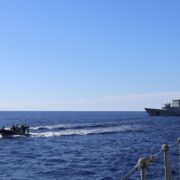
The USNS Seay, a 60,020-ton US support ship, docked at the Macabalan Port on Sunday carrying equipment to be used in the training exercises scheduled to end on March 28.
The Visiting Forces Agreement (VFA), signed in 1998, provides the legal framework governing the presence of US military personnel temporarily stationed in the country.
Jurisdictional issues
Under the agreement, Philippine authorities have primary jurisdiction over offenses committed by US personnel, except for those committed during official duties.
Cabanlas, however, raised concerns about jurisdictional issues under the VFA, citing the case of Lance Corporal Daniel Smith, a US Marine convicted by a Makati court for allegedly raping a Filipina in 2005.
While his case was under appeal, Smith was detained within the US Embassy and was not turned over to a local jail. His conviction was eventually reversed by the Court of Appeals in 2009 following the complainant’s recantation.
Cabanlas said he wants clear answers from US military officials in case a similar incident occurs in Cagayan de Oro.
Maj. Gen. Michele Anayron Jr., commander of the Army’s 4th Infantry Division, said the deployment of US troops is part of the scheduled annual “Balikatan” exercises, facilitated under the Edca.
Anayron sought to allay public concerns about the presence of American soldiers, emphasizing that the joint training is a crucial step in the Armed Forces of the Philippines’ transition from internal security operations to external territorial defense.
“The public has nothing to fear,” he said.
Anayron added that he personally recommended the region as a training venue to ensure soldiers in Mindanao gain vital exposure to modern external defense operations.
However, the deployment has drawn criticism from progressive groups, which argue that the city is being drawn into overseas conflicts.
The local chapter of the International League of Peoples’ Struggle, a global anti-imperialist organization, denounced the arrival of American troops.
It warned that Edca sites, such as the one in Lumbia, are turning the country into a “strategic outpost for US imperialist wars,” which it said could bring geopolitical tensions closer to home.
Edca allows the United States to rotate troops for extended stays and build facilities on local bases.