







Cebu faces waste crisis after fatal landfill slide

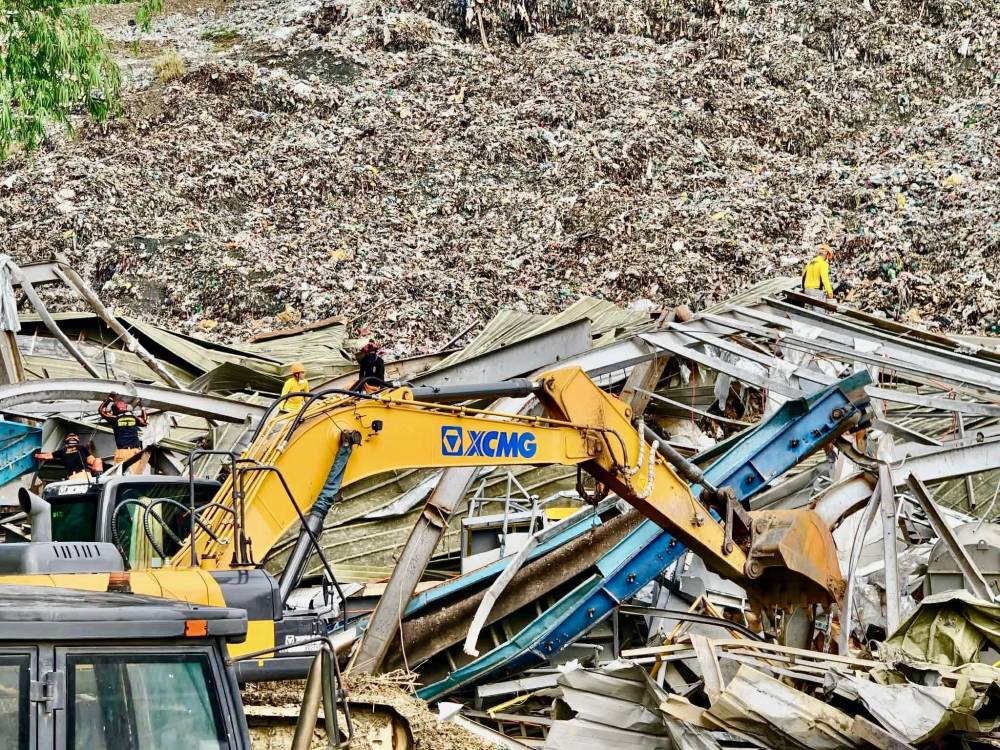
TAGBILARAN CITY—Alarmed by mounting health risks from Cebu’s worsening garbage crisis, provincial and national leaders convened on Thursday to urgently seek solutions following the deadly collapse at the Barangay Binaliw sanitary landfill, an incident now regarded as one of the most serious industrial disasters in Cebu.
Cebu Gov. Pamela Baricuatro met with Environment Secretary Raphael Lotilla at the Provincial Capitol alongside key local officials, including Cebu City Mayor Nestor Archival, Talisay Mayor Samsam Gullas, and Minglanilla Mayor Rajiv Enad, as well as officials from the Department of Environment and Natural Resources (DENR).
The Binaliw landfill serves Cebu City, Lapu-Lapu City, and Mandaue City, and its suspension has left the region grappling with where to dispose of its waste.
Cebu City continues to generate an estimated 600 tons of garbage daily, compounding the crisis after regulators ordered the Binaliw dumpsite to halt operations.
On Jan. 8, a deadly garbage landslide struck the Binaliw Sanitary Landfill when a massive 20-story-high mound of waste collapsed, crushing several structures, including a materials recovery facility (MRF), maintenance areas and administrative offices.
Authorities have confirmed at least 36 fatalities after multiple bodies were recovered from the debris, while at least 18 others were injured.
Baricuatro underscored the urgency of the situation, warning that the garbage buildup poses serious threats to public health if left unresolved.
Transfer facility
Lotilla said the DENR is assisting Cebu City in identifying alternative landfill sites and is considering petitioning the Supreme Court to allow the temporary reopening of the closed Inayawan landfill as a transfer facility.
However, proposals to divert Cebu City’s waste to neighboring localities met strong resistance.
Enad categorically rejected any plan to accept garbage from Cebu City, citing the Binaliw tragedy and his municipality’s own waste management struggles, including the high cost of hauling garbage to Naga City.
Accepting waste from other areas, he said, would unfairly burden a small town already struggling with its own waste problems.
In a Facebook post following a meeting on the garbage crisis, Enad said transferring the waste of a highly urbanized city to Minglanilla would be “unjust.”
“Transferring the environmental and social burden of a big city like Cebu to a small town like Minglanilla is unreasonable and fundamentally unjust,” Enad said.
The mayor noted that Minglanilla is already paying to haul its own garbage to neighboring Naga City, making it illogical to accept waste from other localities.
Enad also stressed that the privately owned landfill in Minglanilla cannot be considered an option, as it has no permit to operate due to the operator’s alleged failure to meet contractual obligations with the municipal government.
He said Minglanilla continues to suffer from the lingering effects of the landfill, which has been closed for three years but still poses environmental risks, including contamination of local rivers and water sources.

Temporary solution
According to Enad, he conveyed to provincial and national officials the strong opposition of residents, citing manifestos from barangay captains and youth leaders, as well as a petition signed by thousands of residents of Barangay Manduang, where the landfill is located.
“I will stand by my policy of Minglanilla-first,” Enad said.
While some officials have described the proposed waste transfer as a temporary solution, Enad warned that past experience shows the environmental and possible public health impacts could be long-term.
He thanked the Cebu provincial government for listening to Minglanilla’s concerns and for agreeing to explore other areas, effectively removing the town as an option.
During the meeting, officials discussed short-term measures, including stricter enforcement of waste segregation and management.
Archival committed to requiring large businesses to manage their own waste, while Mayors Gullas and Enad said they would facilitate the passage of garbage trucks should private landfills in Aloguinsan or Toledo be tapped. The Toledo landfill, however, is not yet operational.
The DENR also introduced its new regional leadership, headed by regional executive director Laudemir Salac, Environmental Management Bureau-7 director John Edward Ang, and Mines and Geosciences Bureau-7 director Al Emil Berador.