






China flooding East Asian waters with naval ships: report

China has deployed more than 100 naval and coast guard vessels in East Asian waters since mid-November amid a diplomatic row with Japan over Prime Minister Sanae Takaichi’s remarks on Taiwan, Kyodo News reported citing Reuters news agency.
Kyodo said the news agency on Thursday quoted security officials in the region as saying the Chinese ships have massed in waters stretching from the southern part of the Yellow Sea through the East China Sea and down into the contested South China Sea, as well as into the Pacific.
As of Thursday morning, there were more than 90 Chinese ships operating in the region, down from more than 100 earlier this week, Reuters said, citing intelligence reports it had reviewed.
Beijing began increasing the number of ships dispatched to the region after Nov. 14, when it summoned Japanese Ambassador to China Kenji Kanasugi to protest Takaichi’s comments that suggested Japan could respond militarily if Taiwan comes under attack, Kyodo said, still citing Reuters.
Defense spending
China was also angered by an announcement last month by Taiwan President Lai Ching-te dedicating an extra $40 billion in spending on defense to counter China, which views the self-ruled island as its own territory, it added.
Together with warplanes, some Chinese vessels in the area have carried out mock attacks on foreign ships. They have also practiced access-denial operations aimed at preventing outside forces from sending reinforcements in the event of a conflict, one of the sources was quoted as saying.
“This goes far beyond China’s national defense needs and creates risks for all sides,” an official briefed on the matter said in the Reuters report, adding Beijing was testing the responses in regional capitals with the “unprecedented” deployment.
Chinese Foreign Ministry spokesperson Lin Jian avoided directly confirming the reported deployment of vessels at a press conference on Friday but stressed that Beijing has always pursued “a defense-oriented” policy.
Lin also said the Chinese navy and coast guard conduct activities “strictly in accordance with China’s domestic laws and international law,” adding that there is “no need for anyone to overreact or overinterpret the situation—let alone hype it up without cause.”
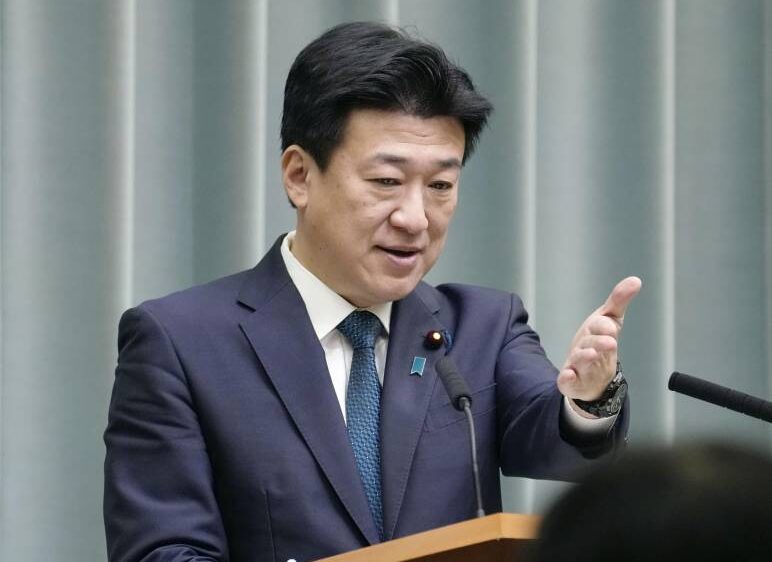
In Tokyo on Friday, Chief Cabinet Secretary Minoru Kihara refrained from commenting directly on the news report at a regular press conference but said that Japan’s government has been “regularly collecting and analyzing information regarding China’s military moves with significant interest.”
Taiwan leader Lai has instructed the island’s Defense Ministry and security agencies to maintain full awareness and provide timely updates, according to Karen Kuo, spokesperson for the presidential office.

Risks to Indo-Pacific
Noting China’s deployment of naval and coast guard vessels poses risks to the Indo-Pacific and the broader region, she called on Beijing to “act responsibly as a major power and exercise restraint.”
But the spokesperson said Taiwan’s security is not in jeopardy and that authorities remain confident in their ability to manage the situation. The island continues to work with friendly partners to help safeguard regional peace and stability, she added.
In December last year, Beijing sent about 90 naval and coast guard ships into waters near Taiwan, southern Japanese islands, and the East and South China seas in what was believed to be one of Beijing’s largest-ever maritime military exercises in decades.
At that time, China did not officially announce a military drill. The deployment followed a tour by Taiwan leader Lai to the island’s diplomatic allies in the Pacific, which included stopovers in the US state of Hawaii and territory of Guam, a move that drew criticism from Beijing.
The mainland condemns Lai as a separatist. Communist-ruled China and the democratic island have been governed separately since they split due to a civil war in 1949.