











China hits back against town execs, Senate

The response came on two fronts: local and national.
The Chinese government on Tuesday announced a travel ban on over a dozen Philippine local officials while also dismissing as mere “political stunt” a Senate resolution that condemned Beijing’s recent tirades against Filipino officials defending the country’s sovereignty in the West Philippine Sea.
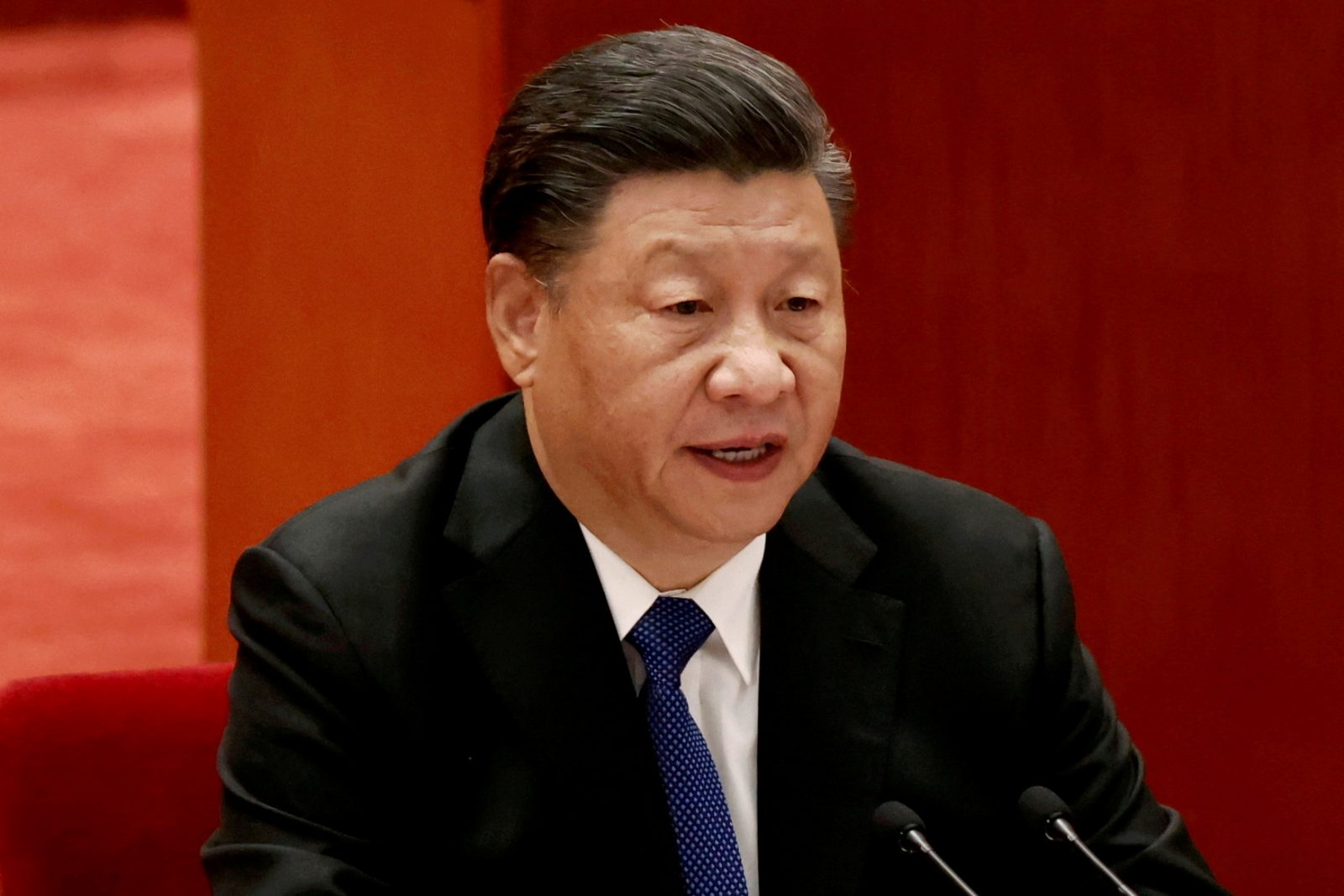
The tit-for-tat stemmed from the latest word war that can be traced to the talk given on Jan. 14 by Commodore Jay Tarriela of the Philippine Coast Guard, where he used caricatured images of Chinese President Xi Jinping in a presentation.
Crying “slander,” Beijing lodged a diplomatic protest four days later, setting off more scathing public statements from officials of both sides, including some Philippine lawmakers and local officials.
On Tuesday, the Chinese Embassy in Manila said the travel ban would apply to 16 individuals responsible for the municipal council resolution that declared its ambassador, Jing Quan, persona non grata in Kalayaan, Palawan, on Jan. 29.
‘Based on reciprocity’
In a statement, the embassy noted that the “so-called Kalayaan Municipality” passed a similar resolution directed against China in 2023.
“Based on the principle of reciprocity, the individuals involved in fabricating the said resolutions are not welcome to enter China (including Hong Kong and Macao),” the embassy said.
The embassy named the banned Filipinos as Beltzasar S. Alindogan, Maurice Phillip Alexis S. Albayda, Nonelon B. Balbontin, Nonie C. Gapuz, Roberto M. Asiado, Hubert B. Llavan, Francis P. Polizon, Marilou S. Vales, Monico A. Abogado, Eugenio B. Bito-onon, Hermoso A. Ornopia, Tracylie Shierjun R. Malabayabas, Arzel E. Belidan, Vicencio R. Milan, Allan D. Dellosa and Mary Cristina J. Lagrosa.
Kalayaan is a small municipality on Pag-asa Island that administers Philippine-occupied features in the Spratly Islands.
The Kalayaan municipal council declared Jing persona non grata after the embassy lambasted Tarriela and other Philippine officials.
The Chinese Embassy on Tuesday also said it was rejecting the Senate resolution adopted by the chamber on Feb. 9 to push back against Beijing’s criticism.
According to embassy spokesperson Ji Lingpeng, the “anti-China resolution” was “nothing but a political stunt” that misrepresented facts and misled the public.
Without naming names, he also accused some Philippine lawmakers of threatening Chinese diplomats.

“What’s truly outrageous and hard to understand is that they would condone and support a Philippine Coast Guard spokesperson maliciously smearing and attacking the leader of another country,” Ji said. “If a foreign official spokesperson were to insult or attack the Philippine head of state, national heroes, or religious leaders, would they stay silent?”
How diplomacy works
He added that the Senate resolution undermined diplomatic efforts for political gain.
“They know little about how diplomacy works, yet they dare to undermine the efforts to improve China-Philippines relations… the price of their hypocrisy, ignorance, and recklessness is paid by the ordinary people,” Ji said.
Ji said China would both reject the resolution outright and continue efforts to strengthen bilateral cooperation. “No matter how many anti-China resolutions these people introduce… it will not weaken the Chinese Embassy’s resolve,” he said.
******
Get real-time news updates: inqnews.net/inqviber