









China warning: Row puts millions of PH jobs at risk

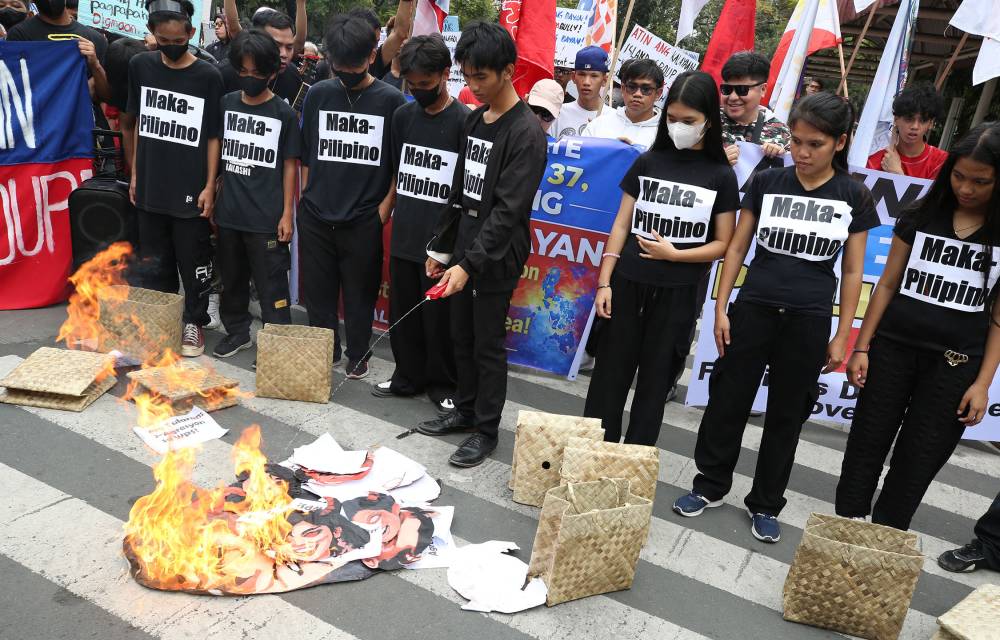
The Chinese embassy in Manila warned on Friday that moves by some Philippine senators to target its diplomats could jeopardize economic ties between the two countries and cost “millions of jobs” for Filipinos as the tensions between Beijing and lawmakers over the West Philippine Sea continue to escalate.
In a strongly worded statement, embassy spokesperson Ji Lingpeng criticized proposals by some senators to declare a Chinese diplomat “persona non grata” or to recall the Chinese ambassador. He called these efforts political “posturing” and noted that only the executive branch could take such actions.
“Any serious damage to diplomatic relations, including downgrading of those relations, would cost millions of jobs,” Ji said, urging lawmakers to consider the potential economic impact of their proposals and to approach diplomatic matters with caution.
The embassy’s statement follows Senate President Tito Sotto’s response to an earlier criticism from the Chinese embassy to the Feb. 9 Senate Resolution No. 256.
The resolution condemned the Chinese embassy’s statement which “improperly” criticized Philippine officials for defending national sovereignty and maritime rights.
‘Persona non grata’
Sotto and several senators had discussed filing a resolution recommending that President Marcos declare Ji’s deputy a persona non grata, but agreed to just pass the resolution instead.
In a Viber message to reporters on Thursday, Sotto said: “When someone triggers you to react and you do not, it’s annoying! I prefer to be annoying!”
Ji urged senators to ensure their public statements reflect an understanding of international relations.
“When it comes to serious diplomatic affairs, some politicians behave like children playing house. Could they at least try to act like adults?” the Chinese diplomat said.
There was no immediate comment from Senate leadership to the embassy’s latest statement.
Ji has not responded to requests from the Inquirer seeking elaboration on his warning concerning loss of Filipino jobs.
Top source of imports
Government data, however, suggests that a fallout in Philippines-China ties could extend beyond job losses, with a Chinese pullback risking billions of dollars in trade and investments.
China remains the Philippines’ top source of imports, accounting for $38.22 billion in 2025, equivalent to 28.6 percent of total inbound goods. By comparison, the next largest source, South Korea, supplied just $10.58 billion, or 7.9 percent of imports.
China has been the country’s top import source since 2013.
It is also a major export market, buying $9.30 billion in Philippine goods in 2025, equivalent to 11 percent of total exports. It ranks behind only the United States ($13.44 billion), Hong Kong ($12.32 billion) and Japan ($11.57 billion).
Investment pledges
China is also a significant investor across the Philippines’ investment promotion agencies.
Philippine Statistics Authority data show Chinese companies pledged P10.25 billion in 2025, more than triple the P2.43 billion recorded a year earlier, and equivalent to 3.68 percent of the total P273.38 billion in foreign pledges.
This places China seventh among top investment sources, behind Singapore, the Netherlands, Japan, South Korea, the Cayman Islands and the US.
Chinese companies are also prominent in the Philippine Economic Zone Authority, one of the country’s top investment promotion agencies.
Mid-2025 data from the agency show that 118 Chinese companies generated $406 million in exports and provided over 16,000 jobs.
2024 warning
In May 2024, the Bank of America (BofA) warned that the further deterioration in diplomatic relations between Manila and Beijing caused by escalating tensions over the West Philippine Sea could inflict serious economic damage to the Philippines.
“China has not been a major source of investments, however, but could possibly have been, as China offered substantial loans and investments in road, rail and dams that have not been pursued,” BofA said.
“The decline in Philippines exports to China, tourism and investment from China appears worse than with the rest of the world,” the bank said.
‘You are not in China’
Mamamayang Liberal Rep. Leila de Lima, a former senator and justice secretary, joined the fray on Friday, blasting Ji for his seeming disrespect of Sotto and other Philippine officials.
In a scathing statement, De Lima said that it was ironic that the embassy official freely expressed his views in the Philippines unlike in China, which she described as a one-party dictatorship.
“To the officials of the Chinese Embassy: You are not in China. This is the Philippines. Here, we kick dictators out, not worship them,” she said.
De Lima added that the spokesperson, as a diplomat, enjoys immunity from libel under Philippine law—a protection not afforded to ordinary Filipinos—and warned that such privilege should not be abused.

His conduct, and that of other Chinese diplomats recently, constitutes an abuse of both constitutional freedoms and the diplomatic immunity extended to them by the Philippine government, she said.
“May I remind them that there is a limit to their abuse of immunity, because reminding them of the limits of free speech is useless, free speech being alien to them as China was never a democracy in any meaningful sense in its long history,” she said.
“This is the problem with individuals raised without democracy but under party dictators,” De Lima said. “This is the travesty confronting us right now in the face of the belligerent ‘wolf warriors’ nesting inside the Chinese Embassy who attack our officials the same way their ship-borne counterparts attack Filipinos in our own EEZ.”
DFA: ‘Firm, professional’
Rogelio Villanueva Jr., the spokesperson for maritime affairs of the Department of Foreign Affairs (DFA), said it would maintain a “firm and professional” approach in handling the dispute over the West Philippine Sea.
Villanueva said the DFA would not be swayed by public criticism or online commentary as Philippine diplomats stay focused on long-term national interests and avoid being sidetracked by “jeers” from “casual commentators, non-practitioners, and self-styled experts.”
“Defense capabilities, messaging, and transparency are all important tools, but diplomacy is the bigger tool in the maritime toolbox and remains indispensable for securing the country’s strategic priorities,” Villanueva told reporters.
He said the agency’s diplomats handle complex negotiations with attention to nuance and long-term national interest rather than public approval.
“Our work is not for fanfare, not for followers, and certainly not for likes,” he said, adding that engagements with foreign counterparts would continue to be guided by professionalism and mutual respect.
Adherence to int’l law
Villanueva said the Philippines was strictly adhering to international law, such as the United Nations Convention on the Law of the Sea (UNCLOS), in asserting rights derived from its territory.
He also cited the Philippine Maritime Zones Act (RA 12064), which defines the country’s maritime zones on the western side of the archipelago, also called the West Philippine Sea, which includes the Kalayaan Island Group.
He said Manila would continue to keep bilateral and regional channels open, including dialogue with China and efforts by members of the Association of Southeast Asian Nations (Asean) to conclude a substantive and effective South China Sea code of conduct with China within the year. —WITH A REPORT FROM INQUIRER RESEARCH
******
Get real-time news updates: inqnews.net/inqviber