








Church to tweak ‘traslacion’ anew after 30-hour trudge

The longest, the biggest and, sadly, another one marked by deaths.
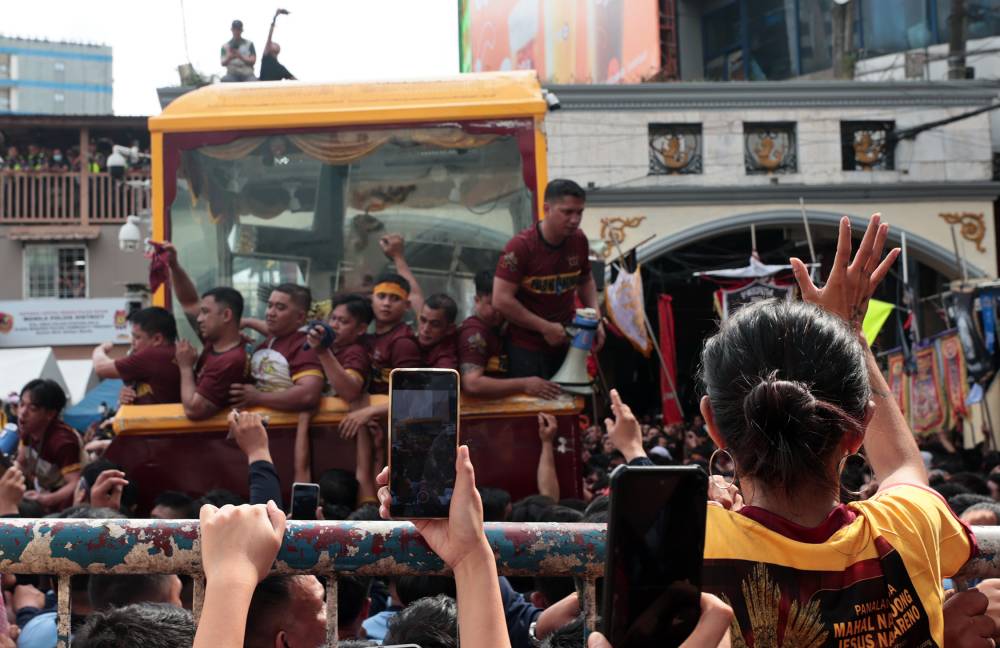
Friday’s staging of the ”traslacion,” the mammoth procession marking the Feast of Jesus Nazareno in Manila, took 30 hours and 50 minutes to complete its nearly 6-kilometer route.
The procession itself drew about 5.5 million people, and a total of 9.6 million if including the novena since Dec. 31 and the two-day “pahalik” leading the Jan. 9 feast, according to Church and police estimates.
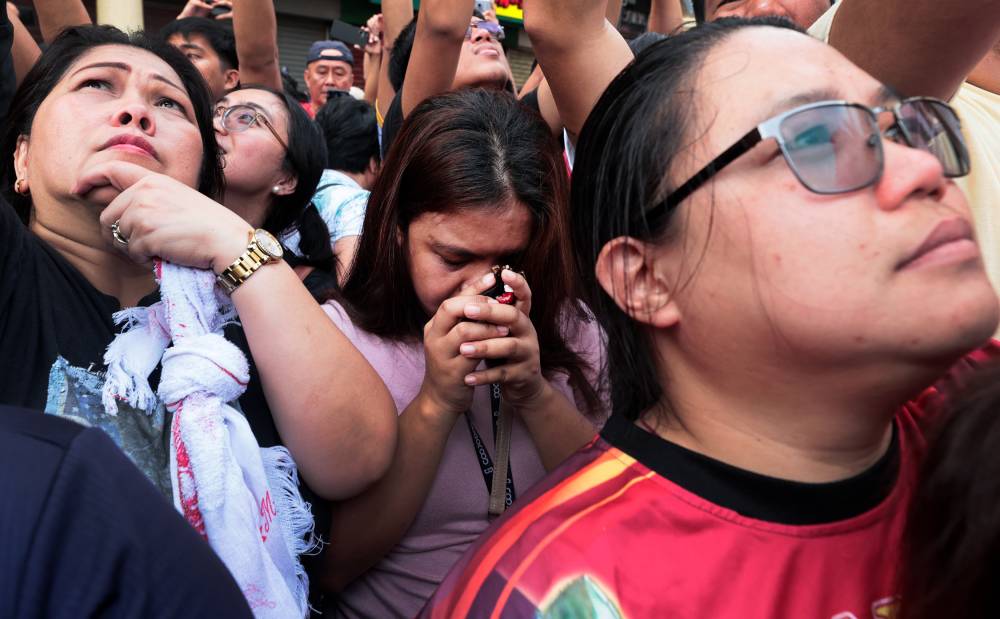
But the famed traslacion, which again formed a sea of mostly male, barefoot devotees, also left four people dead and around 1,700 others requiring medical attention due injuries and exhaustion.
The time was also the longest on record for the Catholic tradition, which has been inspiring intergenerational devotion since the 18th Century but in the last few decades has also been proving to be a crowd-control nightmare.
Due to the unprecedented issues that cropped up, the administration of Quiapo Church, home of the Jesus Nazareno image, said key adjustments would be made for next year’s feast — from the design of the ”andas” or carriage bearing the image, the length of the procession route, to other matters relating to crowd management.
“Definitely, we will have changes,” Fr. Robert Arellano, the church spokesperson for Nazareno 2026 program, said in a press conference on Saturday. “There will be an assessment of the areas that we need to improve or change.”
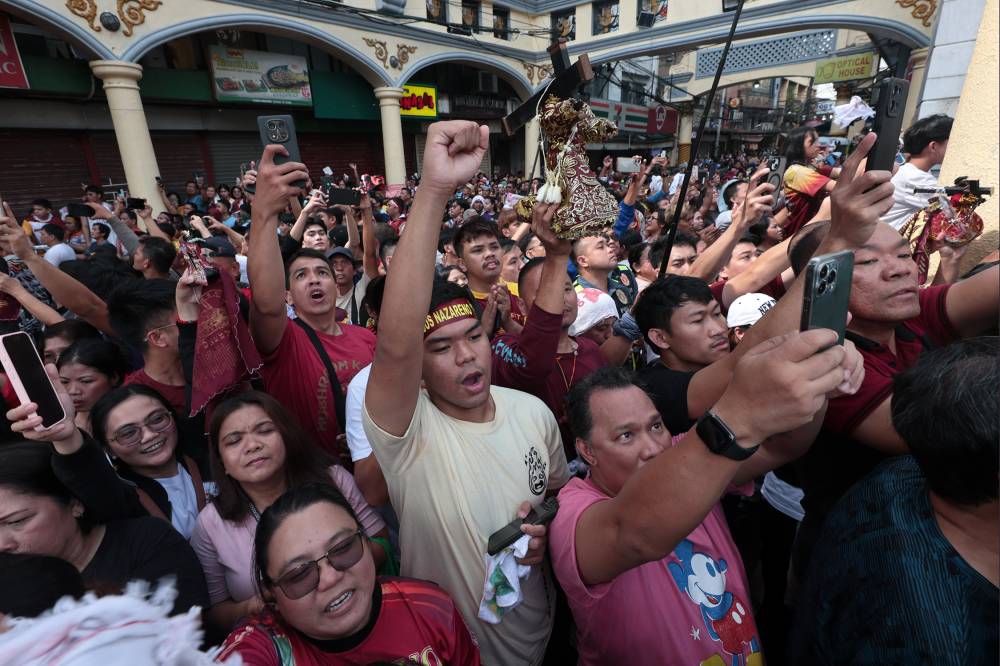
No crowds in front
Ideally, crowds should not be forming ahead of the Nazarene image as it advances through the route, Arellano said, citing one of the recurring causes of delay.
”So many people came and massed in front of the ‘andas’, and it was so hard to break them up. That’s what really made it hard for the andas to continuously move forward,” he added.
The priest also reported four deaths related to the feast.
Three of the fatalities were participants in the traslacion. The fourth, Itoh Son, was a tabloid photojournalist covering the event early Friday morning and who collapsed at a police station near Quirino Grandstand, the starting point of the procession.
Church decision ignored
At one point early Saturday, after the procession had dragged on for 24 hours, Quiapo Church officials decided to cut the rites short and just take the Nazarene image temporarily inside San Sebastian Church, a traditional stop of the traslacion.
But a number of devotees protested and ignored the decision, including the Hijos del Nazareno, the lay group in charge of the andas.
Church officials later said they had no choice but to let it continue.
The thick rope used to pull the andas reportedly snapped while the wheels of the carriage were damaged from the sheer weight of people trying to mount it, further slowing down the procession.
News footage also showed male devotees being hit in the face during the nonstop jostling, some losing their temper and coming into blows.
Last year, the traslacion took 20 hours and 45 minutes to finish, while in 2024 it was over after only 15 hours.
In 2025, the total number of participants in the traslacion and the runup activities was estimated at 8.12 million.
Earlier deaths
In the 2018 procession, one devotee died of a heart attack, while about 800 others were injured. In 2016, two devotees died — one suffering a heart attack and the other having a seizure.
In 2015, four devotees died during the 19-hour procession, including two who were electrocuted. The two were standing on the rooftop of an apartment along the route when the roof collapsed and got into contact with a live wire.
Not always like this
Yet there was a time when the traslacion was not this crowded, chaotic and deadly.
Honee Sison, 75, of Quezon City, recalled that in the early 1990s, the procession around Quiapo Church was still just like any other being held by a major parish.
Employed at a bank along Roxas Boulevard at the time, Sison recalled once going to Quiapo for the Jan. 9 feast.
”I remember coming from the office after doing overtime work, and making it there just as the procession was already returning to the church before 7 p.m. (the same day),” she told the Inquirer in an interview on Saturday.
”The people were not as many (as today) and could practically sprint (down the route) if they wished to,” she added. ”The procession also never started before dawn.”
For many years it was like that, but the crowd grew larger and larger starting around the 2000s, Sison said.
She surmised that the traslacion eventually became such a huge event — with blow-by-blow media coverage and all — after certain celebrities started sharing stories about their Nazarene devotion, popularizing the tradition.