

Civil society group: Flood mess probe still has ‘sacred cows’

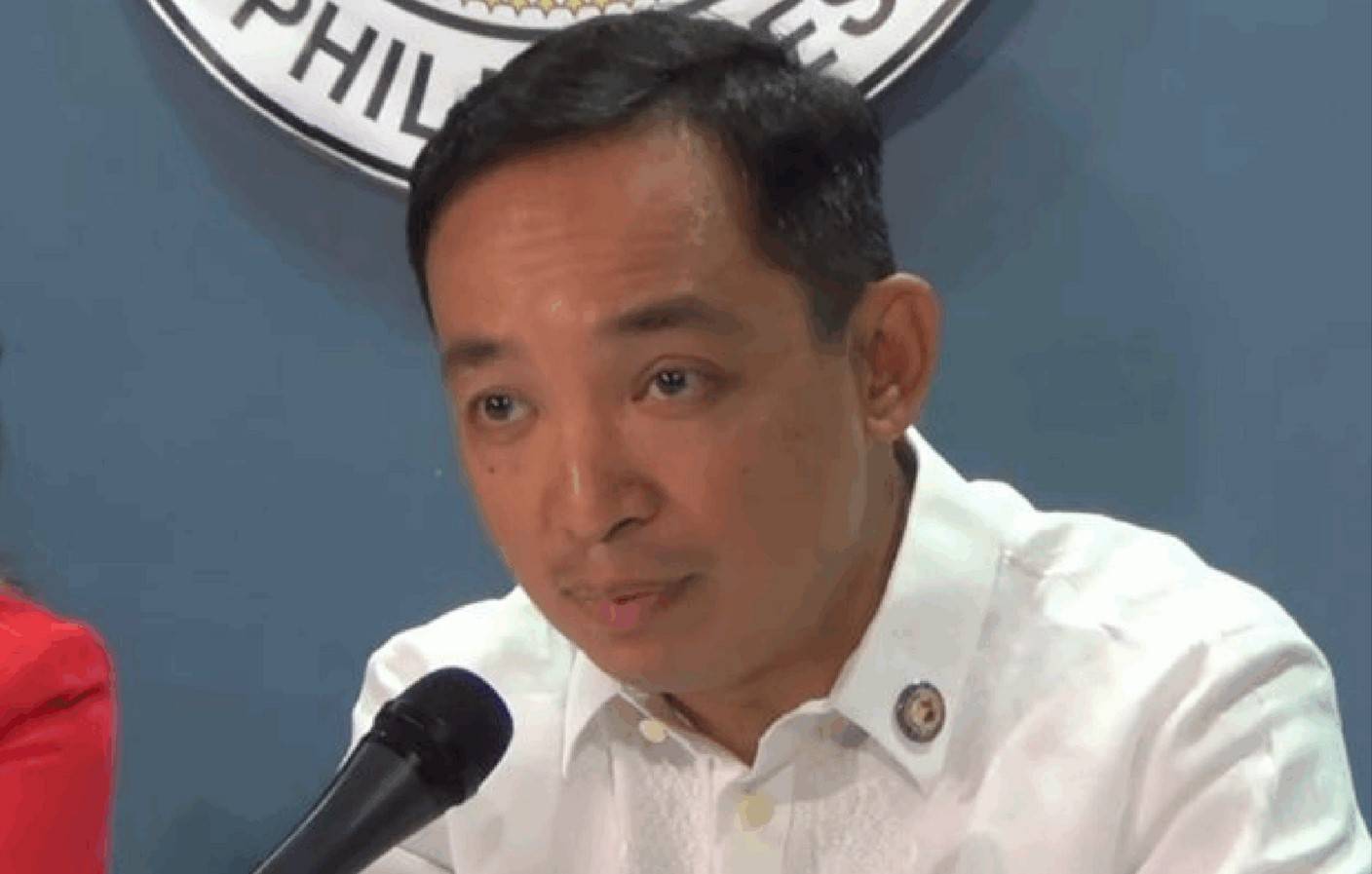
More than six months after President Marcos vowed to get to the bottom of the public works corruption scandal, critics said some “untouchable, sacred cows” among his allies have yet to be fully held accountable.
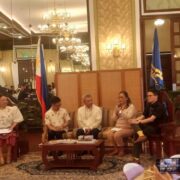
A coalition of activist groups held an “anticorruption assembly” on Saturday to call on the public to sustain the clamor for accountability and a more thorough investigation of former officials, especially in the executive branch, who had been implicated.
Members of the Kilusang Bayan Kontra Kurakot (KBKK) coalition cited former Public Works Secretary Manuel Bonoan, former Budget Secretary Amenah Pangandaman, former Executive Secretary Lucas Bersamin and his grandnephew, former Presidential Legislative Liaison Office Undersecretary Adrian Bersamin.
ACT Teachers Rep. Antonio Tinio said they remained insulated from meaningful prosecution despite serious allegations —including those made by fugitive and former lawmaker Elizaldy Co—pointing to their involvement in possible irregularities in the national budget.
‘Communications’
He aid these former officials “are also the only people who could confirm that the President indeed knows about the (flood control project) kickbacks” from the budget insertions.
Tinio recently said he had seen “records of communications” between Mr. Marcos and then Undersecretary Bersamin which were supposed to serve as proof that the President knew about the kickbacks.
Tinio said the records came from Batangas Rep. Leandro Leviste, who had since taken a leave of absence from the House of Representatives after taking issue with several aspects of the budget of the Department of Public Works and Highways (DPWH).
Among the alleged communications is a March 24, 2025, message indicating receipt of P8 billion from Bernardo, with the President’s acknowledgment.
“Included in the communications was a detailed computation of how the P8 billion kickback was spent—primarily for candidates supported by the President in the recent election, TV ads, P6 million paid to foreign pollster Peron used as election consultant, and P68 million as talent fee for a performer used in the administration’s campaign,” Tinio said.
‘Once a Marcos’
Malacañang and some lawmakers, including Bicol Saro Rep. Terry Ridon, have dismissed the allegations as mere hearsay.
But Tinio insisted on what he saw. “Let us please be more discerning because the truth will always come out … Don’t turn your back on what has been proven by history. Once a Marcos, always a Marcos,” he said.
Labor leader and lawyer Luke Espiritu agreed with his coalition allies that shielding Mr. Marcos out of fear of a political comeback by the Duterte family would be a “grave strategic mistake.”
“Nobody believes he is clean,” Espiritu said. “[But] If you let [Vice President] Sara [Duterte] be the only one to articulate this, she would be the one to gain the support of those who want to call for accountability and become the alternative to Marcos.”
“The only way for us to prevent Sara Duterte from becoming president is if we take control of the narrative and define the post-Marcos scenario—that he must be held accountable, but the alternative is also not Sara Duterte,” he added.
KBKK convener David San Juan noted that while some low-level officials had been targeted by the government crackdown on corruption, the “big fish” remain at large, especially given the uncertain fate of the Independent Commission for Infrastructure (ICI).
‘Dark horse’
Mr. Marcos raised the issue of corruption in flood control projects in his July 28, 2025, State of the Nation Address, vowing that “in the coming months, everyone found culpable in the investigation will be charged accordingly.”
San Juan said “the lack of a clear, independent, and public investigation into the role of those close to the President in flood control reinforces the view of critics that there are individuals who are seemingly untouchable sacred cows.”
He added that while some P25 billion in assets had been frozen, no actual civil forfeiture cases had been filed to permanently recover the wealth.
Part of the problem, said Espiritu, is the inadequacy of the current legal system in tackling these issues, with laws, such as the Anti-Graft and Corrupt Practices Act, “designed to catch individual offenders rather than dismantle systemic corruption.”
Looking ahead toward the 2028 elections, San Juan cited the need for a “dark horse” candidate who is not part of established political dynasties to break the cycle of corruption.
“If we can end this corrupt system, there will be a larger budget for public services,” he said.