







Coco levy case dismissal sparks outcry from farmers

LUCENA CITY—A farmers’ group criticized the Sandiganbayan for dismissing the 1987 coconut levy civil case against the late former President Ferdinand Marcos Sr., former first lady Imelda Marcos, the late Juan Ponce Enrile and others, citing “inordinate delay.”
“This ruling is a painful reminder that in the Philippines, cases are rarely resolved swiftly—especially when the parties are wealthy and powerful,” said Danny Carranza, secretary general of Kilusan Para sa Tunay na Repormang Agraryo at Katarungang Panlipunan (Katarungan), in a statement sent to the Inquirer on Saturday.
Citing reports, Carranza said the antigraft court on March 17 dismissed the civil case, which also involved the late businessman Eduardo Cojuangco Jr. and other associates of the Marcos family.
The case stemmed from allegations by the Presidential Commission on Good Government (PCGG) that the defendants conspired to defraud the government of P426 million in a 1974 project to produce hybrid coconut seedlings on Bugsuk Island in Palawan.
In its ruling, the Sandiganbayan said the nearly four-decade delay in the proceedings violated the defendants’ constitutional right to a speedy disposition of cases.
Carranza, however, blamed the government for the prolonged litigation.
“The government itself bears responsibility for this inordinate delay,” he said, noting that efforts to recover alleged ill-gotten wealth slowed after the tenure of the late PCGG Chair Haydee Yorac.
“This systemic failure weakened the long-standing demand for the recovery of stolen wealth and eroded public trust in our legal and justice institutions,” he added.
‘Painful’
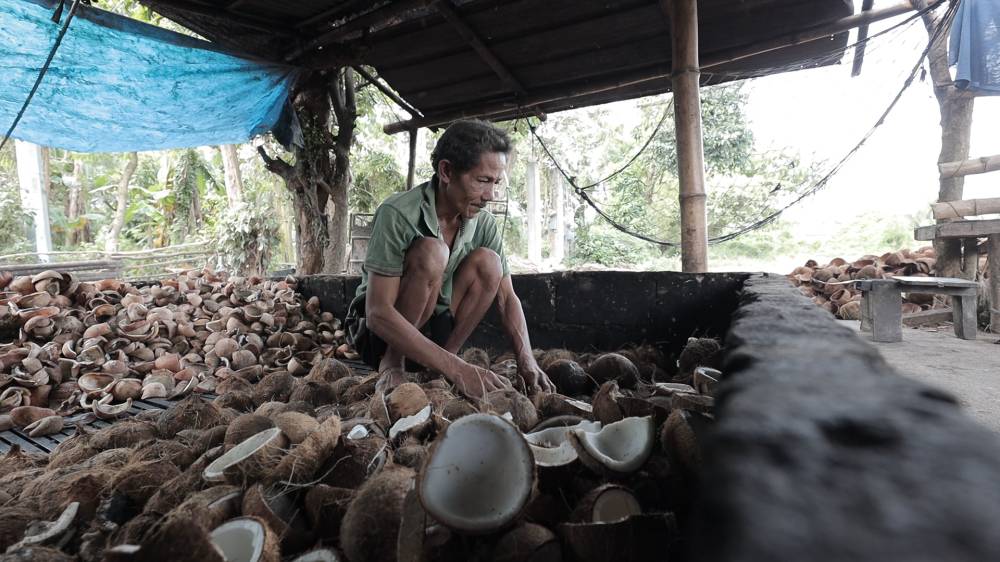
He said the ruling was particularly painful for coconut farmers, who have long sought justice and economic relief.
“While the court recognized inordinate delay in prosecuting the case, there has been an even greater delay in addressing farmers’ urgent calls to end their poverty and return what was taken from them,” Carranza said.
“For decades, they have endured hardship, neglect and broken promises,” he added.
Carranza also questioned what he described as unequal treatment in the justice system.
“Why is there no such consideration when the accused are poor citizens? Farmers and ordinary people are quickly charged and imprisoned, even in trumped-up cases,” he said.
He warned that dismissing cases on procedural grounds could set a dangerous precedent.
“It signals that time can be used as a shield by those with power and resources, allowing accountability to be evaded through prolonged legal processes,” he said.
Carranza added that such rulings could embolden corruption, citing past cases in which officials accused of plunder were eventually acquitted.
The coconut levy, imposed during the Marcos administration from 1973 to 1982, was collected from farmers supposedly to develop the coconut industry. However, critics said the funds benefited only Marcos allies.
Public in nature
Following the Edsa People Power Revolution, coco levy assets were sequestered by the PCGG, which filed cases in 1987 against the Marcoses and their associates.
In 2001 and 2012, the Supreme Court ruled that the coconut levy funds were public in nature and should be used for the benefit of coconut farmers.
The fund, now under government control, is estimated at about P100 billion, including cash and assets, such as coconut mills.
Carranza reiterated the group’s call for the government to fast-track the implementation of Republic Act No. 11524, which allocates the recovered funds for the development of the coconut industry.
The law mandates that programs under the Coconut Farmers and Industry Development Plan be financed through the levy fund.
In 2022, then President Rodrigo Duterte issued Executive Order No. 172, directing the Philippine Coconut Authority to manage and utilize the fund.
“But coconut farmers continue to wait for the full benefits of the recovered levy fund,” Carranza said, noting that small and unorganized farmers still struggle to access assistance.
He stressed that sufficient funds exist to uplift farmers’ welfare “if only these are made accessible and properly utilized.”
******
Get real-time news updates: inqnews.net/inqviber