











‘Compliance culture’ in DepEd seen not helping PH education

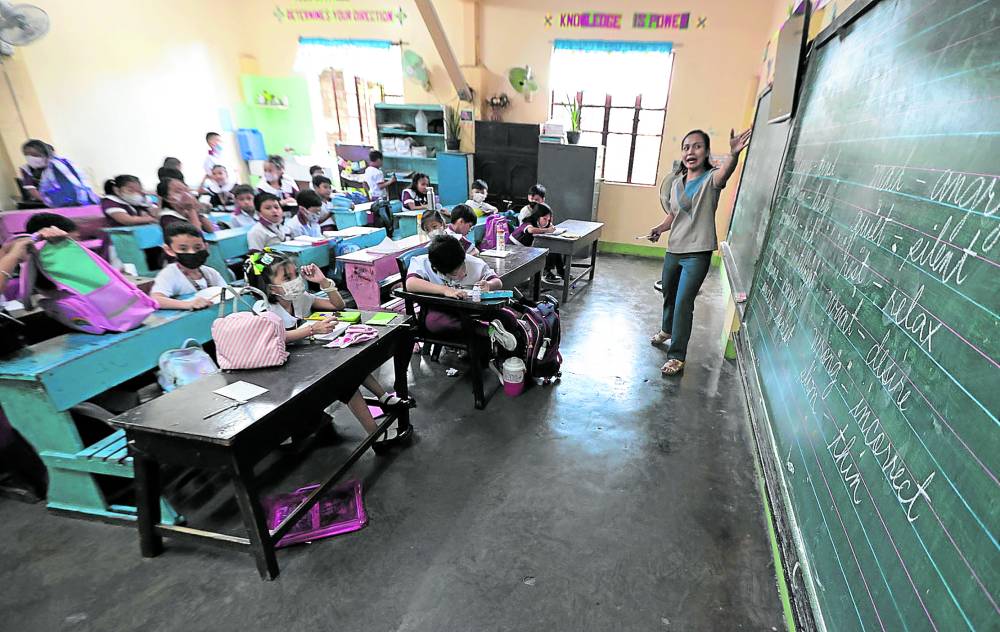
In a country that supposedly allows democratic space, public schools ironically operate under what the Second Congressional Commission on Education (Edcom 2) describes as a “memocracy”—a rigid memorandum-compliance culture within the Department of Education (DepEd).
As one teacher put it during a consultation: “Our school is more policy compliant. Kung anong binaba from DepEd, ’yun ang ginagawa. (Whatever instructions are handed down by the DepEd, that is what we do).”
While department issuances encourage contextualization, Edcom 2 said in a 2025 report that school leaders who deviated from rigid reporting requirements risked penalties or public criticism, while teachers who perform tasks beyond what a memorandum explicitly required were sometimes labeled “pabibo,” or attention seekers.
This long-entrenched rigidity has hindered the sector’s ability to deliver responsive, locally tailored solutions and has stalled decentralization, a shift that education advocates say is critical to improving learning outcomes, Edcom 2 said.
The congressional education commission is the body mandated to conduct a comprehensive national assessment of the performance of the country’s education sector. It was created by Republic Act No. 11899, which was passed in July 2022.
Local gov’ts as lead
According to the Philippine Business for Education (PBEd), empowering local governments to design innovative, community-specific solutions could be the next step to “turn the tide” for the education system.
“The teacher, the principal, the barangay captain, the mayor should be the ones leading in solving the problem. The strategy may come from the central office, but the execution and implementation should come from the bottom,” PBEd executive director Hanibal Camua told the Inquirer in a recent interview.
PBEd is an advocacy group founded and led by the country’s top business leaders.
The record-high education budget of nearly P1 trillion for 2026 offers a starting point for the Marcos administration to leave its mark on the sector, with just over two years left in its term, Camua said.
But a more lasting legacy, he emphasized, would be laying the groundwork for decentralizing education and moving away from the top-down, hierarchical approach that often places the burden on a single agency, which is the DepEd.
Next 2 years of Marcos
Despite gains achieved by Edcom 2, Camua noted that the education sector remains in “crisis.”
“The next two years of the Marcos administration should be years where we would see decisive actions on education, if we are to address the crisis once and for all,” he added.
Given the substantial budget, Camua cited five key priorities:

1. Addressing classroom backlogs through public-private partnerships
2. Fixing the teacher pipeline
3. Strengthening early childhood care and development
4. Procuring more textbooks and learning materials
5. Involving more stakeholders in education delivery through decentralization
“Put it this way: If local governments are in charge of building schools in areas that have congestion, and citizens know that there was a budget to build those classrooms, it would be very glaring if the mayor fails to do that,” Camua explained.