








Cordillera’s mountain tourism gets a push

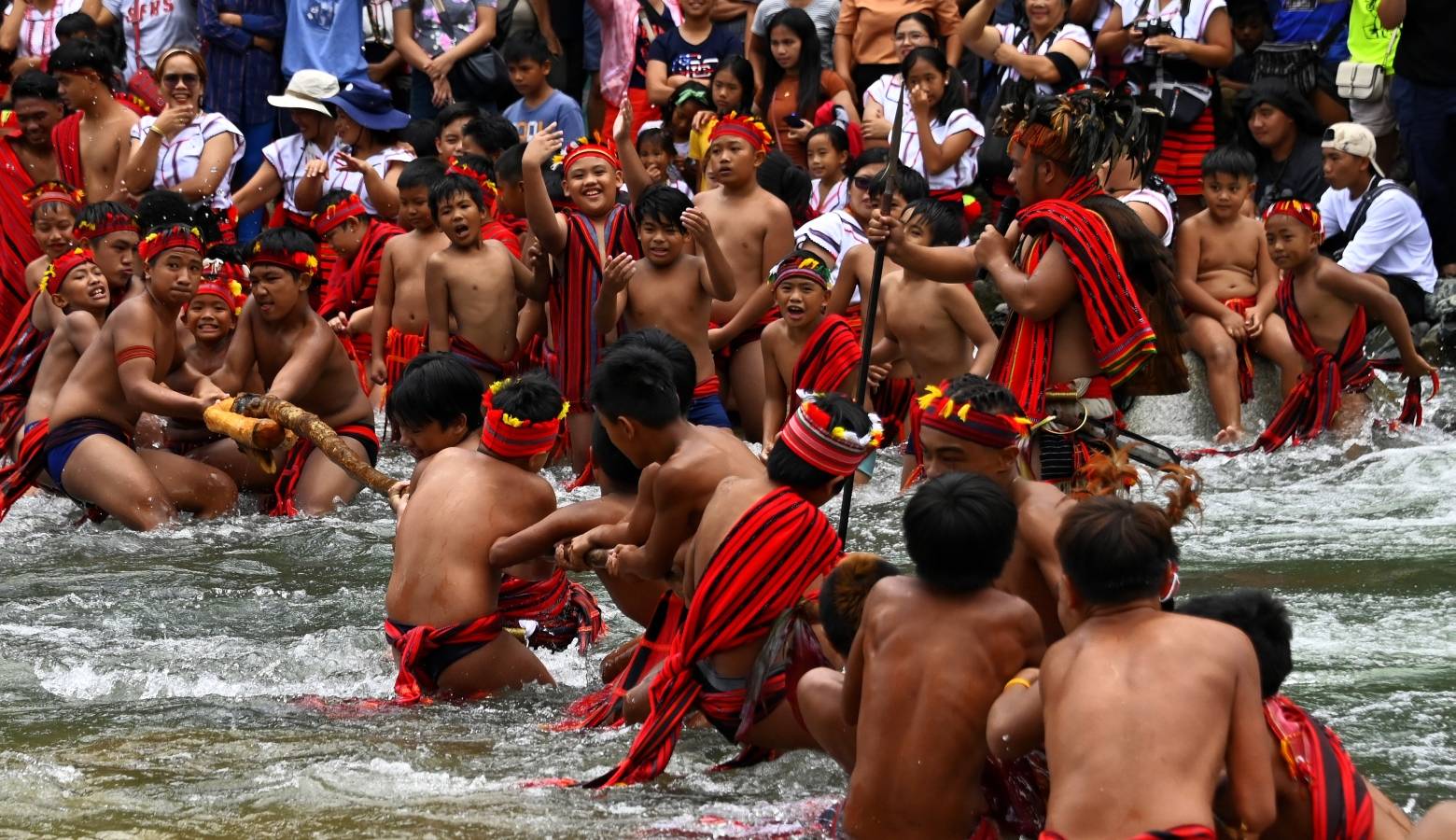
BAGUIO CITY—The government is looking at mountain tourism as a major economic driver, tying an already robust mountain trekking industry to the Department of Tourism’s (DOT) recent promotion of gastronomy and “slow food” tours around the Cordillera provinces of Ifugao, Kalinga, Abra, Apayao and Benguet; and Mountain Province for more adventurous visitors.
The tourism agency has drawn up a mountain tourism product development road map that incorporates environmental preservation, cultural heritage and community participation into what used to be conventional ecotourism programs, said Paulo Benito Tugbang, director of the DOT’s Office of Product Development, on Dec. 10, during a two-day Mountain Tourism Summit organized by the agency’s Cordillera office.
The government is trying to balance the influx of tourists with the Cordillera imperative to protect “its fragile ecosystem” and preserve cultural integrity by asking communities to take part in their towns’ tourism planning, he said.
The mountains are also ideal for “slow food” circuits, or longer tours that allow visitors to taste slow-cooked cuisine and immerse themselves in local practices during the journey, Tugbang said.
Last year, the mountain region was visited by 1,983,511 tourists, who spent an estimated P10.72 billion on food, transport and accommodations during their trips—particularly in the rice terraces of Ifugao, the caves of Mountain Province and the white water rafting sites in Kalinga—according to data from the DOT and the Philippine Statistics Authority.
The 2024 tally is higher than the 1.68 million tourists hosted by upland communities in 2023.
Synergy
A national ecotourism board manned by the DOT and the Department of Environment and Natural Resources “provides the synergy in creating a more enabling environment for the development of tourism while also preserving the landscapes, the flora and fauna and the social heritage of these destinations,” Tugbang added.
Mountain tourism would be suited to the newly recognized 395,975-hectare biosphere reserve in Apayao province, which has excluded areas dedicated to other industries, like renewable energy and tourism, that would not affect wildlife sanctuaries and critical habitats, Apayao Gov. Elias Bulut Jr. said at the forum.
He pointed to Mt. Sicapoo, Apayao’s highest peak at 2,354 meters, which is considered a difficult climb.
The governor said the biosphere could be “a model of how mountain tourism can lift up our people as assuredly as our mountains lift up the horizon.”
But the decision to open up the mountains to outsiders should be made solely by the people who live there, said Marlon Martin, executive director of the Save the Ifugao Terraces Movement, during his discussion on cultural sensitivity.
Subordinate
Martin said tourism programs designed for upland destinations must be “subordinate” to the social and cultural dynamics of these territories. Highland communities should set the rules, and their customary laws must govern tourists, Martin said.
He stressed that every tourist enters the “ancestral domain” of mountain communities, which practice rituals and traditions that were never quelled by either Spanish or American colonizers.
“We in the mountains experienced colonization differently from lowlanders. We were never conquered,” Martin said.
Tourism, he added, must adjust to the highlands’ “community rhythm,” “temporal systems,” “agricultural cosmology” and indigenous science, which have kept ancestral Cordillerans attuned to nature.
When the end-of-harvest Ifugao ritual called “ponnok” began to draw tourists after it was revived by households in the Hapao rice terraces in Hungduan town, tour guides from Metro Manila kept demanding that the community set the exact date of the ritual, he said.
“You can’t set dates,” Martin said. The ritual occurs in August or September, but elders will not start ponnok until every kernel of rice has been harvested.
The government must also respect and exclude sacred spaces from tourism programs, such as burial grounds, Martin said. He cited a mountain in the region where some trekkers wander, not knowing it is actually where victims of violence are laid to rest.
In the Philippines and other parts of the world, governments have intervened in indigenous communities because of a tourism agenda, without realizing how these actions harm centuries-old traditions, Martin said.
In China, the government moved an entire village of more than 100 households because it blocked the view of some of its famous terraces, he said.
In the 1970s, the administration of the late President Ferdinand Marcos Sr. directed every rice grower to plant a government-endorsed variety, which led to the abandonment of indigenous rice, he said.
Consequently, rituals associated with indigenous rice were no longer practiced in some Ifugao farms until heirloom rice demand surged again, Martin said.