











Crude oil prices top $100 a barrel as Iran war intensifies

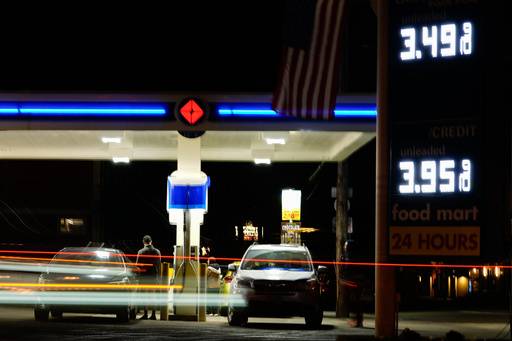
CHICAGO—Oil prices eclipsed $114 per barrel for the first time since 2022 on Monday as the Iran war intensified, threatening production and shipping in the Middle East.
The price for a barrel of Brent crude, the international standard, surged past $114 after trading resumed on the Chicago Mercantile Exchange. That was up 23 percent from its Friday closing price of $92.69.
West Texas Intermediate, the light, sweet crude oil produced in the United States, also was selling for about $114 a barrel. That’s 25 percent higher than its close Friday at $90.90.
The war’s toll on civilian targets grew early Monday as Bahrain accused Iran of striking a desalination plant vital to drinking water supplies, and oil depots in Tehran smoldered following overnight Israeli strikes.
The increases followed the US crude price jumping by 36 percent and Brent crude rising by 28 percent last week. Oil prices have surged as the war, now in its second week, ensnared countries and places that are critical to the production and movement of oil and gas from the Persian Gulf.
Strait of Hormuz
Roughly 15 million barrels of crude oil – about 20 percent of the world’s oil – typically are shipped every day through the Strait of Hormuz, according to independent research firm Rystad Energy. The threat of Iranian missile and drone attacks has all but stopped tankers from traveling through the strait, which is bordered in the north by Iran, carry oil and gas from Saudi Arabia, Kuwait, Iraq, Qatar, Bahrain, the United Arab Emirates and Iran.
Iraq, Kuwait and the UAE have cut their oil production as storage tanks fill due to the reduced ability to export crude. Iran, Israel and the United States also have attacked oil and gas facilities since the war started, exacerbating supply concerns.
The last time Brent and US crude futures traded near the current level was in 2022, after Russia invaded Ukraine.
Global surge
The global surge in oil prices since Israel and the US attacked Iran on March 1 has rattled financial markets, sparking worries that higher energy costs will fuel inflation and lead to less spending by US consumers, the main engine of the economy.
Tokyo’s benchmark Nikkei 225 index plunged more than 7 percent early Monday, while other markets also foundered.
In the US, a gallon of regular gasoline rose to $3.45 on Sunday, about 47 cents more than a week earlier, according to AAA motor club. Diesel was selling for about $4.60 a gallon, a weekly increase of about 83 cents.

Too much for global economy
Energy Secretary Chris Wright, speaking on CNN’s “State of the Union,” said US gas prices would be back under $3 a gallon “before too long.”
“Look, you never know exactly the time frame of this, but, in the worst case, this is a weeks, this is not a months thing,” Wright added.
If oil prices stay above $100 per barrel, some analysts and investors say it could be too much for the global economy to withstand.
Iranian authorities said strikes by Israel on oil depots in Tehran and a petroleum transfer terminal early Sunday killed four people. Israel’s military said the depots were being used by Iran’s military for fuel to launch missiles. Mohammad Bagher Qalibaf, the speaker of Iran’s parliament, warned that the war’s impact on the oil industry would spiral.
Iran exports roughly 1.6 million barrels of oil a day, mostly to China, which may need to look elsewhere for supply if Iran’s exports are disrupted, another factor that could increase energy prices.