




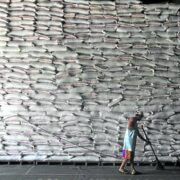






DA ready for ‘key test’ of full rollout of P20/kg rice this year


Will 2026 be the year the Marcos administration fully delivers on its campaign promise of bringing rice prices down to P20 per kilo?
That is what the Department of Agriculture (DA) is aiming for, as it views the full rollout of the “Benteng Bigas, Meron Na!” as one of its key tests this year, alongside the challenge of keeping palay prices fair for farmers.
Agriculture Secretary Francisco Tiu Laurel Jr. said before the New Year that the DA remains committed to the initiative.
“Next year will mark the full implementation of the P20 rice program,” Tiu Laurel said. “We believe we are ready, but it is easier said than done.”
Currently, the program is operating in all of the country’s 82 provinces, with more than 400 sites selling rice at P20 per kilo. However, the DA is still looking to expand coverage to include lower-middle-income households and other population groups.
The target, according to Tiu Laurel, is to reach 15 million Filipino households by 2026.
Palay prices
Beyond consumer access to cheaper rice, Tiu Laurel said the DA must balance the program with the need to keep palay prices fair, warning that low farm-gate prices could discourage planting and threaten domestic rice production.
Keeping palay prices fair will be the DA’s “most urgent challenge” in 2026, he added.
To support farmers, the National Food Authority will continue buying palay during the summer harvest at P17 per kilo for wet palay and P21 per kilo for dry palay.
FMR takeover
The effort is supported by a temporary freeze on rice imports, which was in effect through December. This pause capped rice imports at about 3.5 million metric tons (MTs) in 2025, down from 4.8 million MTs imported in 2024.

Alongside rice policy, the DA also faces a major test in implementing P33 billion worth of farm-to-market (FMR) road projects in 2026.
Responsibility for the projects was transferred to the DA from the Department of Public Works and Highways following the corruption controversy involving flood control works.
“That’s a real challenge,” Tiu Laurel said. “We have to go from zero to one hundred.”
Despite the scale of the task, he is confident the DA will be able to deliver the projects transparently at costs up to 20 percent lower than in previous years.
“We want this done properly—transparent, corruption-free and built to the right standards of quality and durability,” Tiu Laurel added.