







David on Philhealth case: No to another robbery

President Marcos and Congress should not “simply backfill” the P60 billion that was ordered returned to the Philippine Health Insurance Corp. (PhilHealth) by the Supreme Court, but should instead get the money from the people who profited from the fund diversion, an outspoken Catholic church leader and a budget watchdog said on Saturday.
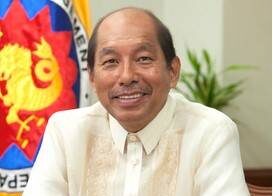
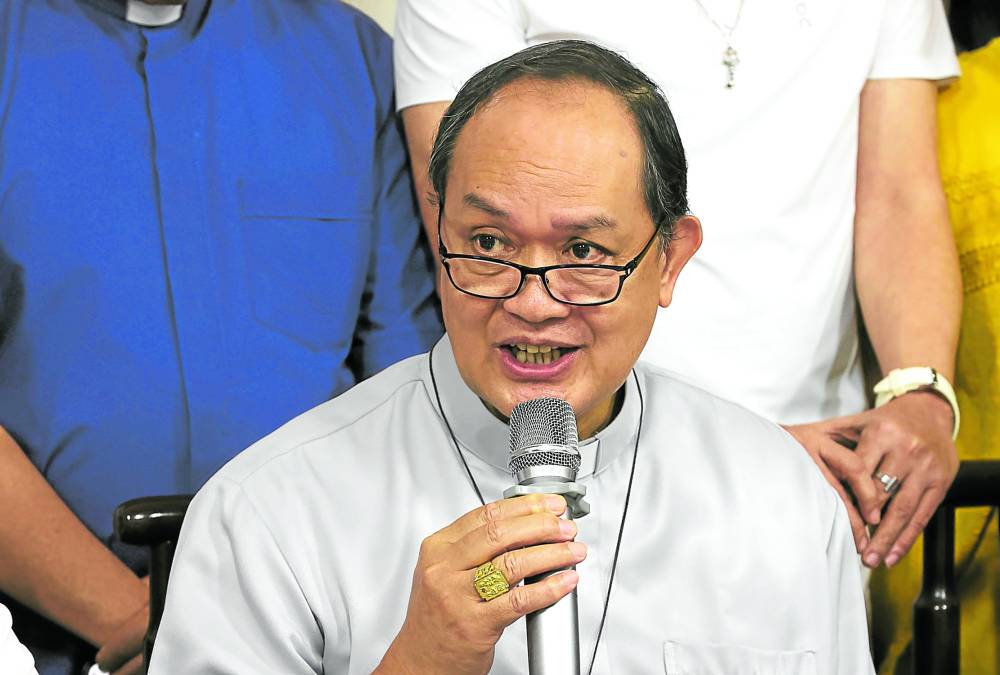
Fresh from finishing his four-year term as president of the Catholic Bishops’ Conference of the Philippines (CBCP), Cardinal Pablo Virgilio David thanked the high court for its unanimous decision ordering the government to return the funds to the state health insurer.
However, if the order to return means that the government would get the money from the proposed 2026 national budget, then, “No thanks,” the Bishop of Kalookan said.
“The people have been robbed—still the people have to pay?” he said in a Facebook post. “How is that not a kind of double jeopardy—at least in the moral sense? The public was robbed once, and now we are being told to foot the bill again? This is unacceptable.”
The 15-0 decision of the Supreme Court should also not be used both by the executive and the legislative branches to just “backfill the stolen money through future appropriations,” he said.
David suggested that the court take “one step further” by directing the government to recover the diverted funds from public officials and private contractors tagged in the flood control kickback schemes.
The Supreme Court should also order the government to reimburse PhilHealth and the Philippine Deposit Insurance Corp. (PDIC) directly from the frozen, garnished or seized assets of individuals who “masterminded or benefited from this scandal” in addition to criminal charges, David said.
“Anything less only reinforces the culture of impunity that allowed this massive theft to happen in the first place,” he said.
“This is about justice–for every worker whose PhilHealth contributions were stolen, every depositor whose safety net was endangered, and every Filipino whose taxes are constantly held hostage by corruption disguised as ‘flood control,’” he said.
Never again
This was the same sentiment expressed by budget watchdog Social Watch Philippines (SWP), as it demanded that the P60 billion should be recovered by the government “from the people who enabled the illegal fund transfer in the first place.”
Jessica Reyes-Cantos, a co-convenor of SWP, recalled that the House of Representatives had set aside P60 billion for the PhilHealth benefit improvement package under the proposed national budget for next year, in compliance with the President’s earlier order to return the money.
“But this cannot be called restitution at all, for it uses, yet again, taxpayers’ money to pay for the fund that was stolen,” Cantos said.
The President and Congress should not make the same mistake in the 2026 national budget by ensuring that any attempts to transfer funds similar to the diversion of trust funds from the PhilHealth would not be repeated, SWP said on Saturday.
Wary of special provisions
Ma. Victoria Raquiza, SWP co-convenor, pointed out that Mr. Marcos would be signing the proposed 2026 budget in less than a month as the Senate and the House bicameral conference committee would soon meet to reconcile their respective versions of the proposed General Appropriations Act (GAA).
Raquiza said the bicameral conference committee must refrain from reintroducing any special provisions that have language similar to what was used in the 2024 fund transfers. Mr. Marcos should veto any such provision, she added.
“The [Supreme] Court has made it clear that realigning or pooling health insurance funds outside their intended purpose will not withstand legal scrutiny,” she said.
In a statement on behalf of the petitioners who challenged the PhilHealth fund transfer, former Supreme Court Associate Justice Antonio Carpio, said that the ruling “ensures that PhilHealth funds remain exclusively for health-care services and are protected from diversion.”
“This ruling is a win for every Filipino who relies on an adequately funded and functioning PhilHealth,” the statement said.
In addition to Carpio, the petitioners included former Sen. Aquilino Pimentel III, former Finance Undersecretary Cielo Magno, former Ombudsman and retired Supreme Court Associate Justice Conchita Carpio Morales and former Commissioner Heidi Mendoza of the Commission on Audit.
The others were labor and medical groups, health-care workers, Bayan Muna leaders, the 1Sambayan Coalition and members of the University of the Philippines College of Law Class of 1975.
Ambiguous
The petitioners hailed the high court for affirming that public health funds “must be safeguarded, transparent, and used solely for the people’s benefit.”
The court voided Special Provision 1(d), Chapter XLIII of the 2024 GAA and the Department of Finance Circular 003-2024. The Special Provision authorized the return of “fund balance” or excess reserve funds of government-owned or -controlled corporations to the National Treasury.
The special provision was ambiguous because its concept of “fund balance” was not defined in the 2024 GAA, the high court said.
The P60 billion was part of the state health insurer’s then P89.9-billion unused funds.

PhilHealth itself welcomed the decision and also thanked the high court.
“Just as what we have said before, whatever will be the decision of the court, we will gladly accept it,” PhilHealth spokesperson Israel Francis Pargas said in an interview with dzBB radio.
Even before the Supreme Court’s ruling, Raquiza recalled that the House had already set aside P60 billion for the PhilHealth benefit improvement package under the proposed 2026 budget in compliance with the President’s order to return the funds.
On Ralph Recto
However, this cannot be considered as restitution, Raquiza said, adding that this again would be in the form of “taxpayers’ money” used to pay “for the fund that was stolen.”
Cardinal David also criticized Executive Secretary Ralph Recto, who was the finance secretary who pushed for the fund transfers, insisting that it was legal under the 2024 GAA and was a “common-sense approach” to avoid new borrowing and to finance important government programs.
“What we are really witnessing is common nonsense,” David said in another Facebook post.
“If the money had at least been transferred to the Department of Health for programmed and clearly identified health expenditures, there might have been some room—however debatable—for fiscal justification,” he said. “But that is not what happened.”
“The funds were funneled into unprogrammed appropriations, most of which—as the Supreme Court itself noted—were generic insertions for DPWH (Department of Public Works and Highways) flood control projects, bearing no relation to PhilHealth’s mandate or to public health,” David pointed out.
SolGen to review ruling
The Office of the Solicitor General would review the Supreme Court ruling to decide on an appropriate action to take, including seeking reconsideration, according to the Presidential Communications Office (PCO).
The PCO also cited the President’s Sept. 20 directive to restore the P60-billion funds of PhilHealth.
The PCO said that this was a “a recognition of the agency’s stronger performance, increased absorptive capacity and expanded benefits in line with the government’s goal of delivering universal health care for all Filipinos.”
Marcos then said that the funds would be returned to the state health insurer, following the savings generated from other government agencies, particularly the DPWH.