



De Lima, Erice ask SC: Junk P150-billion standby funds

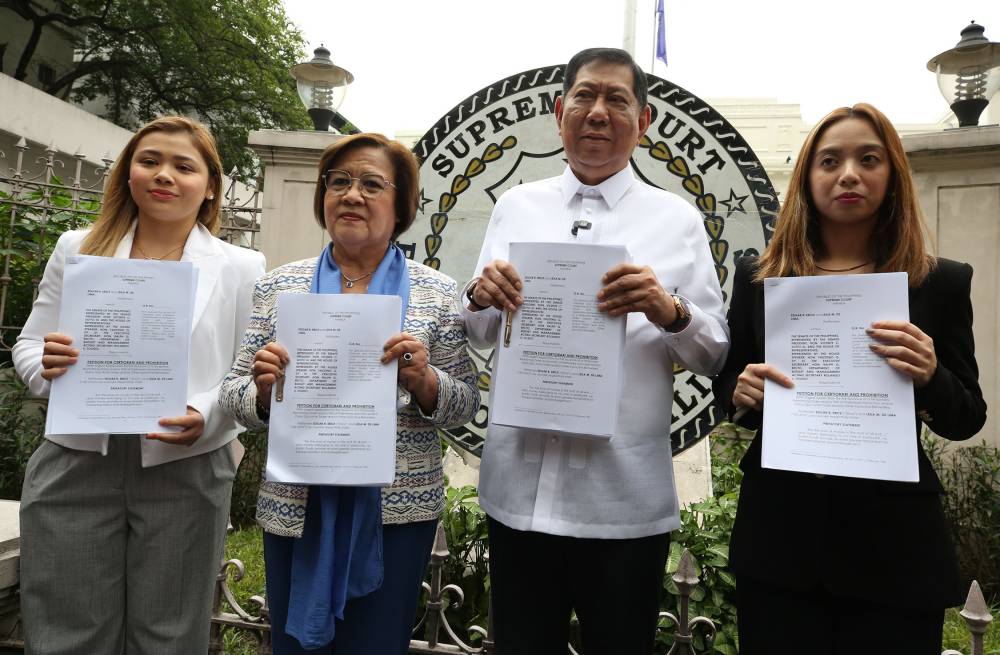
Two minority representatives on Thursday asked the Supreme Court to declare the P150.9-billion unprogrammed appropriations (UAs) in the P6.793-trillion 2026 national budget unconstitutional for lacking clear revenue sources and giving President Marcos “blanket authority to spend.”
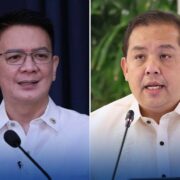
In their petition, Mamamayang Liberal Rep. Leila de Lima and Caloocan Rep. Edgar Erice said that under Republic Act No. 12314, or the 2026 General Appropriations Act (GAA), the UAs would be used only under specific conditions, such as “when revenue collection exceeds targets” or when grants or foreign funds are generated.
They argued that this process “inverts the constitutional architecture of budgeting.”
“Instead of revenues determining expenditures, expenditures are authorized in anticipation of revenues whose existence is speculative and contingent,” they said.
According to the lawmakers, the UA structure violated Article VII, Section 22, of the 1987 Constitution, which requires that the budget be based on actual sources of financing, emphasizing that the Charter “is unequivocal” about this matter.
“Appropriations cannot constitutionally rest on mere possibilities that are neither determinable nor certified as ‘actually available’ at the time Congress enacts the GAA,” they said.
They noted that there has been no certification from the national treasurer, as required by the same Article, that actual funds were available for special appropriations.
No clear standards
De Lima and Erice told the court that the questioned provisions of the 2026 GAA do not lay down clear and enforceable standards on when the UA may be released, what fiscal conditions must be first satisfied, what specific projects may be funded and the limits of Executive discretion in determining fund availability and use.
“This absence of standards converts the unprogrammed appropriations into a blanket authority to spend, restrained only by Executive judgment, and not by legislative command,” they said.
The UAs “evade” the discipline required of appropriations and “undermines transparency and accountability.”
Almost P250 billion worth of UAs were placed in the final version of the General Appropriations Bill (GAB) presented to the President for enactment, but he vetoed P92.5 billion.
Abad cites ‘distortion’
The lawmakers made an urgent appeal to the Supreme Court to issue a temporary restraining order while the case is pending, noting that the total UA was a “significant portion of the national wealth” that would be impossible to recover once spent illegally.
Former Budget Secretary Florencio “Butch” Abad supported the petition, saying the UAs were a “grave constitutional distortion.”
In a statement to the Inquirer, Abad warned that the UA undermined Congress’ exclusive power over public spending, which is the legislature’s “most important check on the Executive and a cornerstone of fiscal accountability.”
“Yet this constitutional design has been increasingly strained—indeed undermined—by the growing reliance on unprogrammed appropriations,” he said. “Often defended as a tool for flexibility, UA in fact raise deeper and more troubling concerns about budget discipline, institutional balance, and fiscal credibility.”
Abad noted that the amounts of UAs had grown sharply in recent years.
The 2016 UA was only P67.5 billion. This ballooned to P807.2 billion in 2023, before falling to P363.2 billion in 2025 and finally to P150.9 billion this year.
Violated in three ways
He said that in the last three budget cycles, all under the Marcos administration, the bicameral conference committee exploited the UA by defunding priority programs in the GAB and transferring the funds to the UA. This created “a massive pool of discretionary funds” that were diverted to “pork barrel and patronage projects.”
These standby funds violate the Constitution in at least three ways, Abad said.
First, they unlawfully transfer to the Executive the power to complete the act of appropriation. Instead of Congress specifying the purpose and amounts to be spent, the UAs leave these decisions to the Executive Branch after the budget is passed.
“This is not budget execution; it is budget-making, a power the Constitution reserves exclusively to Congress,” he said.
Second, Congress surrenders control over appropriations and weakens as a coequal branch. The Executive is allowed to decide national spending priorities “without prior legislative approval.”

Third, UAs “subvert the constitutionally mandated budget framework” because they are not backed by assured sources of financing at the time of enactment.
These funds “function instead as a parallel, contingent budget” outside the disciplined and transparent process required by the Constitution, Abad said.
DBM insists it’s constitutional
In a statement, the Department of Budget and Management (DBM) insisted that UAs were constitutional, having been validated by the Supreme Court itself in an Oct. 8, 2019 ruling.
It assured the public that the UAs would not be used as a “lump-sum fund” or “blank check for spending.”
“As previously upheld by the Supreme Court, the UA is a standby appropriation that may only be released upon the occurrence of clearly defined fiscal conditions and is subject to strict validation and control mechanisms,” the agency said.
The 2019 ruling affirmed that UAs comply with the constitutional requirement of having a discernible purpose. The funds are accompanied by an annex detailing the amounts allocated for specific public purposes, the DBM said.
Adiong: It’s not like ‘pork’
Lanao del Sur Rep. Zia Alonto Adiong also defended the UAs, saying that this portion of the budget was legal, unlike “pork,” which was declared unconstitutional by the high court in 2013.
Watchdogs consider UAs as “shadow” pork, as these sit outside the regular budget framework and can be released with little transparency.
Adiong, a vice chair of the House committee on appropriations, welcomed the issue being raised in the Supreme Court.
“So, if there are questions from our colleagues, the proper venue for that really is to challenge that before the [SC] because only the Court can decide the interpretation of constitutionality regarding different things,” he said.
Adiong said the UAs had already been identified in the National Expenditure Program for specific purposes according to specific criteria and guidelines on how they would be used. —WITH REPORTS FROM DEXTER CABALZA, NYAH GENELLE C. DE LEON AND GABRIEL PABICO LALU