









Death toll from Cebu landfill collapse climbs to 4

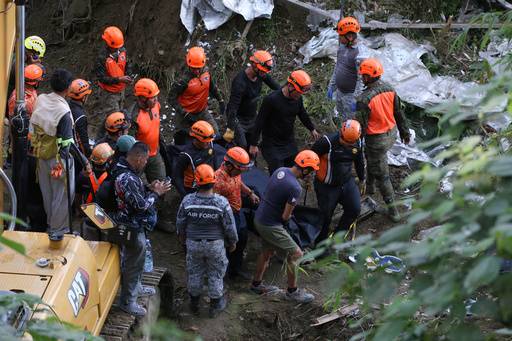
The death toll from the Binaliw landfill collapse in Cebu City climbed to four on Saturday as rescuers raced against time to find 34 others feared buried under the rubble of garbage and debris.
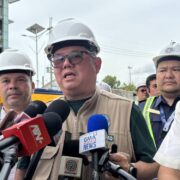
Regular operations at the landfill have been temporarily suspended while search, rescue and recovery work is ongoing, with Cebu City Mayor Nestor Archival saying his administration cannot simply shut the facility down without due process.
In a report by Cebu Daily News, Archival said the Department of Environment and Natural Resources (DENR) must be held accountable for regulatory lapses surrounding the landfill amid mounting questions over the operations of Prime Integrated Waste Solutions Inc. (PIWS).

Early warnings
“We are not actually the ones to say there is a violation—that is the DENR,” Archival said in an interview. “For the quarry, we can say stop. But there is a process to be followed to close the landfill. The one to say that this is no longer acceptable is the DENR, because they issued the ECC (environmental compliance certificate).”
The landfill, earlier described as taller than a 24-story hotel, collapsed on Jan. 8, killing workers, following years of documented complaints, alleged violations, and warnings from local officials. The four fatalities include an engineer and a female office worker.
As of Saturday, 12 injured workers have been rescued from the huge mound of garbage that collapsed among the low-slung buildings of the waste management facility.
“Authorities confirmed the presence of detected signs of life in specific areas, requiring continued careful excavation and the deployment of a more advanced 50-ton crane, which is en route with police escort,” Archival said in a statement.
Subject of complaints
“Safety of responders remains paramount due to hazards, such as unstable debris and acetylene risks, prompting adjustments to the security perimeter and controlled access,” he added.
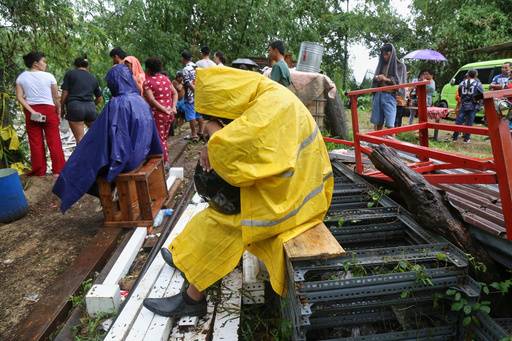
The Binaliw landfill has long been the subject of complaints from residents and local officials.
Before formally assuming his post, Archival already warned PIWS in June 2025 that the landfill could face closure if long-standing environmental issues were not addressed, including foul odor, untreated wastewater, and complaints of water contamination affecting Barangay Binaliw and neighboring Panoypoy village in Consolacion town.
“If they do not address these matters, together with DENR, we will be giving them a warning. If they continue to ignore us, we will have to close them eventually, but in a diplomatic way,” Archival said.
At the time, the Cebu City Solid Waste Management Board (SWMB) said the facility had violated Republic Act No. 9003, or the Ecological Solid Waste Management Act, by allowing practices tantamount to open dumping, an act prohibited under the law.

Despite confirming the violations, the board opted not to impose sanctions, citing a preference to help the operator correct the problems.
Following the deadly collapse, Consolacion Mayor Teresa “Nene” Alegado called on the DENR to act decisively on complaints raised by local government units, saying the delayed enforcement had tragic consequences.

“The LGU already complained. That means there was already a pending disaster waiting to happen—and now it really did,” Alegado said.
City and national authorities are conducting parallel investigations into the cause of the collapse, including possible regulatory, operational and environmental failures.

Unstable condition
They also said the landfill’s unstable condition continues to pose challenges to rescuers, requiring careful and phased operations.
Landfills and open dumpsites have long been a source of safety and health concerns in the country, especially in areas close to poor communities where many residents scavenge for junk and leftover food in the garbage heaps.
On July 10, 2000, a garbage avalanche at the Payatas dump in Quezon City killed more than 200 persons and buried thousands of homes. About 80 bodies had not been found.
The 50-foot mountain of packed trash collapsed after a week of heavy rain caused by Typhoons “Ditang” and “Edeng,” burying Sitio Pangako, which hosts as many as 3,000 informal settlers. —CEBU DAILY NEWS, AP AND INQUIRER RESEARCH
Source: Inquirer Archives