







Debt service eats up biggest slice of budget pie


(First of two parts)
When lawmakers shepherded the P6.793-trillion national budget through the legislative wringer last year, most of the public’s attention had been on the allocations for the more contentious, corruption-tainted agencies.
But one major part of the nation’s financial resources that largely escaped notice was the debt service that annually eats up a huge slice of the country’s national spending program—even before the first peso is allocated to any other budget item with no questions from Congress.
Under the 2026 General Appropriations Act, P950 billion was automatically appropriated for interest payments on the country’s debts—just P10 billion shy of the P960 billion allocated for the Department of Education.
On top of this is the P1.055 trillion that would go to principal amortization, essentially bringing the total debt service bill for 2026 to P2.005 trillion and dwarfing the constitutionally mandated budget allocation for education and more than four times the budget for health.
This makes debt service the single biggest expense item for the Philippines this year and every year prior.
Father’s legacy
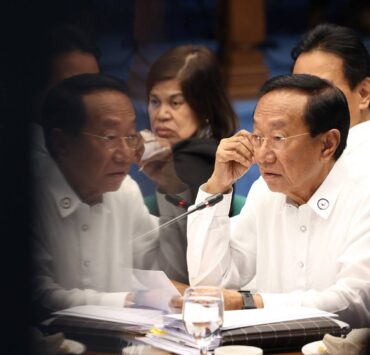
Former Budget Secretary Florencio “Butch” Abad said this debt service burden meant that much of the country’s funds were already spoken for before a single classroom is built or a hospital bill can be footed.
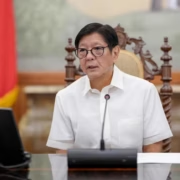
While the country’s debt position has not yet hit critical levels, it could well define the remaining two years for President Marcos, who inherited one of the worst legacies of his late father’s regime—the debilitating foreign debt accumulated by the dictatorship that continues to roll over to this day.
A May 1986 report by the University of the Philippines School of Economics said the foreign debt incurred by Ferdinand Marcos Sr. was “one of the biggest obstacles” to economic recovery in the final years of his dictatorship.
It said the Philippines was then one of the most heavily indebted countries in the world—seventh in size of debt, sixth in debt to exports ratio, fourth in debt to gross domestic product (GDP) ratio, and ninth in debt service ratio.
“Our inability to grow the economy and collect revenues has kept the problem practically there for the past so many years,” Abad told the Inquirer. “The problem with debt servicing is that you have no choice but to pay, which means it immediately crowds out investments that you need to make for infrastructure and social services.”
Decrees still in force
The automatic appropriation for debt service was mandated by presidential decrees (PDs) authored and passed by Marcos Sr. during the martial law years: PD No. 81 (Dec. 14, 1972); PD 1177 (July 30, 1977), which institutionalized automatic debt service appropriations; and PD 1967 (Jan. 11, 1985).
The UP School of Economics report noted that most of the Marcos Sr. projects financed by foreign loans were “unproductive” and “not well chosen or were probably chosen precisely to finance capital flight” through overpricing.
These projects required capital far beyond what domestic revenues could provide, making foreign loans the fastest financing option at that time.
One of the loan packages was for the Bataan Nuclear Power Plant, which initially amounted to $600 million but ballooned to $2.3 billion, making it one of the biggest foreign debts of the Marcos Sr. regime. In 2007, the government fully paid for the nuclear plant, which was never operated for safety reasons.
These martial law-era PDs remain in force today, despite the fall of the dictatorship in 1986 and the ratification of the 1987 Constitution. They were intended to ensure that the Philippines would not default.
Critics like the nonprofit Freedom from Debt Coalition (FDC) say that these decrees had constrained appropriations for essential social and economic services.
“What seems to have happened is that we have become accustomed to treating borrowing almost like using a credit card,” FDC secretary general Rovik Obanil said. “Instead of strengthening revenue generation, strengthening the economy so that government revenues grow, instead of reining in or reducing unnecessary expenditures, and of course, addressing the problem of corruption because a significant portion of funds also goes to corruption—we simply resort to borrowing automatically.”
Undoing Marcos decrees
In 1991, then Senators Teofisto Guingona and Aquilino Pimentel Jr. asked the Supreme Court to scrap these decrees, arguing that they violated the government’s constitutional mandate to prioritize education.
Guingona and Pimentel also contended that the PDs violated the constitutional provision that disallowed disbursements by the national treasury except through an appropriation law. Debt servicing unduly delegates legislative power to the President, who determines in advance the amount set aside for the debt payments, they added.

According to the high court ruling authored by Associate Justice Emilio Gancayco (Guingona v. Carague, April 22, 1991), the issue of whether the country should honor its international debts, especially the enormous amount incurred by the Marcos Sr. administration, should not be addressed by the high court but should be a task for Congress to repeal the mechanisms for automatic appropriations.
Since 1987, lawmakers have filed several bills to amend debt servicing legislation, but all of them languished in committee.
The late Albay Rep. Edcel Lagman pushed for a limit to external debt service payments since the 8th Congress (July 1987 to May 1992). The last attempt was made by the Makabayan bloc in 2022.
What each Filipino owes
In the Senate, among the last to file a bill to stop automatic budget allocation for debt service was Sen. Jinggoy Estrada. In 2013, he filed Senate Bill No. 876 to restore Congress’ full power of the purse by reviving Republic Act No. 4860, or the Foreign Borrowing Act of 1966, which was amended by PD 81.
When the Marcos dictatorship was toppled in 1986, the country’s outstanding debt was P528 billion, about 78 percent of the country’s GDP then. The debt per capita—or the amount of debt each of the 55.5 million Filipinos at that time owed—was P9,513.
By the end of November 2025, under the administration of his son and namesake, the Bureau of the Treasury reported that the country’s accrued debt climbed to a fresh all-time high of P17.65 trillion.
This means that each of the almost 114 million Filipinos, including newborns and those on their deathbeds, owes at least P154,824 of the national debt by end-2025. This amount will just keep growing as the government takes out more loans to keep the economy running. —WITH A REPORT FROM INQUIRER RESEARCH
******
Get real-time news updates: inqnews.net/inqviber