







DepEd: Tri-sem to help students learn better

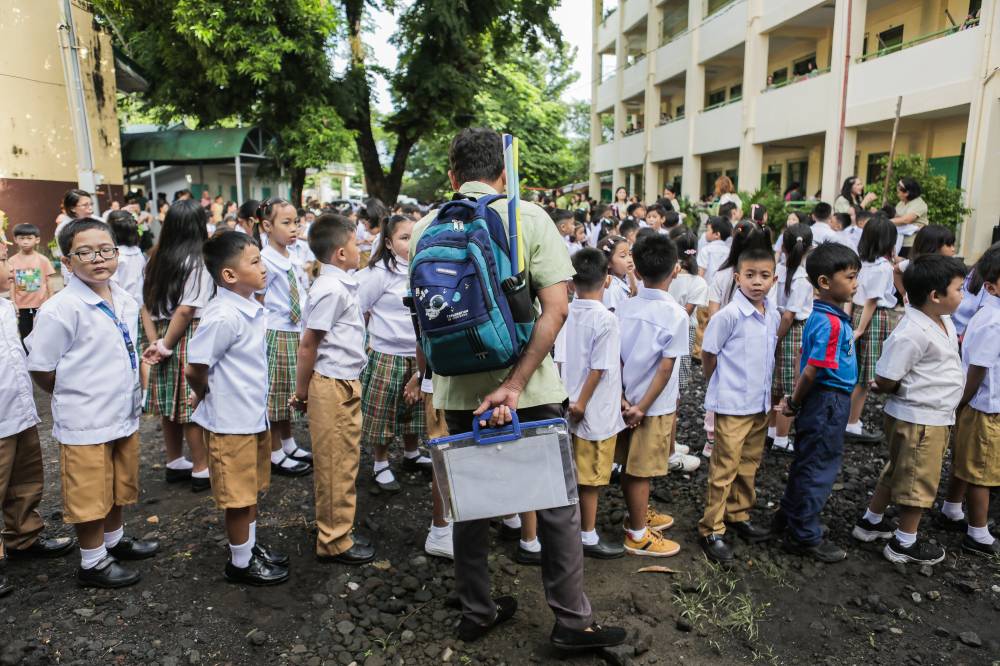
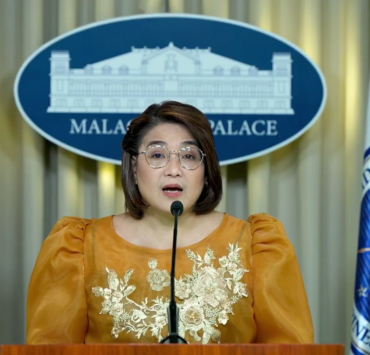
The Department of Education (DepEd) on Monday said the adoption of a trimestral school calendar would help address the long-standing inefficiencies affecting the country’s education system.
The shift from four grading periods to a three-term academic calendar for public schools, it stressed in a statement, would help students learn better “by redesigning how time is structured in schools.”
“This reform is the result of a rigorous, multi-stage consultation process that began in January 2026. Learners, teachers, school leaders, parents, and other stakeholders, as well as the House of Representatives and the Senate were engaged,” the DepEd said.
The reform, which was approved last week by President Marcos for implementation starting School Year (SY) 2026–2027, will address long-standing inefficiencies that have led to a loss of up to 53 teaching days in the 2023 to 2024 school year, it added.
Last year, a report by the Second Congressional Commission on Education and the Philippine Institute for Development Studies found that 53 teaching days had been lost because of nonteaching tasks and activities assigned to teachers, on top of class suspensions resulting from calamities or holidays.
Designated breaks
Under the proposed school calendar for SY 2026–2027, the 201 school days will be divided into three terms. Each term will have longer, continuous days of teaching to improve the pacing of lessons. There will be designated breaks in between the terms to give teachers time for lesson planning, output assessment and other professional tasks to further boost effective teaching.
Classes will begin in the first part of June, with the first trimester lasting until September. The second trimester will be from September to December, while the last trimester will be from January to the latter part of March to complete the 201 school days.
The first term will have 54 instructional days and a 10-day assessment period, including a five-day opening block, during which learner profiling, baseline assessments and essential administrative processes will be conducted.
This is to ensure that “when classes formally begin, instruction proceeds without disruption.”
The second term will include 55 instructional days and a 10-day assessment period, while the third term will have 61 instructional days and a shorter six-day assessment period.
On the other hand, school activities and celebrations that used to grab the attention of students from their lessons will now be strategically scheduled within a two-week “end-of-term block,” the DepEd said.
According to the agency, this period will also serve as “space for targeted remediation and enrichment for learners, in-service training for teachers, and wellness breaks for both teachers and learners.”
Adopting a trimestral calendar, the DepEd said, would likewise significantly streamline grading cycles, reduce reporting peaks and ease administrative burden, “allowing educators to concentrate on what matters most—effective instruction.”

“The three-term school calendar forms part of a broader, integrated reform agenda aimed at raising learning outcomes nationwide,” it said.
Other initiatives
“Ultimately, this reform is about making the school year work better for both learners and teachers, so that every day in school leads to deliberate and deep learning,” it added.
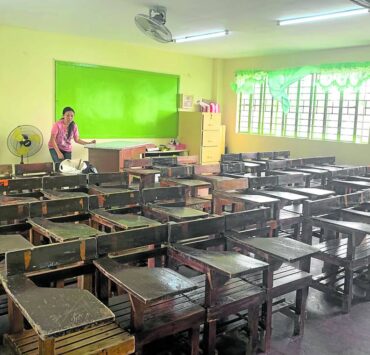
Aside from reforming the school calendar, the DepEd said it would further implement other initiatives to improve the education system, including the fast-tracking of classroom construction as well as the expansion of school-based feeding and nutrition programs.
It said it will also intensify its literacy interventions and ensure the provision of textbooks to all learners, while also refining the interagency policy on class suspensions.
In a previous interview, the Alliance of Concerned Teachers (ACT) urged the DepEd not to implement the new calendar, saying it was yet again another case of the government imposing changes without first holding public consultations.
ACT chair Ruby Bernardo said the proposal would not resolve the “fundamental problems” faced by the country’s education system, such as classroom shortages, low wages, excessive workloads and the lack of learning materials.