









DFA, SC agree to speed up recognition of foreign divorces


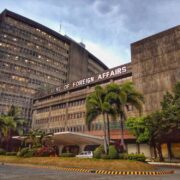
The Department of Foreign Affairs (DFA) and the Supreme Court signed an agreement on Wednesday to establish a centralized database of foreign divorce laws, a move meant to ease the costly and complicated process of having divorces obtained abroad recognized in Philippine courts.
Foreign Secretary Ma. Theresa Lazaro announced the signing of the tripartite memorandum of agreement (MOA), describing it as a step toward helping Filipinos facing legal difficulties over their marital status.
“A major win for every Filipino stuck in legal limbo—proving foreign divorce decrees in Philippine courts just got faster and easier with the signing today of the tripartite MOA (Memorandum of Agreement),” she said in a post on X.
The agreement was signed by the DFA, the Supreme Court committee on family courts and juvenile concerns, and the Office of the Court Administrator (OCA).
“By establishing a centralized database of foreign divorce laws, we are streamlining court proceedings and lifting the heavy legal and financial burden off our overseas Filipinos,” Lazaro said.
On July 1, the high tribunal approved the agreement on the establishment of a central repository of authenticated and updated foreign laws regarding divorce and the nullity or annulment of marriage.
It said that the repository is primarily intended to help parties opposing the recognition of foreign divorces obtain the applicable foreign laws needed to support their objections.
The signing comes two weeks after the Supreme Court approved amendments to the Rules of Court aimed at simplifying the requirements for Filipinos seeking judicial recognition of foreign divorces.
Under the amendments approved on Oct. 7, Filipino spouses covered by Article 26(2) of the Family Code will no longer be required to prove the applicable foreign divorce law when filing their petitions. Instead, they must establish that the foreign divorce took place.
The amendments also introduce a presumption that a foreign divorce between a Filipino and a foreign spouse allows the foreign spouse to remarry under foreign law, unless the divorce decree itself states that it is only a limited divorce.
The burden of proving that the divorce is not absolute falls on the party opposing the petition.
An English translation of a foreign divorce document is also presumed accurate if the translator certifies its accuracy under oath. Both presumptions may be challenged by presenting contrary evidence.
Obstacles identified
The Supreme Court said the changes were intended to address difficulties faced by Filipino spouses, particularly overseas Filipino workers, in obtaining authenticated copies of foreign laws and official English translations.
During consultations, the DFA identified several obstacles, including foreign family laws scattered across different jurisdictions, the absence of designated officials authorized to certify such laws in some countries, and the lack of official English translations from foreign ministries.
The high court, however, stressed that the amendments do not eliminate the requirement to file a petition for judicial recognition of a foreign divorce.

The substantive requirements under Article 26(2) of the Family Code also remain unchanged. The provision allows a Filipino spouse to remarry when a valid foreign divorce involving a foreign spouse gives the latter the legal capacity to remarry.
Recognition may still be opposed on grounds such as lack of jurisdiction, lack of notice, fraud, or a clear mistake of law or fact, according to the high tribunal.
The issue has also drawn attention in Congress.
In August, Senate President Pro Tempore Vicente “Tito” Sotto III filed Senate Bill No. 2388, seeking to establish a less costly administrative process for recognizing foreign divorces.
The bill would authorize the Department of Justice’s Office of the Chief State Counsel to recognize qualifying foreign divorce decrees, with petitions to be resolved within 180 days after submission of complete requirements, excluding appeals.
The proposed legislation is separate from the Supreme Court’s procedural amendments and Wednesday’s agreement.
Lazaro thanked Chief Justice Alexander Gesmundo, Associate Justices Amy Lazaro-Javier and Jhosep Lopez, and DFA personnel involved in the initiative.


