









DOH seeks bigger oral health care budget

The Department of Health (DOH) has urged the government to invest more in public oral health as the country marks Oral Health Month, noting that over 90 percent of Filipinos suffer from tooth decay due to lack of access to dental services.
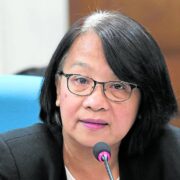
“It is difficult for the government to attract dentists because their salaries are very low. That is why we are lobbying for a salary increase,” Health Undersecretary Emmie Liza Chiong said in a recent interview on state-run PTV network.
The DOH’s National Monitoring and Epidemiological Dental Survey in 2021 showed that 92.4 percent of Filipinos had tooth decay (dental caries), while 78 percent had gum diseases (periodontal diseases).
However, there is only one dentist for every 53,000 Filipinos, far from the ideal ratio of 1 is to 7,500 as recommended by the World Health Organization.
“Hopefully, this will be approved so that more people will join this initiative to give greater attention to oral health by approving plantilla positions with higher salary grades and providing commodities for oral health,” Chiong said.
Based on the DOH’s National Database of Selected Human Resources for Health as of end-2025, only around 2,400 dentists are employed in the public sector.
Pay adjustment
Several bills, however, are pending in the House of Representatives and Senate seeking to raise the monthly entry-level salary for government dentists —Salary Grade (SG) 13 at P36,125 — to SG 17 at P49,562. Their private counterparts get P50,000 to P60,000 a month.
The bills also push for an upgrade in the monthly pay of Dentist VII, the highest-ranked in the plantilla (SG 28 at P167,129), to SG 30 at P210,718. These measures, however, remain pending in the committee level.
“There is really a shortage of dental supplies, equipment and personnel. While health services are devolved and should be the main responsibility of local government units, we make sure that we at the DOH do our part to help,” Chiong said.
“That is why we are calling for a bigger budget for the oral health program, because it is currently very small and our resources in the department for oral health are very limited,” she added.
The DOH is also pushing for the revival of its Oral Health Bureau “so we will be in a better position to lobby for a bigger budget.”
According to Chiong, of the P450-billion budget allotted for universal healthcare in 2026, less than 1 percent, or merely 0.14 percent, was dedicated to oral health.

“We hope the budget will increase so that we can purchase more supplies that can reach our fellow Filipinos, especially those in remote areas and local government units [that] commodities often do not reach,” she said.
“Because we have limited resources, we also have limited commodities for a large number of Filipinos, which is truly disheartening,” she added.
Oral care package
Chiong urged the public to take advantage of outpatient dental benefits of P1,000 per member offered by the Philippine Health Insurance Corp. (PhilHealth).
Part of the primary care package, it covers annual routine preventive oral care services such as mouth examination or oral screening, oral prophylaxis or cleaning, and fluoride varnish application.
Chiong said the PhilHealth package was approved in 2024, although not many are aware of it. , in fact, the health of the entire body—from head to toe—depends on it. Even minor oral health issues can have effects on the heart, the eyes, and other parts of the body,” she said.
“This should be realized by more people so that our budget can be increased. So to our lawmakers, I am appealing to you to carefully look into the status of oral health across the Philippines,” Chiong said.