






DPWH gets 40% less than desired budget for 2026

The bicameral conference committee on the 2026 national budget ended a three-day impasse over the allocation for the Department of Public Works and Highways’ (DPWH) by agreeing to cut it down further to P529.6 billion, or P351.4 billion less than the P881 billion originally proposed by Malacañang.
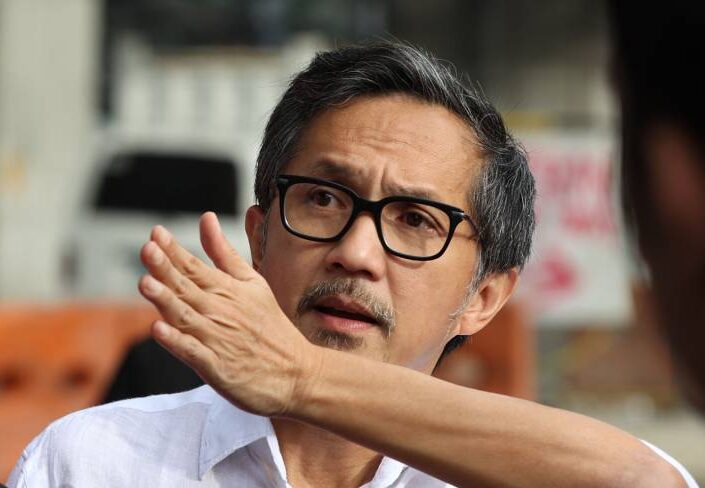
It was a surprising resolution to the standoff caused by Public Work Secretary Vince Dizon’s request to restore the P45 billion earlier slashed by the Senate, which would have essentially restored the DPWH budget to the House-approved level of P624 billion. Dizon then expressed concern that a cut of that size would affect the implementation of 10,000 DPWH projects.
On the sixth day of the bicameral talks, Senate finance chair Sherwin Gatchalian said the committee managed to generate P20.7 billion in “savings” after recomputing the costs of the 10,000 projects cited by Dizon.
The savings were realigned to the Philippine Health Insurance Corp. and the country’s disaster risk reduction management fund. (See related story on Page A2)
First to be livestreamed
The panel finally adjourned at 2:22 a.m. Thursday after conferring Gatchalian and House appropriations committee chair Rep. Mikaela Suansing the authority to reconcile the general and special provisions of the General Appropriations bill (GAB).
Suansing also served notice to Gatchalian that there would be modifications for roads and bridges projects across basically all regions worth P7.9 billion.
In reply, Gatchalian told Suansing to make sure that all projects have station numbers and coordinates “so that our constituents will know where exactly those infrastructures will be built.”
This year’s bicameral deliberations on the budget were the first to be opened to the public, via livestreaming, in the history of Congress. Past conferences were held behind closed doors, almost always arousing suspicions that anomalous insertions were made in the final draft of the budget.
Dizon on Thursday said his agency would have to “make do” with what was approved by Congress even though it was 40-percent lower than what was proposed in the National Expenditure Program (NEP) prepared by Malacanang.
Options
“That’s okay because I believe, the President believes, and the Congress believes that what’s important in the budget is that it’s clean and it’s implemented correctly,” he said.
But Dizon said the DPWH would now have to assess whether some projects would have to wait because of the reduced budget.
Still, he said there are still options to address any future shortage of funds.
“We can modify it. Or, if we have savings, which I’m quite confident we will have large savings in 2026, we can use that to complete the projects. So there are rules for that. But the important thing is, we already have a budget. There is clarity. Now, it’s execution time,” he said.
To guard against the misuse of funds, Dizon reiterated that the DPWH will be applying its updated Construction Materials Price Data to all of its projects that will be approved by Congress.
Transparency portal
All DPWH projects and related information will also be published in the agency’s transparency portal that was launched in November.
The portal—which can be accessed through https://transparency.dpwh.gov.ph—will include “not just the [total cost of the project], but by how much it was reduced,” Dizon said. “Hopefully, they can do that in the next month and a half to two months.”

Budget timeline
Both the Senate and the House agreed to ratify the final draft of the P6.793-trillion national budget and have it transmitted to President Marcos for signing on Dec. 29.
Explaining the new timeline, Gatchalian said “It was originally supposed to be ratified by the House and the Senate on [Dec. 22], but based on the timetable of the staff, the signing will be on the 28th and the ratification on the 29th.”
“This is because of the balancing and the printing—since we still have to reconcile our numbers with theirs. That process alone would take five days,” Gatchalian said. “Then there’s Christmas as well, including ‘noche buena.’ So roughly around the 28th, we’ll come back to sign, and then on the 29th to ratify.”
Both chambers of Congress are supposed to adjourn session on Dec. 19, but it was adjusted to Dec. 23 to pave the way for the budget approval. The adjournment will now be on Dec. 29.
Gatchalian and Suansing made assurances that there would be ample time for President Marcos to review the budget.
“What we are doing now is that the review by the Department of Budget and Management (DBM) is already synchronized. DBM is the one conducting the review—actually, we are in talks with [Acting Budget] Secretary [Rolando] Toledo. As we speak, they are already monitoring using the real-time numbers they have. At the same time, we are also sending them data. So their review is being done in real time,” Gatchalian explained.
“That’s what we worked out with the DBM—that as we finish with each agency, we already start sending the documents to the DBM. The finalization of the enrolled bill of the GAB and the DBM’s review are being done simultaneously, so rest assured that the executive is given enough time to review the GAB before the President signs it,” Suansing added.