








E-trikes banned on major NCR roads; group wants it PH-wide

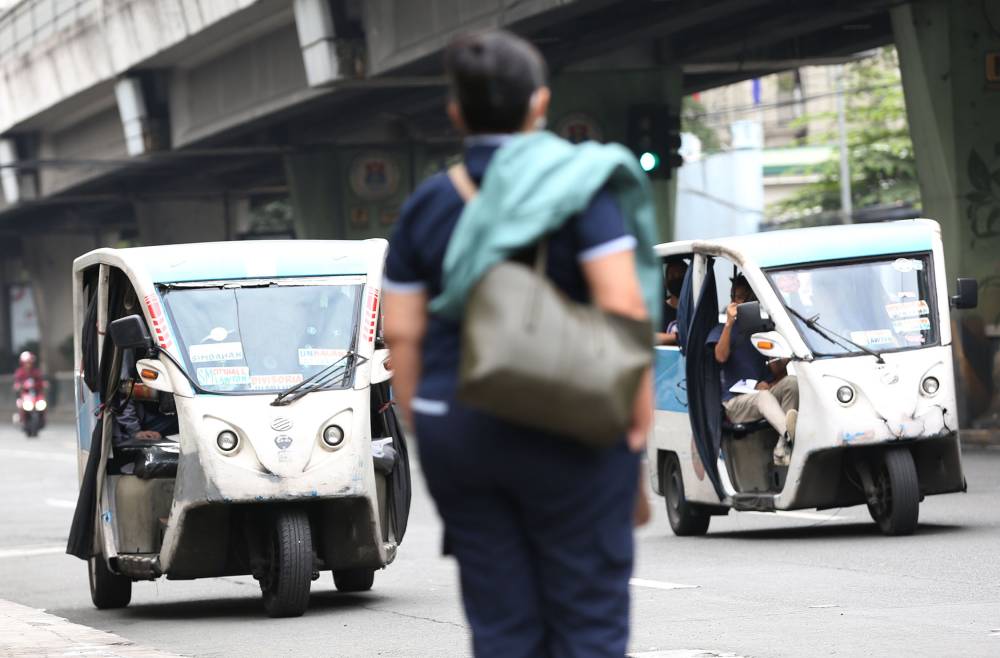
The Electric Vehicles Association of the Philippines (EVAP) welcomed the Land Transportation Office’s (LTO) ban on electric tricycles (e-trikes) on major roads in the National Capital Region (NCR), even as it called for a “clearer implementation” of the rule.
It added that the ban should cover more roads beyond Metro Manila.
Road safety
“We actually find the areas identified to be lacking … The implementation should be nationwide since complying with the LTO requirements is no joke,” EVAP president Edmund Araga said in a phone interview with the Inquirer.
“At the end of the day, we need safety rules. We have to make it safe for road users and this is a good opportunity to ban vehicles that are not compliant and do not obey traffic rules,” he added, noting that e-trikes risked passengers’ safety because they are made of light materials.
The LTO, citing “general considerations of road safety,” implemented the ban on major thoroughfares in the metro starting Friday.
These include Epifanio de los Santos Avenue (Edsa), C-5 Road, Roxas Boulevard, and the stretch from Quirino Avenue to the Magallanes-South Luzon Expressway, in compliance with rules set by the Metropolitan Manila Development Authority.
“This enforcement is based on general considerations of road safety. These major roads are designed for faster and larger vehicles and are not suitable for e-trikes due to traffic speed, volume of vehicles, and the width of the roads. Mixing slow-moving and lightweight vehicles on this type of road poses a clear danger to all road users,” LTO chief Markus Lacanilao said at a press release on Jan. 1.
Lacanilao said the agency “recognize[s] that many people rely on e-trikes as a means of transportation, which is why the LTO is ready to work with local government units (LGUs) and industry sectors to develop safe and appropriate routes for e-trikes […].”
Clear rules
The LTO planned to deploy law enforcers in critical areas to inform motorists of the rules and ensure proper implementation. However, it warned that those caught operating e-trikes in prohibited areas will face sanctions, including the imposition of fines and the possible impoundment of their vehicles.

Araga said EVAP welcomes the new regulations but called for a clear set of rules. He noted that the LTO already had specific regulations on electric motor vehicles through Administrative Order No/ 039-2021, but it was suspended in 2024 by the agency’s then chief Vigor Mendoza.
Araga added that EVAP was open to working with the LTO in crafting regulations and routes for e-trikes, an offer that was echoed by Bicol Saro Rep. Terry Ridon.
“Our goal is to work closely with the LTO and the leadership of the Department of Transportation on new policies for registering LEVs (light electric vehicles) weighing over 50 kilograms, licensing their operators, and providing road safety education for everyone who purchases these vehicles,” Ridon said in a statement on Friday.
He welcomed the development, saying it “reflects a more understanding and people-centered policy on light electric vehicles,” noting that many commuters rely on e-trikes and e-bikes. —WITH REPORTS FROM FAITH ARGOSINO, LUISA CABATO