



Edsa 3, ZTE, ‘Hello, Garci’: Crisis after crisis under GMA

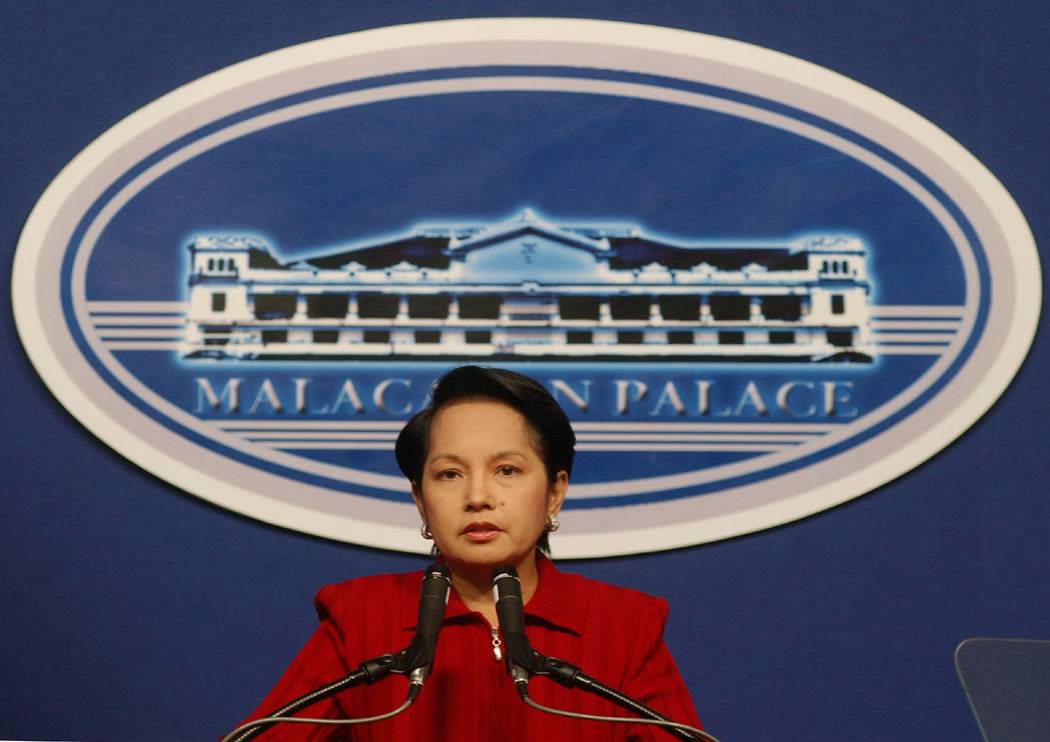
At an event outside Metro Manila on Nov. 29, 2007, we Palace reporters were covering President Gloria Macapagal-Arroyo when she abruptly ended her appearance and rushed back to Malacanang.
Joyce Pañares, a colleague from the Manila Standard, noted that someone had passed a message to Arroyo at the venue before her unexpected departure.
With no explanation for the President’s abrupt exit, reporters likewise left the venue in a mad dash to join the presidential convoy.
It was a long way back and a frantic ride to the Palace. The President’s vehicle later exited somewhere along the South Luzon Expressway, leaving the other parties in her convoy, including the media, behind.
We later learned that Arroyo had stopped along the way to take the presidential helicopter back to Malacañang, a quicker route for what seemed to be an emergency.
Nerve-wracking coverage
It was. We learned that she was facing an attempted coup—the occupation of the Manila Peninsula Hotel in Makati City by Magdalo soldiers led by then Navy Lt. Antonio Trilanes IV (an elected senator by then) and Army Brig. Gen. Danilo Lim.
The officers and soldiers, who were on trial for the so-called 2003 Oakwood mutiny, had walked out of their court hearing at the Makati City Regional Trial Court and walked the streets of Makati City to call on Arroyo to step down for alleged corruption. They later holed up inside the hotel, as they did when they occupied the Oakwood luxury apartment three years ago, and continued to rail against the Arroyo administration.
It was another nerve-wracking coverage as we waited how the President would deal with yet another crisis. It was not a long wait, though, because on the same day, Trillanes, Lim, and the Magdalo soldiers eventually surrendered to authorities after a six-hour-long standoff that ended with the military sending armored personnel carriers and government forces barging into the hotel to arrest them.
After that long, tumultuous day, yet another crisis had been averted in the administration of Arroyo, whose nine-year presidency would be the longest in the country. Her administration was also marked by coup plots, the Edsa 3 uprising, and other damaging controversies involving corruption allegations.
Palace beat
These were the major events I covered while on the Palace beat from 2005 to 2007 and then again in 2008.
Before I covered the Arroyo presidency in March 2005, I got to know her because I was one of the few reporters assigned to cover the then vice president of President Joseph Estrada.
I would tag along with Vice President Arroyo on her provincial visits, who was also the secretary of the Department of Social Welfare and Development at the time.
I was initially surprised at how she could easily switch from Tagalog to Bisaya when she spoke to the crowds. This was something she also did when she became president and would address crowds in sorties outside Metro Manila (to the chagrin, however, of Manila-based reporters who couldn’t understand the regional languages).
Arroyo, as a child, had spent time in Iligan City in Lanao del Norte where her grandmother lived, and that accounted for her proficiency in the Visayan dialect.
I covered Arroyo until the time she succeeded Estrada after another tumultuous event, the Edsa People Power 2 in January 2001.
I got to interview her shortly after Edsa 2, and one of the questions I asked her was whether she was a religious person (given her fateful ascent into power). She replied in the affirmative.
Covering her presidency, I would hear her aides say that she would start her day by going to Mass every morning at the Palace chapel.
An understatement
To say that covering Arroyo was an intense experience, given the roller-coaster series of upheavals that she faced as vice president and as president, is an understatement.
Three months into covering her as president, in June 2005, the “Hello Garci” scandal broke out, where a wiretapped phone conversation between Arroyo and an election official allegedly showed she had rigged the 2004 presidential election.
I was there when the President apologized for talking to the election official that she did not name, but was said to be Elections Commissioner Virgilio Garcillano. In the wiretapped phone conversation, they talked about the 2004 presidential elections which Arroyo had won over popular movie actor Fernando Poe Jr., and Arroyo could be heard inquiring about one million votes that she supposedly won.
While she said sorry to the nation, Arroyo only admitted to committing the mistake of talking to the election official—what she called “a lapse in judgment” to protect her votes.
There were calls for her resignation, and as expected, Palace officials defended the President.
I remember the tense atmosphere in the Palace press room every time the political crisis seemed to be getting worse. These included the resignation of key Cabinet officials led by Social Welfare Secretary Corazon “Dinky” Soliman, known as Hyatt 10, and the calls made by Poe’s widow, the equally popular movie star Susan Roces, who refused to accept her apology and accused the President of stealing the election.
In the end, Arroyo survived the controversy despite calls by civil society, including the late President Corazon Aquino, for her to resign.
State of emergency
Several months later, military coup jitters hit the Palace on Feb. 24, 2006, when Arroyo declared a state of emergency to stop an attempt by some generals to overthrow her administration.
We were later told that General Lim and some soldiers were planning to join antigovernment demonstrations during the celebration of the anniversary of the 1986 Edsa People Power uprising and declare their withdrawal of support from the President.
I went to Malacañang immediately, but was stopped from entering the gates, along with other reporters. By that time, the Palace was heavily guarded, but some reporters who had arrived earlier were able to enter without notice.
After several minutes of waiting and after calls to the then presidential chief of staff, Michael Defensor, we were allowed to go to the media office.
We learned that a news conference would be called within the day to explain the state of emergency. The late Justice Secretary Raul Gonzalez was among the officials who strongly defended the declaration above the din of reporters who were peppering him with questions on its legality.
It did not help that authorities then raided the office of the Daily Tribune, igniting fears of a clampdown on the media.
And because the administration was facing yet another crisis, reporters decided to stay overnight in the Palace grounds to keep vigil.
We rushed to a nearby mall to buy clothes and necessities for at least an overnight stay. It was a Friday night, and we only had a few hours to get our things before the mall closed.
The media had been assigned an old house in the Palace grounds where we could spend the night. Later that night, Press Secretary Ignacio Bunye dropped by to tell us that Palace officials had been told to go home, a sign that the crisis had somehow eased.
The state of emergency proclamation was lifted after a week.
Broadband controversy
Upon returning to cover the President in late 2007, another crisis hit her administration, and new calls for resignation and rallies were launched, this time over the ZTE-NBN broadband controversy.
Arroyo and her husband, first gentleman Jose Miguel Arroyo, were alleged to have received kickbacks from the $300-million project to establish a national broadband network in the country, which had been awarded to China’s ZTE Corp.
The President eventually canceled the contract after a Senate investigation into the deal saw the son of former Speaker Jose de Venecia alleging that the contract was overpriced to accommodate kickbacks for then Commission on Elections Chair Benjamin Abalos, who brokered the deal.
The hearing also produced whistleblower Rodolfo “Jun” Lozada, a consultant of the ZTE-NBN deal under Romulo Neri, then the head of the National Economic and Development Authority. Neri also alleged in the hearing that Abalos had offered him a commission in exchange for approving the contract.
The President and her coaccused would eventually be exonerated of plunder in the ZTE-NBN case.
Intense defense
A check on stories I wrote during yet another crisis time for the President showed the intensity of the Palace defense, with Cabinet officials and allied local officials even engaging in a “unity walk” in support of Arroyo. The children of President Arroyo also came out to push back against the criticisms of their parents.
Indeed, during such crisis moments, Arroyo would leave her officials to speak for her, particularly Bunye, Defensor, and Executive Secretary Eduardo Ermita. She held press conferences too, but she usually gave her reactions through statements or speeches released by the Palace.
Looking back, there were times that my colleagues and I would huddle before a presser or an ambush interview to ensure we could ask questions that would guarantee an answer from the President. Since some of us had covered Arroyo when she was VP, some of us reporters knew which questions would get a response and which ones would get shot down.
For instance, I recalled that Arroyo would reply to speculative questions with her standard “I do not have a crystal ball,” and so we tried to be precise in our questions to avoid such a non-answer.
‘Political noise’
Reacting to calls for her to resign, Arroyo’s oft-repeated answer was that she was focused on the economy “like a laser beam.”
Her officials would also dismiss the resignation calls as “political noise.”
Arroyo also often brought up her father’s reminder to her about holding public office: “To do what’s right, do your best, and God would take care of the rest.”
Whatever one could say about her, Arroyo survived her presidency and beat the odds. That, incidentally, was also the name of her centerpiece program launched in 2004, a 10-point agenda for achieving national development goals until the end of her term in 2010.