









Europe, Middle East divided on Board of Peace for Gaza

JERUSALEM—Divisions emerged Wednesday over US President Donald Trump’s Board of Peace as its ambitions have grown beyond Gaza, with some Western European countries declining to join, others remaining noncommittal and a group of Muslim countries agreeing to sign on.
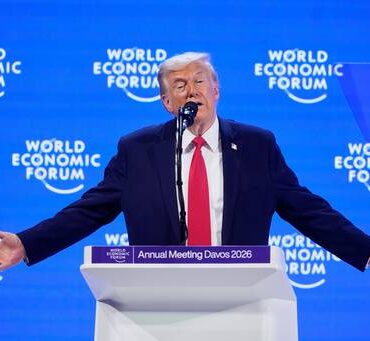
The developments underscored European concerns over the expanded and divisive scope of the project—which some say may seek to rival the UN Security Council’s role in mediating global conflicts. Trump is looking to form the board officially this week on the sidelines of the World Economic Forum meeting in Davos, Switzerland.
Norway and Sweden said they won’t accept their invitations, after France also said no, while a bloc of Muslim-majority nations—Egypt, Indonesia, Jordan, Pakistan, Qatar, Saudi Arabia and the United Arab Emirates—said in a joint statement that their leaders would join.
It was not immediately clear how many countries would accept. A White House official said about 30 countries were expected to join, and about 50 had been invited. Two other US officials, who similarly spoke on condition of anonymity to describe internal plans not yet made public, said roughly 60 countries had been invited but only 18 had so far confirmed their participation.
Mediator for other conflicts
Trump was sunny about the prospects ahead of an event Thursday tied to the board, saying of the countries that were invited that “some need parliamentary approval but for the most part, everybody wants to be on.”
Later, Trump defended his choice of invitees, including some leaders considered to be autocratic. “I have some controversial people,” he said. “But these are people that get the job done. These are people that have tremendous influence.”
Chaired by Trump, the board was originally conceived as a small group of world leaders overseeing the Gaza ceasefire plan. But the Trump administration’s ambitions have since expanded into a more sprawling concept, with Trump hinting at the board’s role as mediator for other global conflicts.
Norway, Sweden say no
Israel’s Prime Minister Benjamin Netanyahu said he’s agreed to join the board—a departure from an earlier stance when his office criticized the makeup of another committee tasked with overseeing Gaza.
Norway’s state secretary, Kristoffer Thoner, said the Scandinavian country would not join the board because it “raises a number of questions that requires further dialogue with the United States.”

Swedish Prime Minister Ulf Kristersson said on the sidelines of Davos that his country wouldn’t sign up for the board as the text currently stands, Swedish news agency TT reported, though the country hasn’t formally responded.
Broad mandate
Slovenian Prime Minister Robert Golob said that “the time has not yet come to accept the invitation,” according to the STA news agency. The main concern is the board’s mandate is too broad and could seriously undermine international order based on the UN Charter, Golob said.
France declined the invitation earlier in the week. French Foreign Minister Jean-Noel Barrot said, “Yes to implementing the peace plan presented by the president of the United States, which we wholeheartedly support, but no to creating an organization as it has been presented, which would replace the United Nations.”
The United Kingdom, the European Union’s executive arm, Canada, Russia, Ukraine and China also have not yet indicated their response to Trump’s invitations.