





Evangeline Rodriguez: Guardian of ancestral lands, voice of indigenous women

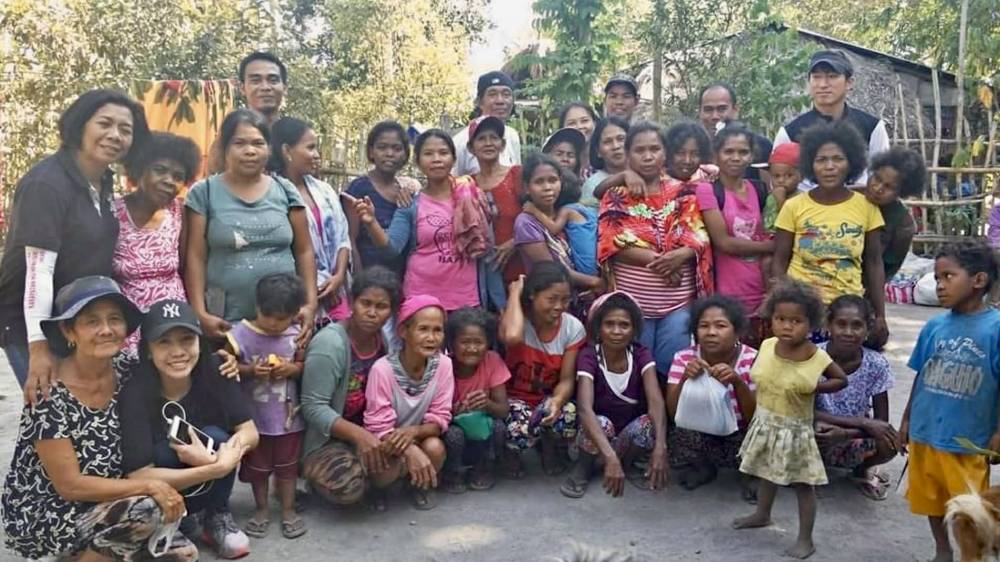
OLONGAPO CITY—In New Cabalan, a resettlement community in this city where many Aeta families were relocated after their ancestral lands became the US Subic Bay Naval Base, generations of indigenous peoples grew up rebuilding their lives far from the forests and mountains they once called home.
One of them was Evangeline Rodriguez, 61, who was raised among displaced Aeta Ambala communities in Bataan province and later became a leading advocate for indigenous women and ancestral land rights.
Born into a family deeply involved in traditional leadership, Rodriguez is the eldest of eight children of Gregorio Quiambao Jr., a respected Aeta Ambala leader who served as a spokesperson for indigenous communities as early as the 1960s. Her mother, meanwhile, came from Cavite province.
Despite their mixed heritage, Rodriguez and her siblings were raised firmly within Aeta traditions. Their father ensured that respect for elders, cultural rituals, and indigenous values remained central to their upbringing.
Rodriguez passed on those traditions to her seven children, continuing a cultural legacy that has endured despite generations of displacement and change.
Rodriguez’s early exposure to leadership came from accompanying her father to community gatherings and discussions on indigenous rights.
During a time when many Aetas were afraid to speak out, her father worked to educate tribal members about the injustices they faced and encouraged them to assert their rights.
His advocacy helped awaken awareness among indigenous communities that had long been marginalized and exploited.
“He opened the eyes of many in our tribe. Before that, many Aetas were very afraid,” Rodriguez told the Inquirer.
For Rodriguez, these experiences planted the seeds of her own commitment to community service.
Their partnership in community work continued for decades until her father’s death more than three years ago. Before Gregorio died, he reminded his daughter of her responsibility.
Early community service
“He told me not to give up on our tribe,” Rodriguez said. “He said there would be no one else who would truly care for them.”
Although she initially doubted whether she could carry the responsibility, his words stayed with her.
Rodriguez once aspired to become a nurse. At the time, opportunities were opening for indigenous scholars to train in health care and eventually work in hospitals.
She traveled to Baguio City to pursue nursing studies, but cultural beliefs within the Aeta community discouraged families from allowing young women to live far from home.
She eventually returned to Olongapo City and shifted to business administration, graduating from Network Computer Colleges in 1995.
Even before finishing her studies, Rodriguez had already begun working within her community.
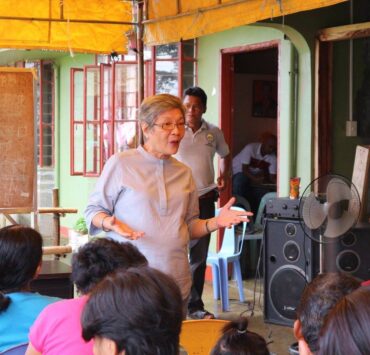
Her active involvement alongside her father drew attention from local leaders, who encouraged her to participate in seminars and training programs.
She later served as a community health worker and daycare teacher for indigenous children in New Cabalan—roles that allowed her to support families who preferred caregivers and educators from their own tribe.
“Many of them feel more comfortable when the one teaching or caring for them is someone from their own community,” she said.
These experiences strengthened her connection with the community and deepened her understanding of the challenges indigenous families faced.
Rodriguez eventually helped organize a women’s group that grew into Alyansa ng Katutubong Kababaihan ng Pilipinas Inc. (Alikkap), a national network advocating for indigenous women’s rights.
The movement began in 2013 as Alyansa ng Katutubong Kababaihan ng Olongapo. It later expanded to Hermosa, Bataan, before evolving into a broader organization connecting indigenous women across the country.
The alliance was formally registered with the Securities and Exchange Commission in 2019.
Rodriguez’s involvement in national platforms helped expand the organization’s reach across Luzon, the Visayas, and Mindanao.
In 2014, she became a member of the Open Government Partnership in Malacañang, a platform for civil society organizations working with the government.
Empowerment
Through this engagement, she saw the need to unify indigenous communities nationwide.
“Our rights are often exploited because indigenous groups are divided. But if we are united, our voices will be stronger and people will hear us,” Rodriguez said.
By bringing indigenous women together under one alliance, she hoped to strengthen their ability to advocate for land rights, cultural preservation, and equitable development.
Rodriguez believes that empowering women can transform entire communities.
“Women have power and influence over decisions and values in the family,” she said. “When a mother is equipped and learns something, she can pass it on to her husband, children, and later to their communities.”
Through Alikkap, Rodriguez has worked to create programs that train indigenous women in leadership, disaster preparedness, environmental protection, and sustainable livelihoods. She has also become involved in policymaking spaces rooted in traditional knowledge.
Rodriguez currently serves as the environment representative of the Regional Development Council in Central Luzon, where she participates in discussions on environmental policies and regional planning.
Her involvement in the council has allowed her to observe the gaps between government programs and the realities experienced by marginalized communities.
“Many programs are created, but the people at the margins rarely feel their impact,” she said.
Despite the challenges of advocacy work, Rodriguez remains determined to continue.
“Nobody can stop me,” she said. “If we do not act now, the next generation will suffer even more.”
Over the years, she has seen a gradual transformation within her community. Indigenous women who once hesitated to speak in public have begun expressing their concerns and asserting their rights.
“They were once afraid to speak even when they were already being stepped on,” she said. “But when they saw someone willing to stand up for them, they also found the courage to speak.”
Vision for equality
As she grows older, Rodriguez has started mentoring young indigenous women who can carry the work forward.
Preparing the next generation of leaders is central to her vision of ensuring that indigenous communities remain resilient even after current leaders step aside.
Her dream is to see indigenous communities empowered, respected, and free from discrimination.
“I want indigenous peoples to feel that we are not different from others,” she said. “We all deserve equal rights.”
In leading indigenous women and guiding the next generation, Rodriguez remains anchored to the memory of her father—the leader who inspired her to serve.