











Ex-Japan PM Abe’s shooter gets life term

A Japanese court on Wednesday sentenced the man charged with the fatal shooting of former Prime Minister Shinzo Abe in 2022 to life in prison, calling the firings using a homemade gun with sufficient lethal power “vile and extremely vicious.”
The Nara District Court handed down the sentence to Tetsuya Yamagami, 45, as prosecutors had demanded.
Yamagami admitted to murdering Abe with a homemade firearm while the former premier delivered a stump speech in the western Japan city of Nara.
During the trial, which uses a lay judge system, his defense counsel argued that his prison term should be no more than 20 years. They claimed that Yamagami was a victim of harm caused by a religious group and that his “tragic” upbringing motivated him to kill Abe.
Financial ruin
The defendant said he held a grudge against the Unification Church because his family suffered financial ruin due to his mother’s large donations to the religious group, with the payout totaling 100 million yen ($633,000).
He said he believed Abe, who was 67 when shot, was “at the center of the Unification Church’s political involvement” in Japan. Abe, who was Japan’s longest-serving prime minister, had remained an influential political figure even after he resigned in 2020.
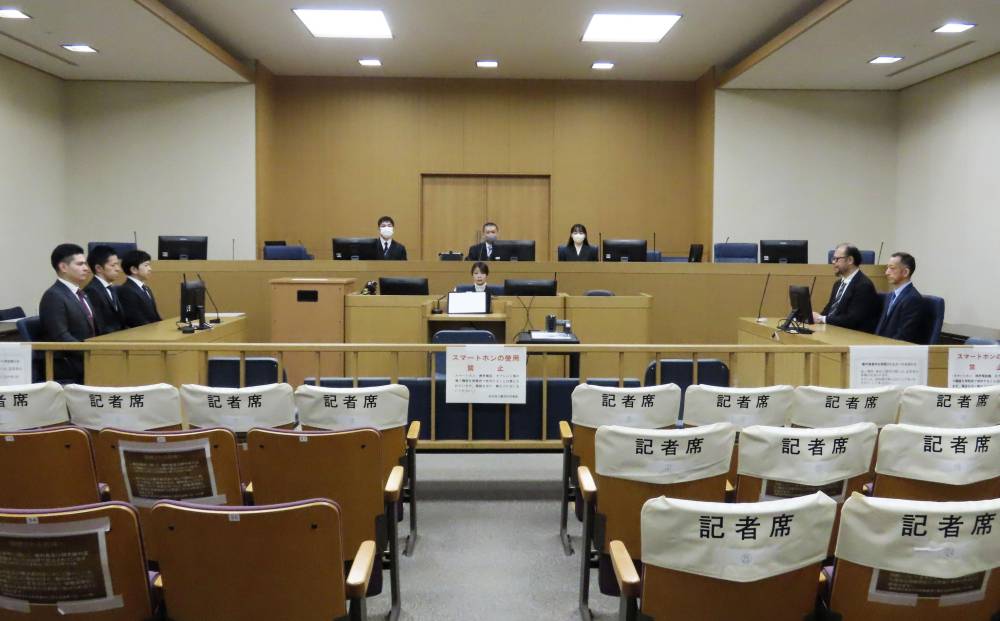
For the high-profile trial, a total of 685 people lined up in the morning to draw lots for the 31 public seats available in the courtroom.
The court found Yamagami guilty of not only the murder charge, but also of violating the gun discharge provision stipulated in the firearms and swords control law.

Ruinous donations
The defense team argued that Yamagami’s homemade firearm was not covered by the law at the time of the incident.
With the case shedding light on the Unification Church’s solicitation of ruinous donations from members, a government probe was launched, leading to the Tokyo District Court’s order for the church to be dissolved and stripped of its tax benefits as a religious corporation.
A law was enacted in December 2022 to regulate manipulative fundraising tactics by organizations as the suffering of children of Unification Church members—referred to as “second-generation” followers—drew public attention.