








Eyes on DPWH ‘allocable’ funds as bicam talks start on budget

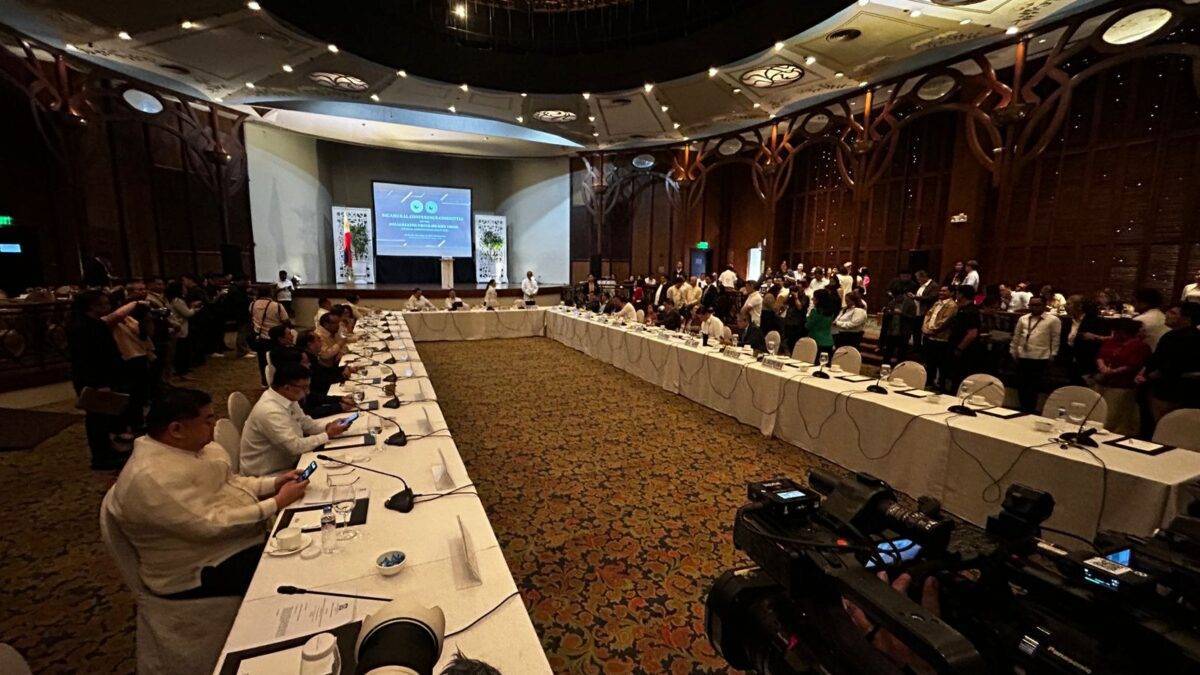
As members of the congressional bicameral conference committee start deliberations today on the proposed 2026 national budget, many eyes will be on the so-called “allocable” funds for lawmakers, which critics question for allegedly being a new form of pork barrel.
The allocables raise a red flag that remains in both the Senate and House versions of the General Appropriations Bill (GAB), according to civil society groups keeping watch on the budget process.
The idea behind the funds, said to be the brainchild of former Public Works Undersecretary Catalina Cabral, was to ensure that each district gets an equitable share in the government’s infrastructure budget.
Documents from the Department of Public Works and Highways (DPWH), however, show that the formula—called the “baseline balanced managed” (BBM) parametric formula and crafted during the first year of the Marcos administration—is not so straightforward and relies heavily on subjective criteria that could be prone to politicking.
Public Works Secretary Vince Dizon, who once admitted that he could not understand Cabral’s formula, was unable to rework the districts’ allocation in time for the budget deliberations. This means the current DPWH budget set at P568 billion was computed based on the concept that Dizon found vague.
Parameters
The “formula” is split into three parts: the equitable minimum allocation per region, which must be equivalent to the historical minimum allocation that that region receives from the DPWH.
Cabral told Congress that the historical lowest allocation per region was 3.8 percent of the DPWH total budget per region.
The second part refers to the minimum infrastructure budget per capita, which depends on the region’s population, while the third part refers to the minimum infrastructure density per square kilometer for distribution toward balanced growth.
Despite these parameters, the document does not state how these variables determine the allocable fund per district.
The DPWH document instead shows that the agency has much leeway in allocating “premiums”—or additional funds—for regions with “poverty rates above the regional average”; districts with “high absorptive capacity”; and districts with “exceptionally high climate vulnerability.”
‘No science to it’
None of these are explicitly stated in Cabral’s so-called formula, which has stumped not only Dizon but also some lawmakers.
As Batangas Rep. Leandro Leviste earlier noted: “When you talk of a formula, there should be an equation where you plug in the inputs, you get certain outputs, regardless of who’s the congressman in that district.
Instead, the allocable formula “is more of a narrative that takes into account certain factors … and this is important because the 2026 budget still uses the amounts that Cabral said. And in that regard, Cabral is more powerful than Congress in terms of deciding the budget allocation of the DPWH.”
“There is no science to it,” Navotas Rep. Tobias Tiangco pointed out. “The DPWH is supposed to be dabbling in engineering, math, and yet the budgets are based on political considerations or whoever is ‘malakas’ … not to mention, (the projects within it and their proponents) are impossible to trace.”
Based on her ‘feelings’?
He added that congressmen “don’t exactly complain about the system (even if they’re at a disadvantage) because either they don’t understand it or because they don’t want people checking their own.”
According to BetterGov.ph, the top five regions with the highest infra allocations under the 2026 DPWH budget in the GAB’s House version are: Calabarzon (P18.52 billion); Central Luzon (P15.7 billion); Northern Mindanao (P14.01 billion); Bicol (P12.55 billion); and Eastern Visayas (P12.51 billion).
Former Budget Secretary Florencio “Butch” Abad explained that the idea of allocables by itself “is not illegal, because no matter what, you really have to find a formula for allocating your infrastructure budget.”
“But what should a reasonable formula look like?’’ Abad said in a recent talk with Inquirer editors and reporters.
“That’s going to be hard. But regardless, what’s clear is that the infrastructure budget must be determined by Cabral’s feelings alone, not determined by whoever calls her up,” he said.
Bernardo testimonies
There is also the risk of politicking and patronage influencing the allocations, as suggested by former Public Works Undersecretary Roberto Bernardo in his earlier testimonies before investigating bodies.

According to Bernardo, contractors peddle their projects to lawmakers and senators in exchange for “commitment fees” of 20-30 percent, while the DPWH district offices consolidate, collect and centralize the kickbacks.
If congressmen double as contractors, Leviste and Tiangco said, they could even lobby for their own projects themselves to be included in the GAA and have the funds parked in other districts.
Abad, however, said there was no way to determine the allocable funds per lawmaker just by looking at the GAA itself because the DPWH district engineering offices are not proportional to the congressional districts.
Transparency
Civil society groups are lobbying not only to have the bicameral conference committee livestreamed but also for the committee led by Sen. Sherwin Gatchalian and Nueva Ecija Rep. Mikaela Suansing to disclose all amendments and project proponents.
Without these safeguards, said People’s Budget Coalition co-convenor Kenneth Abante, the bicam could restore, expand, or conceal insertions removed during earlier deliberations.
“Anything can still happen at this stage,” Abante said. “Citizens have a right to know who is adding what, and why.”
‘No cuts’ on Tupad, etc.
Also Friday, Gatchalian gave an assurance that the Senate did not reduce the budget for social amelioration programs, although it did adopt requests from government agencies instead of redundant recommendations from the House of Representatives.
He issued the statement in response to Deputy Speaker Ronaldo Puno’s claims that the Senate version cut the funding for those programs, particularly the Assistance to Individuals in Crisis Situations (AICS), Tulong Panghanapbuhay sa Ating Disadvantaged/Displaced Workers (Tupad), and the Medical Assistance to Indigent Patients (Maip).
“Nothing was slashed; we just approved the agency requests. So whatever the agency submitted, that’s what the Senate submitted. We didn’t slash anything from the agency,” Gatchalian said. —WITH A REPORT FROM CHARIE ABARCA