






Fatwa allows exhumation of Marawi graves

DAVAO CITY—The International Committee of the Red Cross (ICRC) in the Philippines on Wednesday welcomed the fatwa (religious guidance) issued by the Bangsamoro Darul-Ifta’ allowing the exhumation of graves to facilitate the identification of unknown victims who died during the 2017 Marawi siege.
Sheikh Abdulrauf Guialani, the Bangsamoro mufti, said the Islamic advisory council permitted the exhumation of unidentified victims buried in a mass grave in the Islamic City of Marawi following a request from ICRC for guidance on the matter.
He said the Darul-Ifta’ thoroughly studied the sensitive issue before arriving at the Nov. 3 ruling, a copy of which was obtained by the Inquirer recently.
“The original ruling on exhuming graves is prohibited (‘haram’) as it violates the sanctity and dignity of the human being. However, when justified by valid reasons, it becomes a nuanced matter in Islamic jurisprudence requiring a balance between the sanctity of the deceased and the rights of the living relatives,” it said.
Islamic jurisprudence permits exhumation in cases of confirming identity, among others, the ruling stated.
“As in modern forensic medicine, when there is a claim of lineage or inheritance that depends on identifying the deceased (e.g., through DNA), or for legal necessity, such as proving intentional or accidental murder,” said the ruling.
The prohibition also shifts to permissibility when, according to the Bangsamoro Darul-Ifta,’ these religious conditions are met: the need must be real and urgent; the objective cannot be achieved by other means; the exhumation must be carried out with minimal violation; and permission must be obtained from the deceased’s relatives (if known), the relevant local authority, or the competent religious judiciary.
Closure
Allison Lopez, ICRC Philippines communications manager, said the fatwa issued by the Bangsamoro Darul-Ifta’ would serve as a “vital reference for Muslim families of the missing, local government units and Islamic organizations in Marawi City.”
The ICRC has been supporting families and providing technical assistance to Philippine authorities in the search and identification process of the unidentified dead in the Marawi siege.
Lopez, in an email to the Inquirer on Wednesday, said at least 300 cases of missing persons related to the Marawi conflict remain unresolved. Their families, she said, have the right to know the fate and whereabouts of their missing relatives.
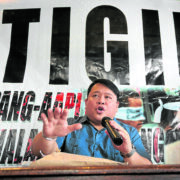
Identifying the remains buried in Maqbara cemetery could provide much-needed closure to many of these families, she added.
“It is crucial that all search and identification efforts are conducted with full respect for cultural and religious sensitivities,” she said.
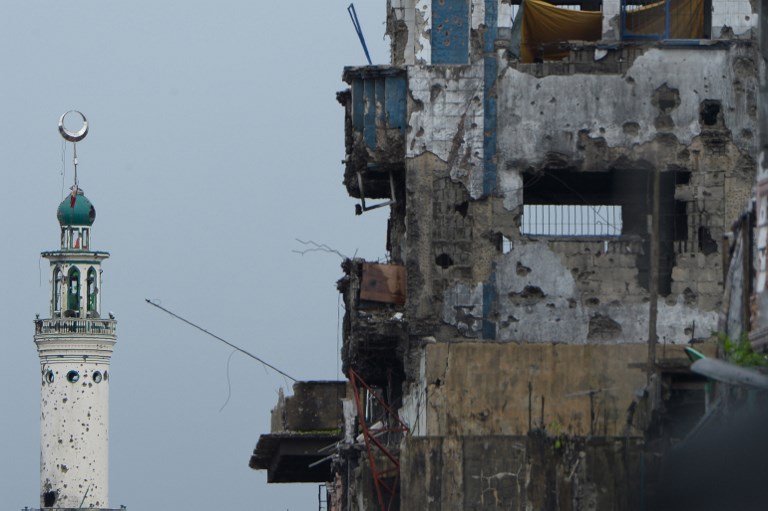
The Marawi siege, which broke out on May 23, 2017 and lasted for five months, displaced at least 350,000 people and left the core of the country’s only Islamic city in ruins.
The urban battle between the Maute Group, aided by the Abu Sayyaf Group, on one hand and the government forces on the other left at least 1,100 dead, mostly Islamic militants, according to data from the Armed Forces of the Philippines.