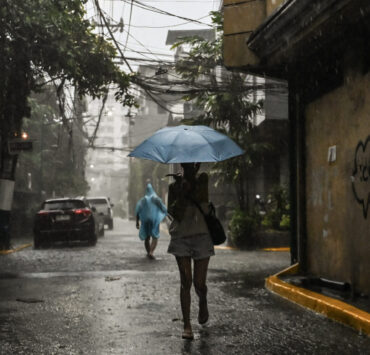






Flood control gaps leave Iligan vulnerable


(First of Three Parts)
ILIGAN CITY—Irenea Lambino and her family of four were inside their makeshift house along the riverbank in Barangay Tubod here when the catastrophic flash floods in December 2011, spawned by Typhoon “Sendong” (international name: Washi), carried the structure away in the middle of the night.
The raging waters of Iligan River (also referred to as Tubod River) destroyed their home, but the family managed to escape with their lives.
“I truly thought we were going to die that night. Thankfully, we managed to hold on to debris floating past us, which kept us from being swept out to sea,” Lambino said in the vernacular.
Despite the terror of the experience, they returned to the same plot of land and used a government shelter assistance fund to rebuild. They had nowhere else to go.
It is the reality for many living in the city’s low-lying communities, said Abel Moya, director of nongovernment group Pakigdait and chair of the Iligan City People’s Council.
Caught between extreme weather and poverty, they are forced back to hazardous areas, trapped in a cycle where tragedy is bound to repeat itself.
“The government must shift from reactive to proactive governance. Disaster mitigation is not just about building dikes; it is about ensuring the safety and dignity of every family by providing secure housing before the next disaster strikes,” Moya said.
Policies were put in place after Sendong to relocate residents out of danger zones, but he said persistent implementation gaps have kept communities vulnerable.
Home to numerous waterways prone to overflow during heavy rainfall, Iligan introduced flood control projects, but a Department of Public Works and Highways (DPWH) official said progress has been crippled by right-of-way issues.
Some projects were criticized by residents for alleged flaws in engineering designs, while others reportedly saw funding abruptly cut following national corruption controversies.
New normal
So when Tropical Storm “Basyang” (international name: Penha) caused another massive flooding in February this year, it felt like deja vu for many residents of the city. Some 14 years after Sendong, they lived the terrifying memories once again.
By then, the Lambinos had been forced out of their lot to make way for a government flood control project. The family dismantled their makeshift house in Barangay Tubod and, after getting permission from the barangay council, moved the structure beside a daycare center in Barangay Mahayahay, just downstream of the Iligan River.
The new location offered little protection. Waters from the river once again destroyed their home, which Lambino blamed on an unfinished flood control project in the barangay. But when the floods receded, they returned to rebuild yet again.
Though Mindanao is spared the frequency of storms that batter Luzon—only two to five typhoons a year—climate change has ushered in intense nontyphoon rainfall events that are just as destructive.
Michael Mar Demecillo, weather specialist at the Iligan station of the Philippine Atmospheric, Geophysical and Astronomical Services Administration, said disaster mitigation in Mindanao must address this new normal.
Iligan, which hosts some 400,000 residents, is especially vulnerable. Elsa Maquiling, the City Planning and Development coordinator, noted that the city’s vulnerability is partly a result of its natural terrain. “Only about 11 percent of the city is flat, mainly in the coastal barangays, covering around 9,000 hectares. The rest is mountainous,” she said.

Demecillo said the Iligan River is also relatively shallow, making it more prone to overflowing. Rapid urbanization, where “much of the landscape is now covered with concrete,” significantly reduced the land’s ability to absorb rainwater, he explained.
Flood control projects became a priority in the aftermath of Sendong. Aly Khan Ali, district engineer of First District Engineering Office of Lanao del Norte, said a flood control project in Barangay Mahayahay was completed in 2018 in two phases.
Right-of-way issues
The first phase, which cost P26 million, was completed in August 2018. The second phase, which cost P51 million, was completed in November 2018.
The two projects span about 900 meters. However, Ali said a 300-m section of the project was not completed due to road right-of-way issues, creating a significant gap in the flood control structure.
“When trucks need to pass through to repair the riprap, there is no available access route for vehicles transporting construction materials. The residents who are informal settlers did not allow us to pass because there was no designated road,” recalled Ali, whose office used to handle projects in Iligan City.
Despite several efforts by the city and barangay governments to negotiate with affected residents, the problem remains unresolved.
This story was produced with support from the Earth Journalism Network