









Foreign-funded projects again suffer budget cuts in 2026

Foreign-assisted projects (FAPs) will again face deep budget cuts next year despite earlier commitments by both chambers of Congress to ensure adequate government support for these projects after years of underfunding.
Based on the bicameral committee conference report uploaded on the Senate budget transparency portal, funding for FAPs under the Department of Public Works and Highways (DPWH) was cut down to only P17.7 billion, or down by P52.3 billion from the original P70 billion proposed by the House.
This even as another contentious item in the DPWH budget, the Convergence and Special Support Program (CSSP), received a P6.2-billion increase—from P234.2 billion to P240.5 billion—despite being flagged by budget advocates as effectively functioning as a “shadow flood control budget.”
Beyond the DPWH, two FAPs under the Department of Transportation also took a major hit in the proposed 2026 budget, which could affect their implementation timeline and incur higher commitment (late penalty) fees.
The Metro Manila Subway Project Phase 1 (MMSP1) ended up with only P20.4 billion in funding from the original P39.2-billion proposal, while the North-South Commuter Railway (NSCR) system had its budget halved from P57.6 billion to P28.8 billion.
These projects are funded by the Japan International Cooperation Agency (Jica).
During the bicameral conference committee deliberations earlier this month, the panel led by Sen. Sherwin Gatchalian, Senate finance committee chair, and Nueva Ecija Rep. Mikaela Suansing, House appropriations committee chair, agreed to realign portions of the MMSP1 and NSCR budget to the Light Rail Transit (LRT) Line 1-Cavite extension Unified Grand Central Station and the automated fare collection system for all railways servicing Metro Manila.
Call for protection
Budget advocates and civil society watchdogs have been calling on Congress to protect funding for FAPs, which require cofinancing from the government to complement the foreign loan to meet the total project cost.
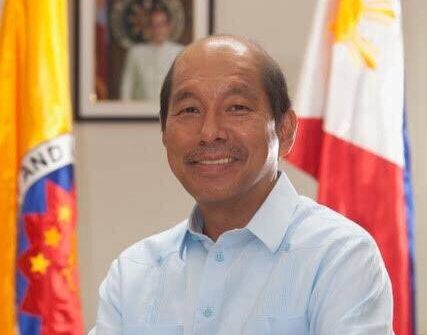
In a previous interview with the Inquirer, former Budget Secretary Florencio “Butch” Abad stressed that FAPs were supposed to be the “hardest target for cuts” because they’re covered by loan agreements with multilateral agencies such as Jica, the World Bank and the Asian Development Bank.
Not giving them the counterpart government funding, Abad added, not only risked reneging on the country’s international commitments, but also brought great economic costs as delays in implementations incurred higher commitment fees, which are usually around 0.25 percent of the loan.
In both 2024 and 2025, funding for these projects were slashed even though the Department of Budget and Management (DBM) requested P246 billion and P215.6 billion for each year, respectively. For 2026, the National Expenditure Program (NEP) proposed P283 billion for FAPs.
In an episode of the BBM Podcast that aired in August, President Marcos stressed the importance of ensuring that the national budget allocates sufficient funding for FAPs, warning that budget “insertions” have jeopardized vital infrastructure initiatives and damaged the country’s credibility with international financial institutions.

Data from the Department of Economy, Planning and Development showed that as of the August 2025 report, the implementation of 44 infrastructure projects, mainly in the transportation sector and funded through Official Development Assistance, had been delayed.
Lawmakers have flagged the delays, noting that the government incurs millions of pesos in commitment fees due to undisbursed foreign loans. The government is required to pay commitment fees on unused portions of foreign loans when projects are delayed.
In September, Suansing assured that foreign-funded projects would get government funding under the 2026 general appropriations bill to offset what she called the “negative impact” of the zero funding it got in 2024.
During the plenary deliberations for the agencies that comprise the Development Budget Coordination Committee, Suansing told Davao Rep. Isidro Ungab that the panel in charge of the budget process “did not touch” the FAPs for 2026.
This was after Ungab, also a former House appropriations chair during the Duterte administration, flagged the “reckless and indefensible defunding” of FAPs, which require cofinancing from the government to complement the foreign loan to meet the total project cost.
In 2024, FAPs got only P4 billion, while in 2025, P150 billion worth of FAPs were left unfunded and pushed to unprogrammed appropriations, which meant they could only get funding if the government had savings. —WITH A REPORT FROM INQUIRER RESEARCH


