





From ICC press row: Du30 not in court just ‘feels wrong’

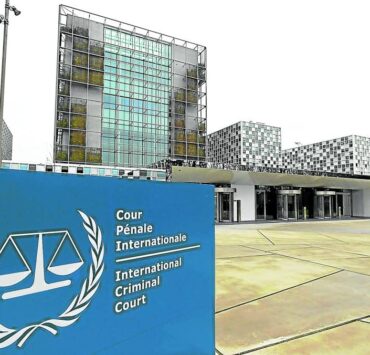
THE HAGUE, the Netherlands—It was supposed to be the first time a former Asian head of state would appear in the flesh and face a chamber in the International Criminal Court (ICC) on charges of committing crimes against humanity.
But to the dismay of many on press row, Rodrigo Duterte’s decision to skip his four-day confirmation of charges hearing, a move approved by the court, denied the historic moment of its main character and primary visual element, to say the least.
For Janet Anderson, a lead correspondent for independent Swiss news website JusticeInfo, Duterte’s absence could largely explain the low turnout especially of the international press who covered the hearing on Feb. 23, 24, 26 and 27.
“I think it has affected the number of people who are here. I’m sure it has affected how people feel about the case,” Anderson told this reporter.
Last-minute plea
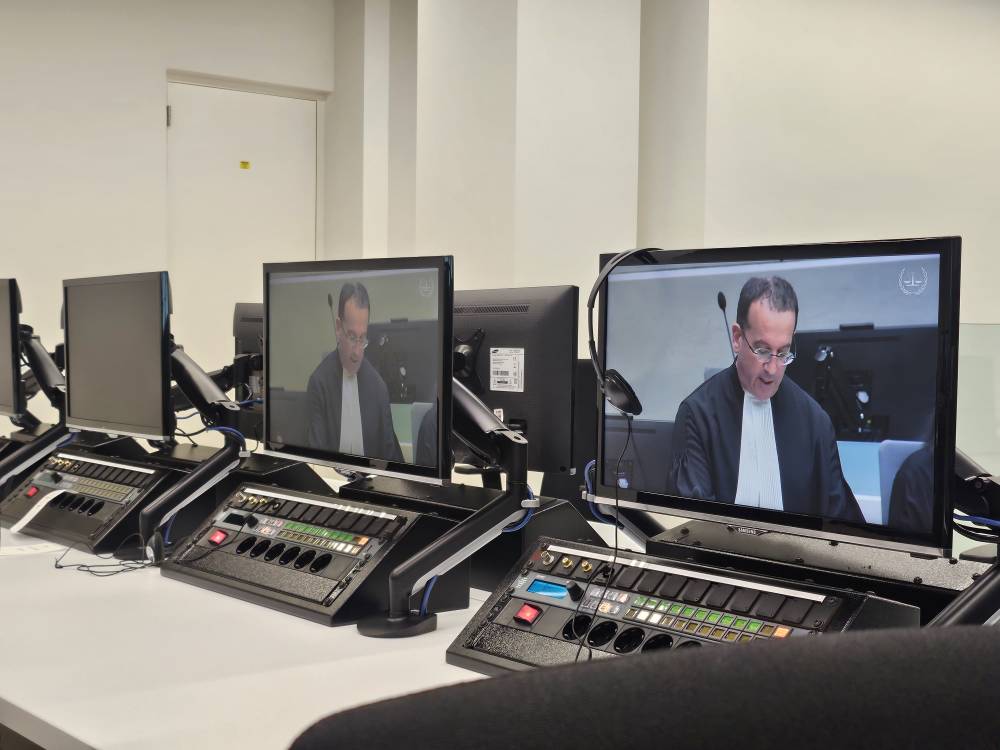
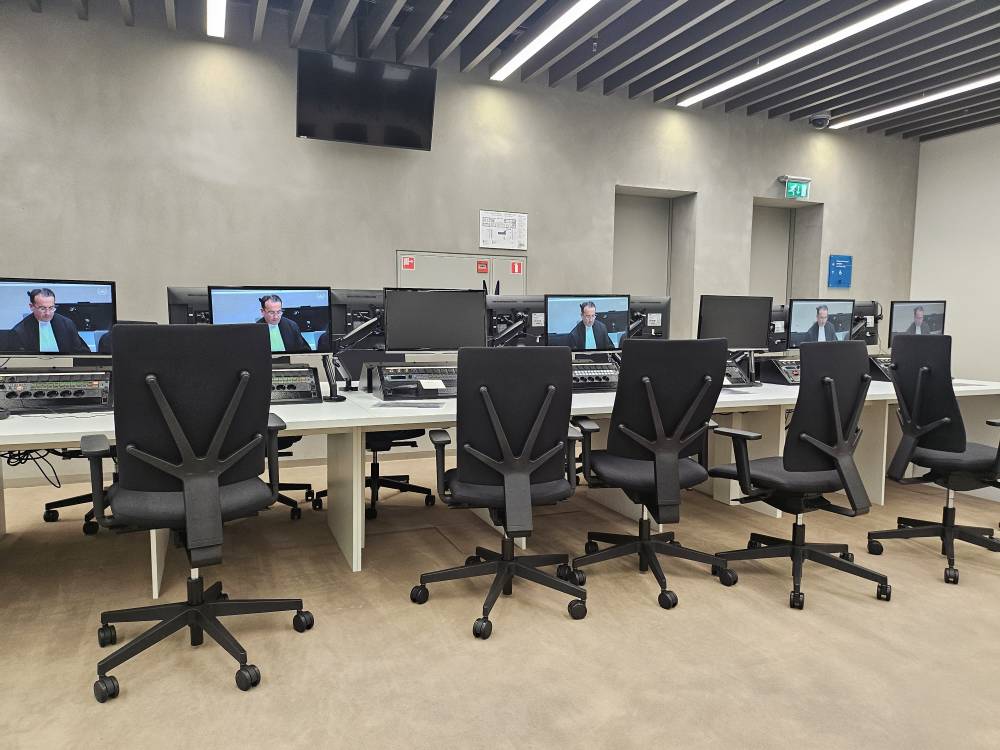
On the first day of the hearing, only a handful of international journalists were seen at the ICC media center where work stations received a delayed broadcast of the proceedings.
The center had desks and rooms enough for 104 journalists, but the Inquirer observed only 29 on the first day, including 19 Filipinos. The place grew quieter in the succeeding days; there was a time when Anderson and a wire service reporter were the only non-Filipinos covering.
A week before the proceedings, the Pre-Trial Chamber (PTC) I granted the former Philippine president’s last-minute plea waiving his right to appear. His letter to the chamber read: “I do not wish to attend legal proceedings that I will forget within minutes. I am old, tired, and frail. I wish for this Court to respect my peace inside the cell it has placed me.”
Detained by the ICC since March 2025, the 80-year-old is being held at the Scheveningen prison complex, located about 1.5 kilometers or a 20-minute walk from the court.
He would be turning 81 there this March 28.
In granting Duterte’s request, the PTC I cited Article 61 of the Rome Statute, the guiding framework of the ICC, as well as Rule 124 of the ICC Rules of Procedure and Evidence. Under these provisions, the chamber may proceed with the hearing despite the absence of the accused as long as he or she understands the consequences of skipping the proceedings.
The chamber stressed, however, that its decision had nothing to do with Duterte’s health concerns since it had already ruled that he was fit and capable of exercising his rights in the proceedings.
The first—and still the only—documented ICC “appearance” of Duterte was during his initial pretrial hearing on March 15, 2025, where he was presented to the judges four days after his arrest in Manila and allowed to address them via videoconferencing.
The world last saw him on a screen, in a blue suit, looking weary and appearing to doze off during the proceedings.
For the families of the drug war victims, especially for the parents who flew to the Netherlands for last month’s event, Duterte’s decision to skip his confirmation of charges hearing reeked of “cowardice.”
Other aging detainees
“We wanted to see his reaction while the charges are being read, but of course we can’t do anything about it anymore,” said Llore Pasco, who came both as a mother who lost two sons and as a volunteer for the support group Rise Up.
For Anderson, a veteran freelancer covering the various international tribunals based at The Hague, the proximity of Duterte’s place of detention to the ICC should have been considered.
“He’s only just off the road. It’s not far to come. It feels wrong that he had not come here to be seen,” she said.
Anderson cohosts a podcast for JusticeInfo titled “Asymmetrical Haircuts.” Duterte, she said, has joined a list of former men of power, wealth and influence now aging and ailing in ICC detention.
They also include Félicien Kabuga, a 93-year-old Rwandan businessman accused of war crimes and crimes against humanity for allegedly financing the 1994 genocide that killed about 800,000 people of the Tutsi ethnic group.

Anderson likened Duterte’s case to that of Ratko Mladic, a former leader of the Bosnian Serb army who was convicted of genocide, war crimes and crimes against humanity in 2017. He was initially indicted in 1995 and remained in hiding for years before being arrested in 2011.
“(Mladic) is currently dying in detention because he suffered a series of strokes during the trial,” the journalist noted.
Likened to Trump operations
Duterte’s so-called drug war, she said, may also be compared to the military operations launched by US President Donald Trump targeting alleged drug-carrying vessels in the Caribbean Sea and the Pacific Ocean.
“You can look at what Duterte was doing—a massive populous leader, people really wanted to see drug abuse go down, you ended up with killings—and look at what Trump is doing as well,” she noted.
Weighing in on the discussion on how the prosecution and the defense fared during the recent hearing, Anderson said she believed the prosecution was able to build a “strong case” mainly by citing Duterte’s own speeches and media interviews “to show intent.”
As to the defense, she said, the presentation of Duterte’s lead counsel Nicholas Kaufman employed “more theatrics than the prosecution … trying to throw a bit more dust in our eyes.”
“But as observers, we should always critically observe what is going on and see the extent to which the defense arguments are quite good,” Anderson said.
******
Get real-time news updates: inqnews.net/inqviber