











From ‘lolo’ to ‘apo’? How far should dynasty ban go

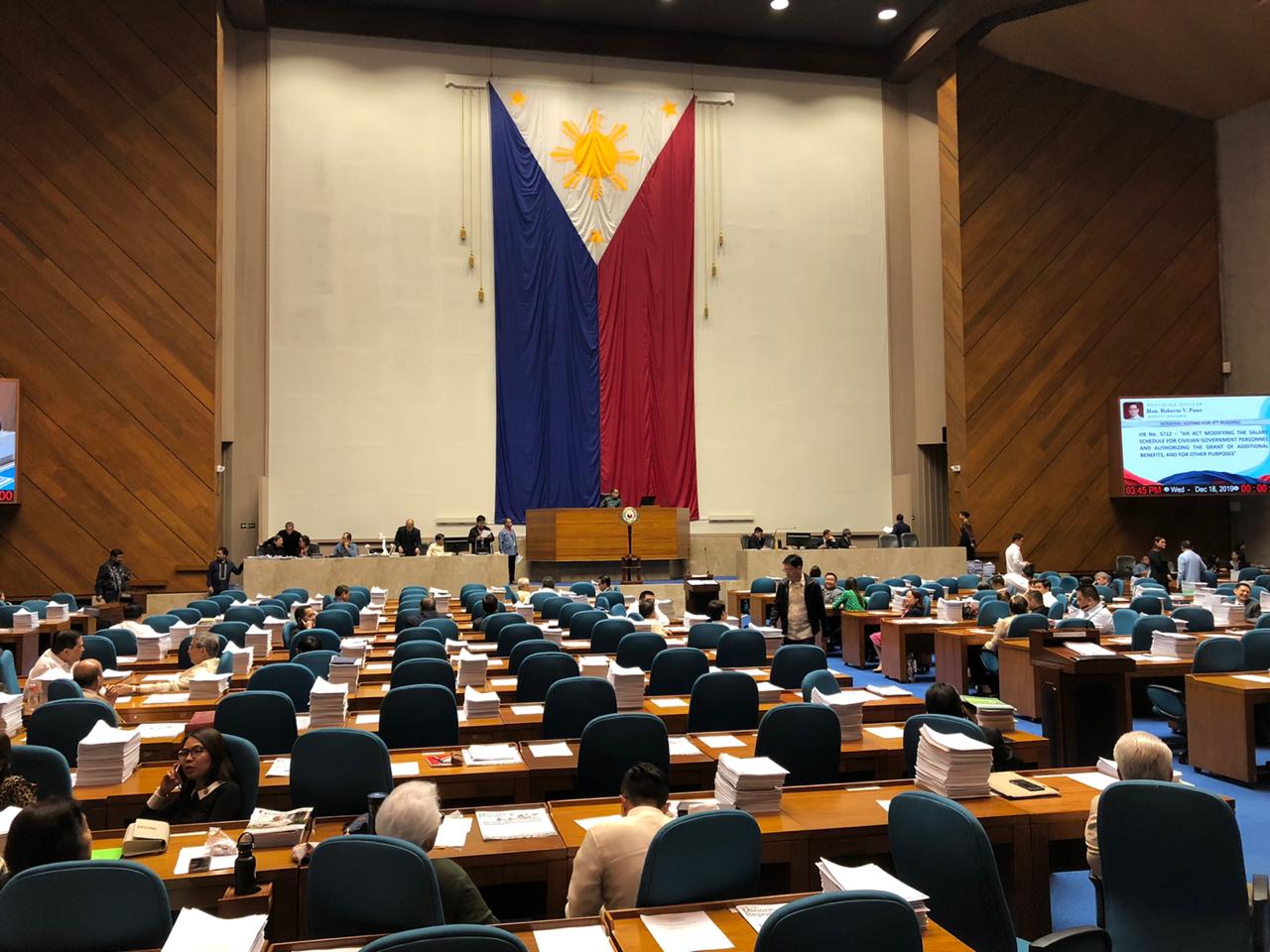
Now comes the nitty-gritty: up to what extent across the family tree must the law ban political dynasties?
This was the key question tackled at the initial House hearings on the antipolitical dynasty bills pending before the 20th Congress, which is under pressure to produce the long-overdue enabling law that would finally activate the prohibition set by the 1987 Constitution.
Some academics and legal experts supported a strict, wider ban to prevent families from circumventing the law. But most of the lawmakers who participated in the hearings of the House committee on suffrage and electoral reforms prefer a narrower, more “enforceable” scope to give it a higher chance of being approved.
Currently, the panel led by Lanao del Sur Rep. Zia Alonto Adiong is weighing 20 measures that propose varying degrees of the ban’s application.
Former Bayan Muna Rep. Neri Colmenares, whose bill filed in 2001 was the first ever to hurdle the committee level in the chamber’s history, noted that the “crux of the issue . . . is to decide on a number that Congress would allow to run.”
Based on a matrix provided by the committee, majority of the 20 measures seek to define dynasties as extending up to the second degree of consanguinity or affinity.
This means that if a person wants to run for a specific public office, the following cannot seek any other office in the same election: spouse, parents, children, siblings, grandparents, grandchildren, parents-in-law, and children-in-law.
Make it 4th degree
The Akbayan and Makabayan minority blocs, meanwhile, support bills that bar up to the fourth degree of consanguinity or affinity.
It means that the following persons are also banned: great grandparents, great aunt or great uncle, first cousin, grand nephew or grand nieces; and their in-law counterparts.
Colmenares, however, noted that there are other “numbers” to consider: whether to allow only one or at least two within the same family to run for public office.
“Before we can even get to the nitty-gritty of how it could be implemented, like disqualification, cancellation, etc., that would be the major issue here: How many will you allow? Once Congress has decided, the rest of the provisions will fall into place,” he said.
Lawyer Lee Edson Yarcia of the University of the Philippines College of Law echoed the view, saying the Constitution was clear that only the definition of dynasties was left for Congress to formulate, and not the decision on whether to enforce the ban.
Four levers
Julio Teehankee, a political science professor from De La Salle University, suggested that the committee evaluate the pending bills based on four regulatory levers.
First, he said, is to determine if the ban should cover the second or fourth degree of consanguinity and affinity. Second, determine whether to prohibit simultaneous holding of office, successive holding, or both.
Third, to clarify whether the ban applies to national offices, local offices, or a combination of both. And fourth, to define the reach of the ban across territorial boundaries (districts/provinces) or hierarchical levels.
Teehankee also stressed that the goal of the law is not to punish families but to promote meritocracy, saying the Constitution already made it clear that the state has police powers to regulate candidacies.
“The right to be a candidate is not an absolute right, just like other rights in our bill of rights,” he said. “The reality is that fat dynasties monopolize resources, making a fair fight possible.”
Yarcia suggested that Congress “at a minimum” cover the second civil degree—but urged them to consider the fourth degree to remain consistent with the Code of Conduct for Public Officials.
Word of caution
Dr. David Yap of the Congressional Policy and Budget Research Department offered a cautionary view on a fourth-degree ban, saying it could disenfranchise between 13 and 21 nuclear families for every single individual elected.

While it might be tempting to “simply oppose a ban up until the fourth degree—an exceptionally strict constraint—and while it does eliminate a lot of the situations that we see now, this heavy-handed approach can still be circumvented by especially astute and dedicated political clans,” he said.
“For example, power can be rotated across at least two families unrelated by blood or affinity but allied purely for political purposes,” Yap added.
Ona Caritos, executive director of Legal Network for Truthful Elections (Lente), proposed a unique “sui generis” approach to antidynasty legislation.
A single family may be allowed to occupy a maximum of three positions simultaneously, provided they are at different levels of government, she said.
Specifically, a family can hold only one national position, one provincial position, and one municipal/city/barangay position at any given time, Caritos further explained.
Last resort: Draw lots
To finalize which relative may remain as a candidate, Caritos proposed having “voluntary agreements” among family members. If that is not possible, the matter can be decided by drawing lots.
“The perpetration of power through family members has long been recognized as a practice to be prohibited for the purpose of allowing a broader voice in an improving public service for the Filipino people,” Caritos said. “Our proposal would give this constitutional directive we believe a more effective chance of implementation and truthful to the spirit of our 1987 Constitution.”
Professor Michelle Castillo of the UP National College of Public Administration and Governance suggested a “graduated phase-out provision that could be included as a sunset clause in the current antipolitical dynasty bills that would prohibit certain features of political dynasties at succession.”
For example, the 2028 election could prohibit relatives up to the fourth degree, and then have the ban narrowed to the second degree by 2031, Castillo said.