











Fry scarcity hits ‘bangus’ growers in Pangasinan

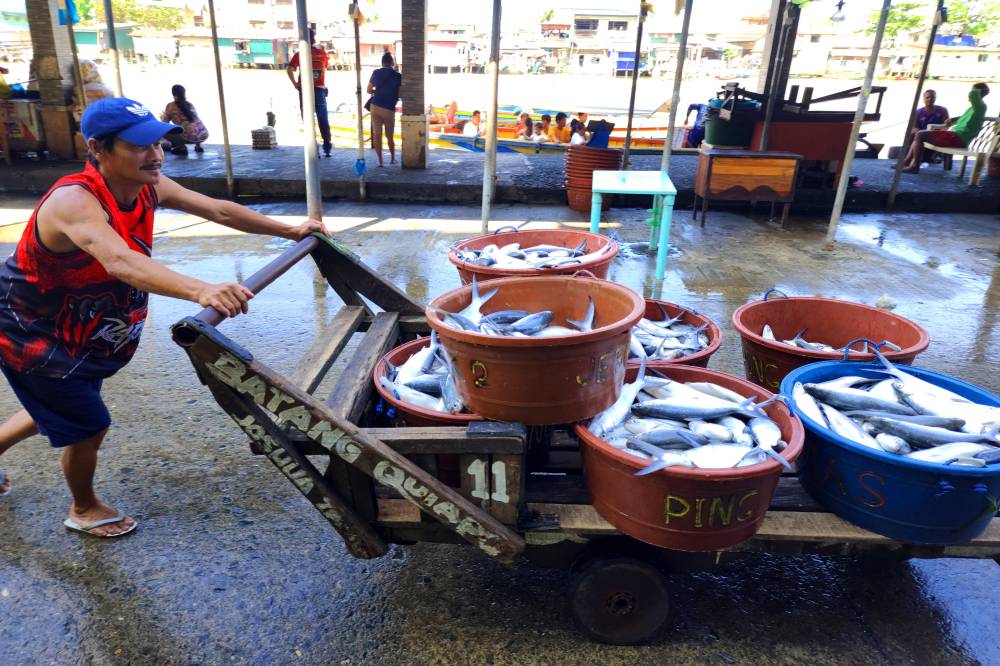
CALASIAO, PANGASINAN—After typhoons ravaged Pangasinan’s “bangus” (milkfish) industry last year, aquaculture operators now face another tide of hardship: a shortage of fry that has nearly doubled in price.
The cold spell in December and January further slowed recovery. Low temperatures stunt bangus growth, prompting many operators to delay stocking their ponds and pens. With the onset of summer, they are now racing to recover from the losses.
“It is when the hot weather starts that is the best time to stock bangus. Almost all operators stock their cages and ponds at the same time, leading to shortage and high prices of fry,” explained Alex Soriano, a fish cage operator in western Pangasinan.
Soriano, president of Tierra del Norte Realty Corp., one of the province’s major fish producers, said their nursery ponds—where fry are grown into fingerlings—were inundated during the onslaught of Typhoons “Emong” (international name: Co-May) and “Uwan” (Fung-wong) last year, contributing to the fry scarcity.
Tierra del Norte sources most of its fry from Indonesia, which has a robust year-round hatchery sector.
Although bangus is recognized as the country’s national fish, the industry continues to grapple with a critical weak link in its production chain: the lack of sufficient local hatcheries.
Pangasinan is the country’s top bangus producer with an annual output of at least 100,000 metric tons (MT). It needs over 600 million fry annually, yet only a fifth of that is supplied by local hatcheries.
Growers remain heavily dependent on imported fry to stock fish cages and ponds, leaving the sector vulnerable to supply disruptions and price volatility.
Joji Fernandez, a businessman engaged in fry importation, said prices of imported fry have doubled in recent weeks.
Regular or small fry, which are 20 to 21 days old, now cost 40 centavos, up from 20 centavos, while larger fry, which are 27 to 28 days old, sell for 50 centavos, from 30 centavos previously, Fernandez said.
Competitive market
Indonesia produces bigger fry classified as “Triple A class,” but much of this premium stock is cornered by Taiwanese growers who offer premium price, outbidding Philippine buyers, Fernandez added.
According to Ramon Perdon, a cage operator in Anda town, Indonesia’s strength on fry production rests on a collection of small-scale, backyard-based hatcheries operated by households.
“But there is an accumulator who gathers the fry from these households when orders come in,” he said, suggesting that this makes for speedy transactions.
Perdon cautions that while Indonesia’s year-round supply capacity makes it a dependable fry source, competition may soon intensify as Malaysia has begun expanding its own bangus production and is likely to source fry from there.
“So our country will have another competitor for fry [supply],” Fernandez warned.
Soriano estimates that the country’s bangus industry requires about 5 billion fry annually. Of this, around 3.5 billion are imported from Indonesia, and roughly 1.5 billion are produced by hatcheries in Sarangani province in Mindanao, with the rest coming from small-scale hatcheries or wild catch.
He noted that Sarangani-produced fry are of better quality, have the same sizes, and have higher survival rates, but the volume is insufficient to meet national demand.

Making a dent
Despite its vast coastlines, the country’s climate is generally not conducive to hatchery operations, according to Perdon.
“During the rainy season from August to October, salinity in hatcheries drops to almost zero and the fry rot. We can’t put roofs over hatcheries because breeders need sunlight to spawn,” he said.
Perdon lamented that the ponds in Bulacan province once used as bangus nurseries—where fry are grown into fingerlings before they are put in grow-out ponds or cages—are now part of the vast expanse of property being developed into a modern airport. This development, he said, negatively impacted the bangus industry.
In a bid to make a dent to the persistent fry shortage, the Pangasinan provincial government broke ground last month for a P238.9-million hatchery project in Bolinao town. Supported by the World Bank, the facility aims to produce around 100.78 million bangus fry and 48.05 million larvae annually.
Gov. Ramon Guico III said the project would help address the fry shortage in the province, and even in the country.
Fernandez hopes the Bolinao hatchery would succeed to be a viable venture, noting the province’s high cost of electricity—a key requirement of the facility to run its aerators, air pumps, water pumps and paddle wheels.
“Power rates in Indonesia are 70 percent lower compared to ours,” he noted.
On top of the Bolinao hatchery, the Bureau of Fisheries and Aquatic Resources is also eyeing the establishment of hatcheries in different parts of the country, including one in Santa Catalina, Ilocos Sur.