









Good governance advocates join forces vs reelection of corrupt pols

BAGUIO CITY—Three anticorruption movements have joined forces to work in ensuring that politicians linked to serious allegations of abusing public funds will not be able to return to office in 2028.
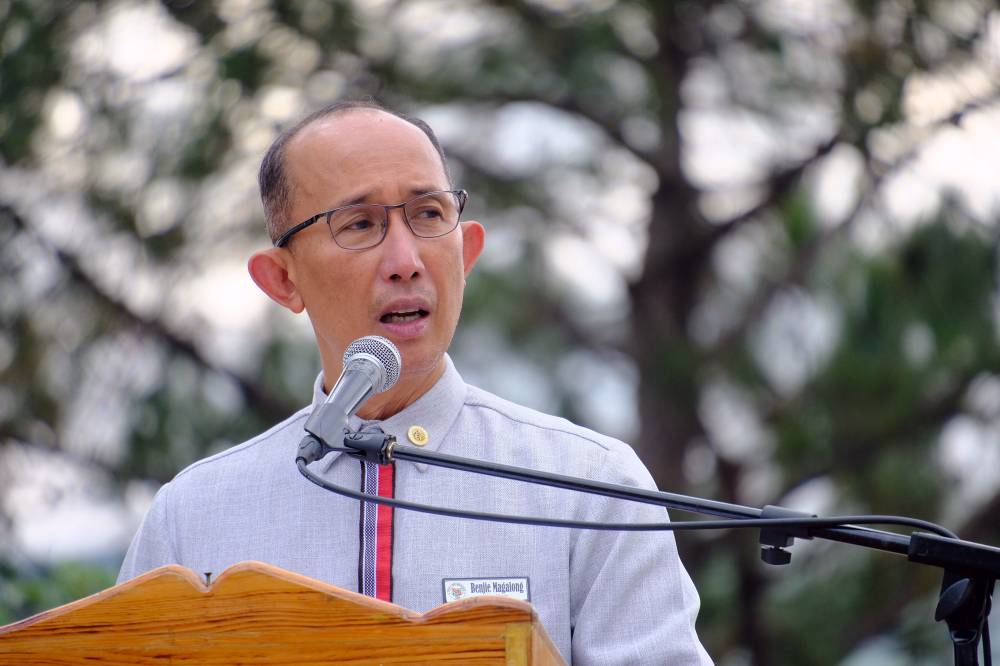
On Thursday, Mayor Benjamin Magalong of the 200-member Mayors for Good Governance (M4GG), former Supreme Court Chief Justice Maria Lourdes Sereno of Bawat Isa Mahalaga Movement, and former Philippine National Police chief Rodolfo Azurin Jr. of KaSimbayanan (Kapulisan, Simbahan at Pamayanan), agreed to work together for a countrywide campaign for “ethical governance.”
The memorandum of understanding, which was signed in the presence of local pastors, outlines the new collaboration that aims to shape voters’ behavior against corruption through, among others, faith-based programs.
The M4GG counts among its convenors Pasig City Mayor Vico Sotto and Quezon City Mayor Joy Belmonte while Azurin is a special adviser and investigator of the Independent Commission for Infrastructure.
On the sidelines of a welcome dinner hosted by local evangelical groups on Wednesday, Sereno said one of their goals was to transform public outrage against the multibillion-peso kickbacks orchestrated allegedly by some lawmakers and public works officials into votes and block the reelection of politicians tied to anomalies in the government’s infrastructure projects. The controversy first drew the spotlight when anomalous flood control projects were flagged by President Marcos during his State of the Nation Address last year.
Sereno stressed that these votes must be cast by citizens out of a desire to “do good,” which are universal values of Christians and the major religions.
“The right electoral decision starts from understanding who you are. If you do not understand your true self, it would be easy to give in when there is vote-buying or to be dictated upon contrary to your conscience,” said Sereno, speaking in a mix of English and Filipino.
When asked, the former chief justice said her group had been in talks with a non-Christian organization which would preach good governance using their religious teachings.
‘Ethical politics’
Magalong said he was concerned that politicians who were enriched by government kickbacks would likely flood the countryside with bribes to get reelected in 2028.
He urged voters to channel the “so much anger … so much frustration” against corruption into a decision to thwart the return of these politicians to elective office.

“Today they anger everyone but then they get reelected? What would we call ourselves then?” Magalong asked. Sereno’s group conducts grassroots discussions to illustrate how ethical politics subscribes to biblical teachings that are also reflected in modern laws.
Sereno authored a 2025 book, “Christian Framework for National Development,” which enumerates Christian beliefs that are found in various constitutional provisions.
Good governance advocates, she said, may point out that the Constitution requires all public servants to live modest lives, hence should be adhered to by voters in electing a leader. “[Living] a modest life reduces the chances of graft,” she said.
Azurin advocated for leaders who are “Maka-Diyos, may kakayahan at may prinsipyo” (God-fearing, competent and principled), stressing that all elements are necessary to avoid electing “competent thieves” or principled but inefficient leaders.
He stressed that the new anticorruption alliance would strive to restore the people’s trust in government and other institutions that were shattered by revelations that some elected officials and government employees lived lavishly amid allegations of corruption.