








Gov’t forgives IPP debts for 3rd time

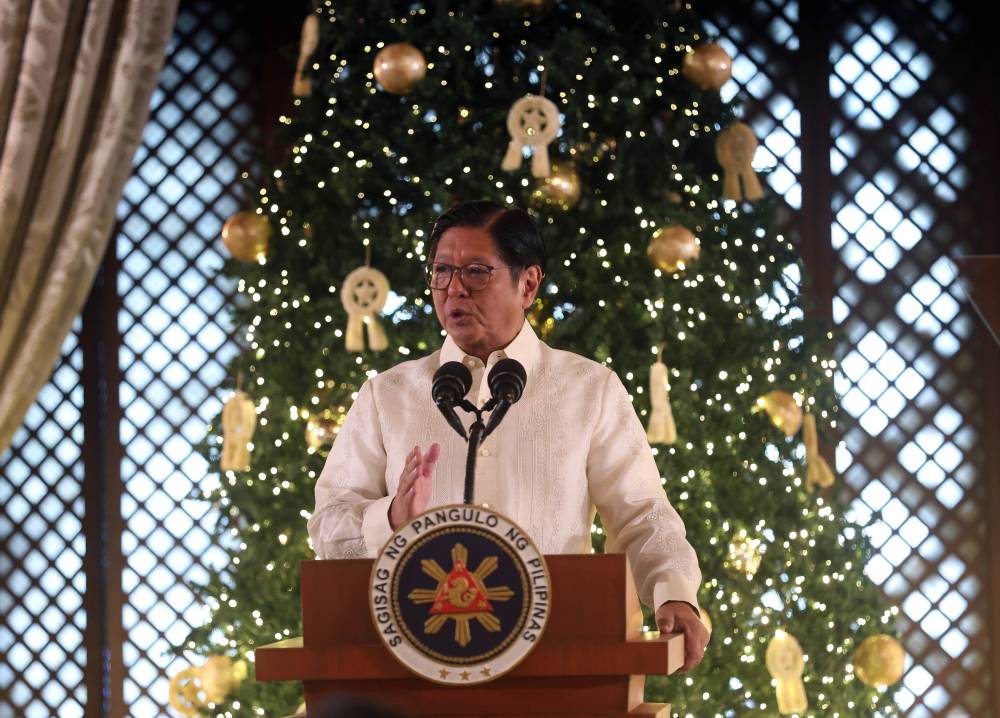
For a third consecutive year, President Marcos has ordered to reduce and pardon all interest and penalties on real property taxes (RPT) imposed on independent power producers (IPPs) this year in order to prevent defaults and economic losses that could affect electricity supply and the government’s fiscal stability.
Under Executive Order No. 106 dated Nov. 28, but published in the Official Gazette only on Wednesday, RPT liabilities of IPPs for 2025 shall be reduced “by an amount equivalent to the tax due if computed based on an assessment level of 15 percent of the fair market value of the property, machinery and equipment, depreciated at the rate of 2 percent per annum, less any amount already paid.”
These include any special levies accruing to the Special Education Fund on the power generation facilities of IPPs under a build-operate-transfer (BOT) scheme and similar contracts with government-owned or -controlled corporations (GOCCs), that are assessed by local government units (LGUs) and other authorized entities for all years up to 2025.
The President also condoned all interests and penalties on the deficiency RPT liabilities of the concerned IPPs.
All RPT payments made by the IPPs over and above the reduced amount shall be applied to their real property tax liabilities for succeeding years.
Monitor compliance
This was the third time that President Marcos ordered the reduction and condonation of RPT liabilities of IPPs. He also issued similar EOs in the past: EO 36 in 2023 and EO 83 in February 2025, which cover RPT liabilities for 2023 and 2024, respectively.
The President directed the Department of the Interior and Local Government (DILG), in coordination with the Department of Finance (DOF), to monitor the compliance of concerned LGUs.
The DOF was also ordered to submit a progress report on the implementation within six months from effectivity of EO 106.
According to the state-run Power Sector Assets and Liabilities Management Corp. (Psalm), it saved P510 million last year due to Marcos’ EO 83.
In March, it said its RPT liabilities from five power plants under BOT contracts were slashed from P626.46 million to P116.52 million.
Under Section 277 of the Local Government Code of 1991, the President may, when public interest so requires, condone or reduce the real property tax and interest for any province or city, or a municipality within the Metropolitan Manila Area.
While IPPs are liable to pay the RPTs to their respective LGUs, a substantial portion of the tax charged has been contractually assumed by the National Power Corp. (Napocor) and the Psalm under a BOT scheme.
Longtime issues
The EO warned that according to the DOF, the collection of the subject RPTs for 2025, which were assessed to reach only 80 percent at most by the concerned LGUs “will trigger massive direct liabilities on the part of Napocor/Psalm, thereby threatening their financial stability, the government’s fiscal consolidation efforts, the stability of energy prices, and may even trigger further cross-defaults and significant economic losses across all sectors.

“As the operations of affected IPPs provide an estimated grid capacity of 1,085 megawatts, their closure or nonoperation will entail substantial losses to the government and force the public to resort to more costly electric power source alternatives or rotating power outages,” it said.
IPPs have long been hounded by issues with RPTs. LGUs have been intimidating the industry for years, with threats such as denying their business permits or even assuming control of their operations and auctioning their properties, which can impact power supply reliability.
In January 2010, the Philippine Independent Power Producers Association cried for help from the national government as LGU officials wanted IPPs to settle billions of pesos in realty taxes.
To address the IPPs’ woes, then-President Benigno Aquino III issued EO in 2011, reducing and condoning the real property taxes of IPPs.
Former President Rodrigo Duterte also signed similar EOs from 2018 to 2022.
IPPs are engaged in generating electricity, which is then sold to distributors, such as Manila Electric Co. (Meralco).