







Gov’t urged: Ask Iran to let PH-bound oil tankers pass

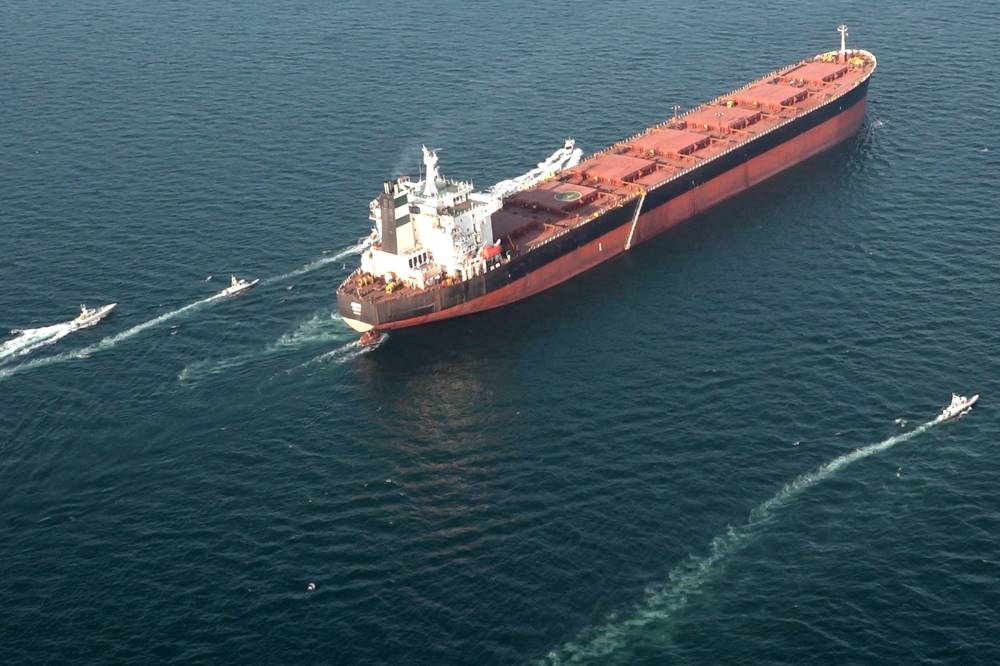
Sen. Sherwin Gatchalian on Saturday said there should be no disruption in oil supply for the country and called on the Marcos administration to open “high-level” talks with Iran to ensure the safe transit of Philippine-bound oil tankers through the Strait of Hormuz, as the tension in the Middle East continues.
The Philippines imports 98 percent of its crude oil from the Middle East, which is now engulfed in one of the world’s most serious conflicts following the US-Israel attack on Iran last month. The war has led to the blockade of the Strait of Hormuz where one-fifth of the world’s oil supply passes.
“I strongly urge the executive department to engage in high-level discussions with Iran to secure safe passage of Philippine-bound oil vessels through the Strait of Hormuz and ensure they are recognized as neutral entities,” Gatchalian said in a statement.
The senator emphasized the importance of strategic coordination to ensure that the rising costs of goods, especially fuel products, would not further burden many Filipinos.
“The government must stay ahead of the curve,” he said. “Strategic coordination and swift diplomatic action will go a long way in protecting our energy security and shielding our people from further economic strain.”
Gatchalian had earlier suggested government-to-government negotiations to secure fuel supply as this would be beyond the capability of private companies.
Malacañang gave no immediate response to Gatchalian’s latest recommendation.
Iran has said that the Strait of Hormuz was open to all except the United States and Israel and those that supported their attacks.
The Philippines is a US treaty ally but is not involved in the war against Iran.
Iran has used its control over the narrow waterway as a bargaining chip in the war, demanding international recognition of its right to exercise authority over the strait as one of its five conditions for ending the war.
Nearly 2,000 vessels are stranded near the gateway for petroleum exports from the Persian Gulf. Affected countries have been lobbying Iran to allow passage.
The shipping journal Lloyd’s List reported on March 25 that Iran’s Islamic Revolutionary Guard Corps had already imposed a “toll booth” system to control vessel traffic through the strait.
Earlier, Iranian lawmaker Alaeddin Boroujerdi told the UK-based Farsi-language satellite TV channel Iran International that the country had been charging some vessels $2 million each to pass. Other reports say the amount is paid in yuan, the Chinese currency.
Enough for up to 45 days
Following talks with what Iran called “friendly” nations, some ships from Malaysia, China, Egypt, South Korea, Thailand, Japan and India have reportedly been allowed to pass through the strait.
President Marcos on Friday said that the Philippines had enough crude oil stocks to last until end-June.
He said he had directed the Department of Energy (DOE) to secure additional sources of various types of fuel, such as gasoline, diesel, kerosene, jet fuel and liquefied petroleum gas.
Energy Secretary Sharon Garin earlier said the country’s fuel supply was enough for 40 to 45 days.
The DOE said it had secured contracts for the delivery of 1 million barrels of diesel, just enough for the country’s consumption for five days.
The agreements with suppliers were finalized through the Philippine National Oil Co. (PNOC) Exploration Corp., with the shipments seen arriving in the Philippines in the coming weeks.
It did not disclose its partner suppliers, but energy officials earlier said the government was exploring all potential providers, not just in Southeast Asia, but also Japan, Canada and the United States.
Continued dialogue
The supply pacts, translating to 165.67 million liters, form part of the current administration’s target to purchase 2 million barrels of diesel with a P20-billion allocation.
Earlier this week, the country received its first shipment of government-procured diesel—about 22.57 million liters, or 142,000 barrels.
Garin said the fresh supplies will be sold to local fuel retailers at cost.
On Saturday, the DOE said it also had energy supply discussions with China, a key player in the global power supply chain.
“Through continued dialogue and diplomatic engagement, the DOE seeks to strengthen cooperation and foster constructive relations between the Philippines and China in addressing energy-related challenges,” the DOE said in a social media post.
An industry source told reporters that based on the first four trading sessions, the per-liter price of diesel could climb by P11 to P12 on March 31. Once implemented, this could result in regular diesel prices rising to over P140 per liter and premium diesel beyond P150 per liter. A softer price hike of P3 per liter is expected for gasoline.
BOC measures
To ensure a steady fuel supply, the Bureau of Customs (BOC) is implementing measures to expedite the processing of fuel imports by the country, as well as daily monitoring and fuel marking, Customs Commissioner Ariel Nepomuceno said in a statement on Friday.
In his March 23 Memorandum No. 36-2026, the customs chief instructed ports across the country to prioritize the processing and monitoring of all imported oil and petroleum products.
The BOC emphasized the need for a regulated and efficient import process as imported petroleum products account for a P200-billion share of its total annual collection, which was valued at P934.4 billion last year.
“Our goal is simple—to keep supply steady and ensure that no disruption reaches our industries or our communities,” Nepomuceno said.
Two ports facilitated the entry recently of the following: 9,157,667 liters of diesel procured by the government and consigned to the state-owned PNOC at the Port of San Fernando in La Union; and 100,402.776 US barrels of crude delivered by MT Sara Sky consigned to Petron Corp., the only oil company in the country that has a refinery. A foreign wire report last week said that Sara Sky carried 700,000 barrels of crude.
Vessel tracking
The BOC said it was continuing to strengthen its Fuel Marking Program. Fuel is marked and verified at the depot “to confirm authenticity and proper tax declaration.” A noncompliant shipment is immediately flagged for review to protect consumers and safeguard government revenue, it said.
It added that its tracking system for vessels approaching Philippine jurisdiction allowed authorities to monitor their movements and conduct inspections upon arrival to ensure that incoming fuel products are accounted for as they are discharged to and from their respective ports. —WITH A REPORT FROM INQUIRER RESEARCH
******
Get real-time news updates: inqnews.net/inqviber