










‘Green’ transport pushed as fuel prices increase

BAGUIO CITY—Top leaders in tourism and trade pushed for green transportation to lessen the carbon footprint of the travel and farming sectors as the war in the Middle East is expected to result in major oil price increases in the coming weeks, highlighting domestic reliance on imported fossil fuel.
The idea was discussed on Wednesday during the opening of the three-day international farm tourism conference here.
If the Middle East conflict does not end within the week, the supply chain would be the first casualty, which could snowball throughout the economy, Sergio Ortiz-Luis Jr., president of the Philippine Exporters Confederation, told the Inquirer. “Shipping has already been affected,” he pointed out.
In his welcome address, Baguio City Mayor Benjamin Magalong stressed that tourism would provide additional support to sectors like agriculture “in times of unfortunate circumstances that may impact our world today.”
Former Transportation Secretary Jaime Bautista made no direct references to the Middle East conflict when he urged the tourism industry to make all roads to farm tourism destinations “green as the farm itself” by investing in “integrated and low impact mobility.”
Ortiz-Luis said that with some 138 accredited farms, the country’s farm tourism industry was valued at $1.6 billion in 2025 which proves that it is not just a “niche” market but is a “major growth engine for rural development and export.”
Tourism Secretary Christina Frasco said they hope to grow the value of farm tourism to some $197 billion by 2032. She said farm tourism is tied to the Department of Tourism’s program promoting local cuisine, and widens the avenue for rural communities to join the “tourism value chain.”
LGUs preparing
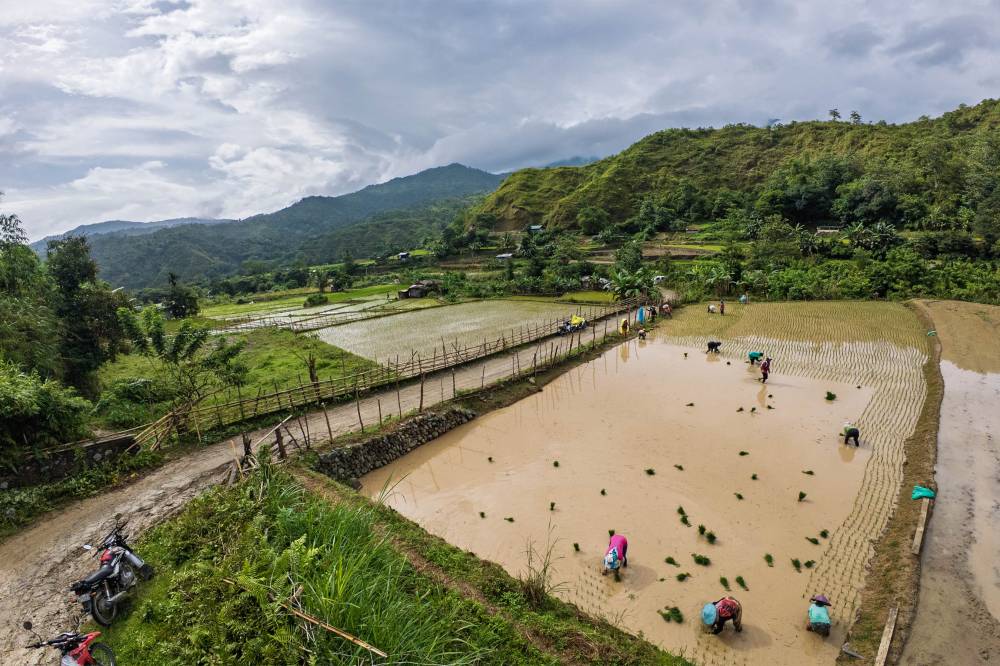
Farm tourism converts active farmlands into tourist attractions that allow travelers to participate in farm activities and consume the crops that are produced there.
In the Cordillera, tourists will also have the opportunity to learn about farm life through “experience and exchange particularly [with] indigenous communities,” said Bautista, chair of the International School of Sustainable Tourism.
But traveling to these destinations “is the elephant in the room” because “emissions from transportation account for half of the industry’s carbon footprint [due to] a broken, pollutive transport system,” Bautista noted.
“Transportation is not a peripheral matter for farm tourism but is central to its credibility and long term success,” he said. “Studies show that when tourists are provided the right infrastructure, they will eagerly adapt. They will walk, they will ride bicycles.”
The Middle East crisis provided an atmosphere for farm tourism players to seriously consider green transportation as local government units (LGUs) in different parts of the country also grappled to institute measures to save on fuel costs.
Earlier, President Marcos called on the public to conserve energy and brace for a possible spike in petroleum prices due to projected supply constraints in the coming weeks.
On Tuesday, oil companies implemented another round of price hike of more than P1 per liter for gasoline and diesel, marking the 10th consecutive week of increases.
Industry leaders warned that the latest adjustments do not yet reflect the potential impact of the escalating conflict involving the United States, Israel and Iran, and cautioned that more substantial price increases could follow if tensions persist.

In Quezon province, Gov. Angelina Tan has directed all provincial government offices to implement fuel conservation measures as a preemptive response to possible global supply disruptions amid the brewing war in the Middle East.
Through Executive Order No. DHT-08 issued on Tuesday, Tan instructed offices to optimize the use of government vehicles by adopting vehicle pooling and proper trip scheduling to avoid duplication of travel. She also ordered the prioritization of urgent and essential trips, assignment of vehicles based on passenger capacity to ensure maximum occupancy, and the use of virtual meetings whenever feasible.
Tan also required regular preventive maintenance of government vehicles and equipment to ensure optimal fuel efficiency.
In Cebu province, Gov. Pamela Baricuatro directed provincial government offices to limit nonessential travel, consolidate official trips, shift to virtual meetings when feasible, strictly monitor fuel consumption, and optimize vehicle use.
All offices were required to submit their respective fuel conservation plans to the Office of the Governor.
Baricuatro also ordered the setting up of a provincial assistance and repatriation desk for overseas Filipino workers (OFWs) in coordination with the Department of Migrant Workers, armed with a registry of Cebuano OFWs in affected areas in the Middle East.
In Iloilo City, transport operators are studying a petition for a fare increase on top of their pending prayer for a P1 adjustment still pending approval by authorities. —WITH REPORTS FROM DELFIN MALLARI JR., LEO UDTOHAN AND HAZEL VILLA


