











Group slams Pax Silica as ‘massive sellout’ of country

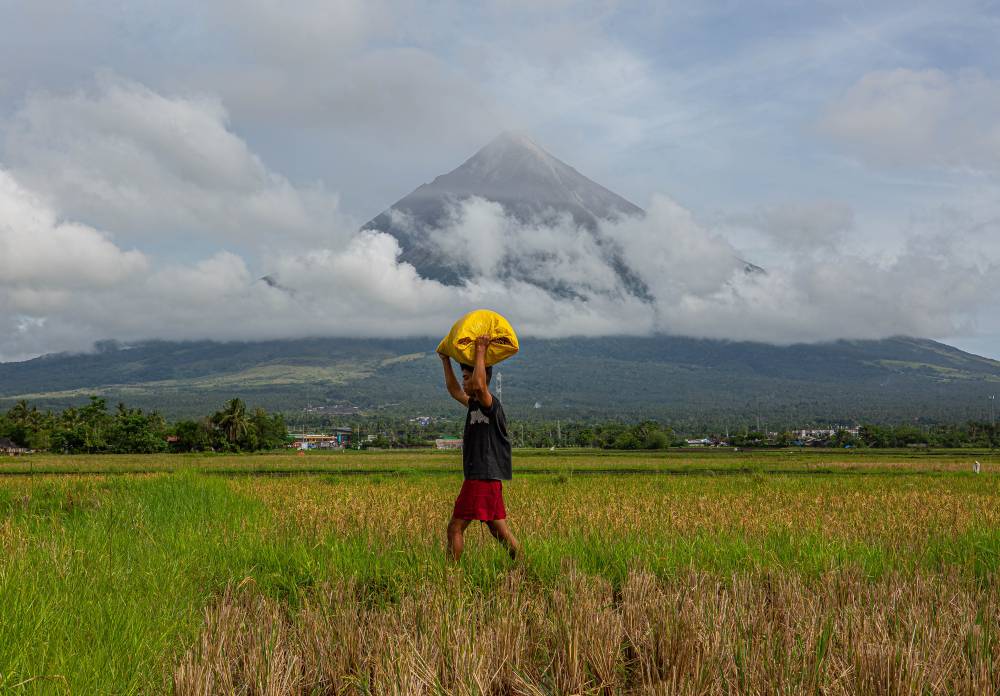
SAN ANTONIO, ZAMBALES—A farmers’ group on Sunday criticized the government for backing a proposed 1,619-hectare (4,000 acres) economic security zone under the Luzon Economic Corridor, saying the US-initiated project could intensify land grabbing, resource extraction and militarization in rural areas.
The Kilusang Magbubukid ng Pilipinas (KMP) said in a statement the planned facility—linked to the multinational effort known as Pax Silica—would integrate the country into supply chains led by the United States for critical minerals and advanced electronics.
It described the project as a “massive sellout” of the country’s land, minerals and sovereignty. “To be honest, this is war production disguised as ‘so-called development.’ The government is opening our mountains and ancestral lands to more destructive mining and industries that serve foreigners rather than the Filipino people,” it said.
Flagship effort
A US agency, the International Trade Administration, last week called Pax Silica a “flagship effort” to establish supply chains worldwide for artificial intelligence, semiconductors, critical minerals and other strategic resources and technologies.
Philippine Trade Undersecretary and Board of Investments managing head Ceferino Rodolfo signed on April 17 a declaration committing the country to Pax Silica as the 13th member nation. The others are Australia, Finland, India, Israel, Japan, Qatar, South Korea, Singapore, Sweden, United Arab Emirates and United Kingdom.
The Luzon Economic Corridor, launched in 2024, aims to strengthen industrial and logistics networks on the country’s largest island and support regional supply chains for strategic industries.
The government’s participation in Pax Silica follows a memorandum of understanding on critical minerals signed on Feb. 4, which seeks to develop supply chains from mineral extraction and processing to semiconductor and electronics manufacturing.
The KMP said the proposed hub is designed to “shore up supply chains” for minerals and electronics, but warned it could function as an export-oriented enclave, prioritizing foreign firms’ access to land, water and energy resources.
“We will be made the suppliers of cheap raw materials and low-value processing such as assembly, testing and packaging, while they keep the technology, control and profits,” it said.
Mining expansion
The farmers’ group also raised concerns that the initiative could spur further mining expansion in provinces such as Zambales, Palawan and Nueva Vizcaya, which have already experienced environmental damage from decades of large-scale extraction.
It said some of the areas that may be affected include agricultural lands and biodiversity zones that support rice, coconut and other food production, raising concerns about food security if these are converted into industrial and mining corridors.

The KMP also pointed to environmental issues linked to former US military installations in Subic and Clark, where communities were exposed to soil and groundwater contamination.
The group noted that the proposal comes as Manila and Washington continue to expand military cooperation, including the annual “Balikatan” (shoulder-to-shoulder) military exercises involving thousands of troops.
The KMP warned that placing industrial facilities alongside military logistics infrastructure could increase the risk of surrounding communities becoming targets if geopolitical tensions escalate.
It also noted that semiconductors and advanced electronics produced in such hubs may have dual-use applications, supplying both civilian markets and defense technologies such as missiles, drones, and surveillance and communications systems.
“There is no doubt that Pax Silica is really meant for the US war effort. It lays the foundation through critical minerals and then pushes production to meet the needs of the US in its warfare,” the KMP said, as it called on farmers and affected communities to oppose the project.


