






Group wants gov’t case vs PhilHealth fund transfer

The Center for People Empowerment in Governance (Cenpeg) has called on the Marcos administration to pursue criminal charges against officials who were involved in the 2024 transfer of P60 billion from the Philippine Health Insurance Corp. (PhilHealth) to the national treasury.
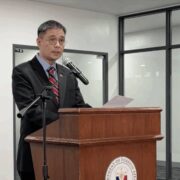
“We expect our legal institutions dedicated to the public interest to do the right thing and what is necessary in accordance with their constitutional and legal mandate,” Cenpeg chair and retired University of the Philippines professor Roland Simbulan told the Inquirer on Sunday.
Cenpeg, in a statement sent to the media on Saturday night, urged Congress, the Commission on Audit (COA) and the Office of the Ombudsman to investigate where the original P60 billion unutilized PhilHealth subsidies were used by the Marcos administration. It said those who authorized and signed the realignment as stated in the bicameral conference committee report for the 2024 general appropriations bill should be held accountable.
Simbulan said it was the task of Cenpeg, as a public policy think tank, “to point out the discrepancy.”
Return the money
“We leave it up to the concerned budget monitoring nongovernmental organizations and the general public to take whatever action is necessary to correct this issue based on the principle of accountability,” he said. “After all, this is a matter of public interest and public welfare that we should all act upon to protect,” he added.
Cenpeg, which was among the CSOs accredited by Congress to participate in the deliberations of the 2026 national budget, also said the government should “immediately return the actual funds—and not through new allocations.”
In a recent decision, the Supreme Court ordered the government to return the P60 billion to PhilHealth.
The high court, citing grave abuse of discretion, also struck down a special provision in the 2024 General Appropriations Act—passed by Congress and signed by President Marcos—and a circular by the Department of Finance, then headed by Ralph Recto (now executive secretary), authorizing the realignment.
Doubled fiscal burden
Cenpeg warned that replacing the missing amount with a new budget item doubles the fiscal burden on the public, while shielding from accountability those who diverted the funds.

It said replacing the diverted PhilHealth funds was neither a compliance with the court’s ruling nor a move for transparency.
“The solution is not to take money again from the people’s pockets. The solution is accountability,” Simbulan said.
“Someone must be held accountable, and the money that was taken when it should not have been taken must be returned.”
Four justices of the high court, however, asserted that Recto has no criminal liability, saying he “acted in good faith” in implementing the transfer of the excess funds to unprogrammed appropriations.