



House asked to bare public works funding per district, party list

Before the House of Representatives votes to ratify the proposed 2026 national budget, it must first disclose all public works allocations for every congressman, including those of party list groups.
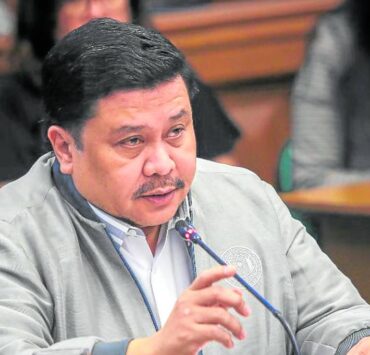
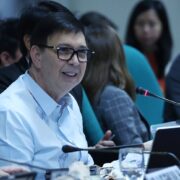
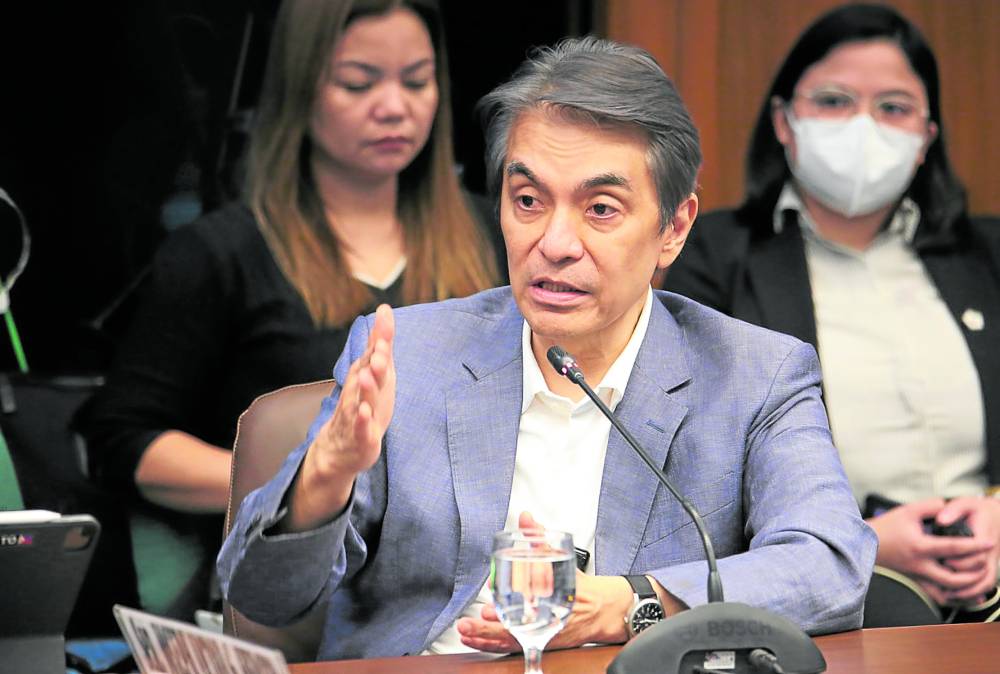
The call was made by Navotas Rep. Tobias Tiangco, who said a full disclosure of the so-called allocables in the budget of the Department of Public Works and Highways (DPWH) was “nonnegotiable.”
Tiangco on Friday asked why Congress had yet to publish detailed data requested months ago by both his office and civil society groups that were accredited as observers in the budget process.
Both the House and the Senate earlier vowed to have the P6.793-trillion draft national budget for 2026 ratified on Dec. 29.
Tiangco said the House must post on its official website a breakdown of the DPWH budget per congressional district or per project endorsed by party list representatives, before lawmakers are asked to approve the 2026 General Appropriations Act (GAA).
Cabral formula
“If it is not released, it will be difficult to cast a vote because there is no way to check if there are districts or party list [groups] whose budgets have been inflated,” he said.
“We must ensure that what happened in the 2025 GAA does not happen again, where there were districts whose budgets suddenly increased because funds were entered without the knowledge of the district representative,” Tiangco added.
He is among the first lawmakers to take issue with the DPWH allocables, or funds allocated to different districts based on their need, population and size of the area using a “formula” devised by then Public Works Undersecretary Maria Catalina Cabral.
The formula was supposed to ensure equitable distribution of infrastructure funding. But even Public Works Secretary Vince Dizon, who took over the post in September, admitted he himself found it hard to understand how the formula was applied.
Questions about allocables remained unanswered when Cabral, who resigned also in September, was pronounced dead on the night of Dec. 18, her body recovered from a roadside ravine in Tuba, Benguet. Authorities later said she died from a fall, citing indications of a suicide.
Dizon promised to scrap the formula in the next budget season for 2027. This meant that the current allocations in the 2026 DPWH budget were still based on Cabral’s formula.
Prone to manipulation
Portions of the DPWH budget are often earmarked for pet projects of district lawmakers and party list representatives, Tiangco said, making them prone to manipulation and corruption if not opened to public scrutiny.
Without full disclosures, he said, Congress risked repeating what happened with the 2025 budget, where there was “no clear way to know how much each party list has budgeted.’’
“What happened to Tingog, Ako Bicol and BHW (Barangay Health Workers) with their huge budgets in bicam (bicameral conference committee) should not happen again,” Tiangco said.
No reply since October
He was referring to documents he obtained relating to the 2025 GAA which revealed that Tingog—a group represented by former Speaker Martin Romualdez’s wife Yedda and son Andrew Julian—last year topped the list of representatives with the highest allocables at P5.96 billion.
Tingog was followed by Ako Bicol, the party list of former appropriations chair Elizaldy Co with P2.295 billion; and BHW represented by Co’s niece, Angelica Co, with P2.064 billion.
Tiangco said he first asked for the information to be published on Oct. 13, but “nothing has been posted” as of this week, even after the bicameral conference on the next budget concluded on Dec. 18
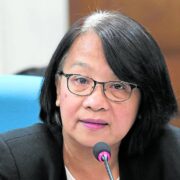
He said he wrote to the House appropriations committee chair, Nueva Ecija Rep. Mikaela Suansing, on Oct. 20 but had yet to receive a response.
According to Executive Secretary Ralph Recto, President Marcos is expected to sign the 2026 GAA in the first week of January. Until then, the national government will be operating on a reenacted 2025 budget of P6.326 trillion at least for several days.
Recto earlier assured the public that a one-week period under a reenacted budget “will not affect government operations” and may actually allow “a careful review’’ of the next budget.