









House must weigh grounds in 2nd bid to impeach VP

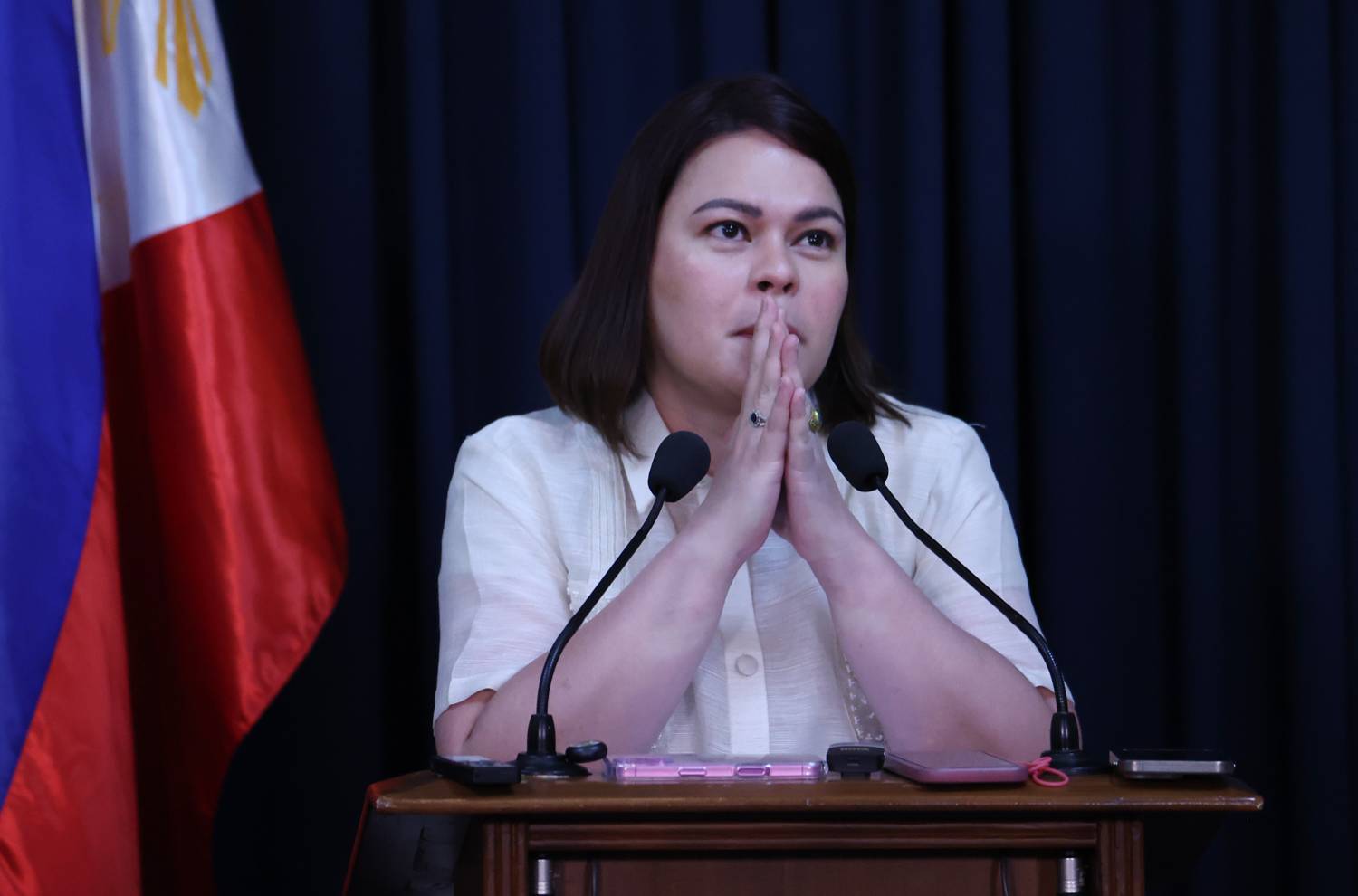
Newly refiled complaints accusing Vice President Sara Duterte of misusing P612 million in confidential funds are expected to be taken up in plenary this week as the House of Representatives proceeds with the second impeachment attempt at her.
Unlike in February last year when the votes of 215 lawmakers were secured for her first impeachment, the complaints would have to go through the first mode of the impeachment process—through the House committee on justice led by Batangas Rep. Gerville Luistro.
The two complaints filed by civil society groups and endorsed by the Makabayan and Akbayan blocs have already cleared the procedural one-year bar and must now go through the committee’s determination of sufficiency in form and substance.
Both complaints repeat the allegations from the 2025 filing that Duterte betrayed public trust in her misuse of confidential funds and threatening to assassinate President Marcos, former Speaker Martin Romualdez, and first lady Liza Araneta-Marcos.
‘Legal wrinkle’
The Akbayan complaint, however, also includes the sworn statement of Duterte’s alleged former aide, Ramil Madriaga, who claimed that he delivered large sums of confidential funds to her security aide and that her 2022 vice presidential campaign was financed with proceeds from the drug war and Philippine offshore gaming operators.
Among these allegations, the misuse of confidential funds will most likely pass the sufficiency in substance test, said lawyer and Ateneo School of Government senior fellow Michael Yusingco.
“These are factual allegations—that she indeed had confidential funds that did not undergo proper auditing and nobody knows what happened to it,” he said.
If the evidence draws a clear line of involvement to Duterte, Yusingco added, this could constitute betrayal of public trust. But he warned this could face a “legal wrinkle” especially with regard to funds she allegedly misused as education secretary, a post not subject to impeachment.
As for the Madriaga testimony, Yusingco warned that if the allegations were presented as “mere conclusions like the Zaldy Co case, it might not pass.”
He was referring to what was supposedly the strongest ground in the Marcos impeachment complaint: that he and Romualdez maneuvered P100 billion in the 2025 national budget in exchange for kickbacks, which was based on videos posted by resigned lawmaker and fugitive Elizaldy Co.
Death threats, substance test
The 39-member committee had thumbed down this ground as mere allegation and hearsay, as Co did not state his allegations under oath.
In contrast, Yusingco suggested that the grounds concerning Duterte’s livestreamed assassination threats against the President and the first lady might also fail the substance test despite being a factual allegation.
“The question is—is it an impeachable offense?” Yusingco said. “It was made out of emotion, and there was no follow-up… she can easily argue that it was not a serious threat.”
The House must also decide whether to assess the complaint “as a whole” or on a per-ground basis, he added.
If the committee follows the precedent of the Marcos complaint and treats it as a single unit, the failure of weaker grounds could lead to the dismissal of the entire case, he said.
2028 ‘theater’
Ultimately, experts suggest the proceedings may be overshadowed by “pragmatic politics” and “political theater” as lawmakers weigh their actions against their 2028 election calculations.
The specter of the recent Supreme Court ruling upholding the dismissal of the first impeachment complaint against Duterte also casts a long shadow on the upcoming proceedings, noted University of the Philippines law professor Paolo Tamase.
He said the resolution only “cemented the legal characterization of impeachment,” transforming it into a judicialized process where the Court is the “final arbiter of law.”
He noted, among other things, that the high court ruled on several issues that were “not raised by the parties,” including the issue on how session days are counted.

He argued this violates the doctrine of “constitutional avoidance,” where courts typically avoid making pronouncements on acts not directly before them to respect the separation of powers.
He said the resolution now allows respondents to use due process challenges as a legal strategy for delay, a tactic not traditionally common in impeachment.
‘Political agenda’
Tamase also expressed concern that the high tribunal has allowed the House to create additional rules for the “second mode” of impeachment.
He said the impeachment rules in the 1987 Constitution were crafted precisely “to prevent a majority from thwarting impeachment on the basis of their sheer control of proceedings, and that’s why… it was designed such that the minority could push through with impeachment with just one-third of the vote.”
“But now, because the majority determines the House rules, the Supreme Court has opened a window for the majority to set onerous requirements for the second vote,” Tamase added.
What’s clear, Yusingco said, is that the dual impeachment attempts against Marcos and Duterte have reduced the proceedings into mere “political theater.”
“This doesn’t bode well for our politics and governance because it shows how poor the quality of our political class has become. Even the Constitution can be manipulated now for their own political agenda,” Yusingco said.
******
Get real-time news updates: inqnews.net/inqviber