








House panel junks 2 impeach raps vs Marcos

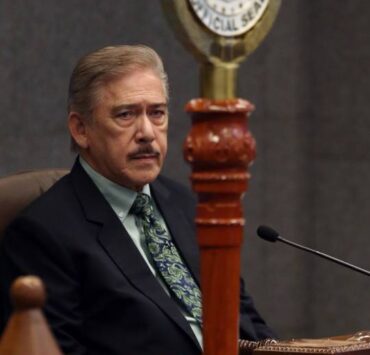
President Marcos appeared to have survived the first attempts in Congress to have him removed from power, after the House committee on justice voted to declare the two impeachment complaints against him to be “insufficient in substance.”
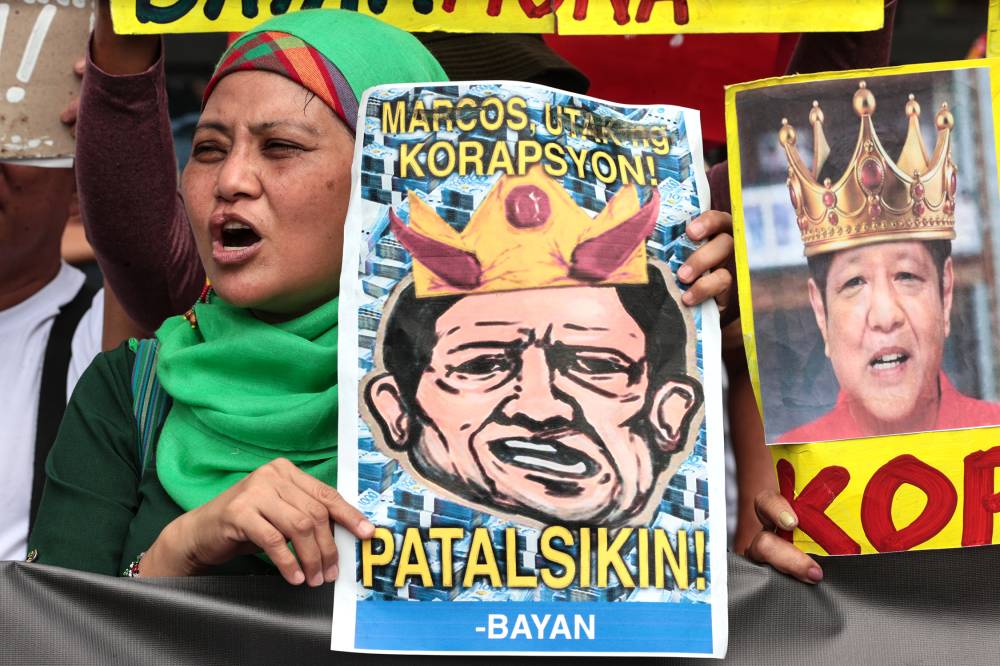
The complaints—the first filed by lawyer Andre de Jesus and the second by the Bagong Alyansang Makabayan (Bayan) coalition—will no longer advance to a full hearing for the determination of probable cause.
But while Wednesday’s vote effectively dismissed the complaints, the committee deliberations would be reported to the plenary where a vote by one-third of the total House membership may still revive them.
For the De Jesus complaint, which was endorsed by Pusong Pinoy Rep. Jett Nisay, 42 House members voted for dismissal, with only Nisay voting in its favor.
For the Bayan complaint endorsed by ACT Teachers Rep. Antonio Tinio, Gabriela Rep. Sarah Elago, and Kabataan Rep. Renee Co, 39 lawmakers voted against it. Seven—mostly from the Liberal Party and Akbayan bloc—voted in its favor.
The committee chair, Batangas Rep. Gerville Luistro, cautioned against calling the complaints completely dead, saying the panel still needed to submit a report to the plenary within 60 session days.
If one-third of the chamber’s membership vote to reverse the panel’s decision, the justice committee “is constrained to come up with articles of impeachment in view of that reversal,” Luistro told reporters.
De Lima argument
The majority of the committee members shared the view that the accusations against Mr. Marcos—mainly, that he committed betrayal of public trust for being at the center of irregularities in the national budget—failed to link him directly to the offenses being alleged.
This was despite the efforts made by the Makabayan bloc, Mamamayang Liberal Rep. Leila de Lima, Caloocan Rep. Edgar Erice, and Akbayan Rep. Chel Diokno to persuade the panel to focus only on the “recital of facts” at this stage rather than have an immediate trial of the evidence.
De Lima argued that the Bayan complaint had enough factual allegations that, if proven, could constitute an impeachable offense.
“I think some people are confused… when we talk about sufficiency of substance. We don’t yet have to delve into the evidence. Those are dealt with in the next stage,” she said.
De Lima tried to convince the panel that having “personal knowledge” of the allegations was too strict a standard at this point.
“[B]ecause if you apply that rule to all the complaints and enforce personal knowledge, nobody else would ever file an impeachment complaint,” she said.
Zaldy Co allegations
Of the eight impeachable offenses alleged in the two complaints, the committee largely considered the third offense in the Bayan complaint—that Mr. Marcos knew and benefited from kickbacks from anomalous public works projects—to be the “strongest and heaviest” allegation.
The Bayan complaint cited the statements of former Ako Bicol Rep. Elizaldy “Zaldy” Co and former Public Works Undersecretary Roberto Bernardo that the President, his Cabinet officials, and former Speaker Martin Romualdez maneuvered to have P100-billion “insertions” in the 2025 national budget in exchange for kickbacks.
Co, out of the country since mid-2025, made his allegations in a series of videos uploaded on Facebook.
De Lima maintained that “we cannot just close our eyes to these factual allegations. This is not yet the proceedings to determine whether there is truth to the horrific allegations by the former appropriations chair (Co)… because I repeat, again, I don’t believe the allegations but I want to know the truth.”
But Bukidnon Rep. Jonathan Keith Flores countered that if the panel allowed this particular allegation to proceed to the next stage, “it would open the floodgates for anybody outside the country to just post a video against any impeachable officer as long as there is recital of facts that constitute an impeachable ground, even if it’s not done under oath.”
“That cannot be the standard for impeachment complaints,” Flores said.
Before voting for the dismissal, San Juan Rep. Isabel Zamora called on the panel to “not tolerate the use of hearsay allegations, videos that are not attested to, or fake news.”
Unprogrammed appropriations
“To say that the Office of the President has become a command center of a criminal enterprise is not only unfounded, but is also mere dramatic rhetoric,” she added.
Both complaints shared only one allegation in common: that Mr. Marcos committed betrayal of public trust for alleged abuse of unprogrammed appropriations (UA), or standby funds whose release is triggered only when there is excess revenue and released at the President’s discretion.
The Bayan complaint cited data from the Department of Budget and Management showing that Mr. Marcos approved 3,770 public works projects worth P214.4 billion from unprogrammed funds in 2023 and 2024.
The complaint noted that majority of the projects were located in “favored regions,” areas that later figured prominently in the investigation of substandard or “ghost” flood control projects.
Representatives Rufus Rodriguez and Lordan Suan of Cagayan de Oro, as well as Manila Rep. Joel Chua, argued that having UAs in the budget is not prohibited by law and that the President’s power over such funds stems from his constitutional duty, not a display of “discretionary indulgence.”
Chua noted that similar appropriations had existed in the national budgets of every administration since 1989.

“If that is the case, every single President since 1989 should have faced similar charges,” he argued.
Ako Bicol Rep. Alfredo Garbin also stressed that the UA was a “statutory budget mechanism enacted by Congress” and that “its growth (under the Marcos administration) by itself is not unconstitutional.”
‘BBM parametric formula’
The panel also remained unconvinced that the President was directly responsible for the creation and implementation of the “Baseline-Balanced-Managed (BBM) parametric formula” that governed the release of so-called allocable funds under the Department of Public Works and Highways (DPWH).
The formula, whose creation was attributed to the late Public Works Undersecretary Catalina Cabral, came under intense scrutiny for being an alleged source of patronage and corruption in infrastructure projects.
Tinio argued that the formula formed part of official policy and allowed favored local officials to have their regions prioritized for public works funding despite the lack of technical basis, thus “creating a system for centralized corruption.”
Zamora, however, said an “imperfect policy direction is not an impeachable offense…. In the first place, it was not the President who created the BBM parametric formula.”
Rodriguez added that the complaint failed to show that Mr. Marcos had issued an executive order to institutionalize the DPWH formula, which had no counterpart in other departments.
Garbin and Galing sa Puso Rep. Jan Padiernos also pointed out the absence of a law or jurisprudence that makes a budgeting formula illegal.
They added that the “alter ego doctrine” pertaining to the President’s command over the actions taken by Cabinet secretaries could not be applied to establish the personal culpability required for impeachment.
“[This offense] pleads a policy critique. It does not plead an impeachable offense or a willful constitutional breach… The phrase ‘priorities of leaders,’ even if quoted, is not proof of graft,” Garbin said.
******
Get real-time news updates: inqnews.net/inqviber