




How Chinese immigrants shaped Baguio history

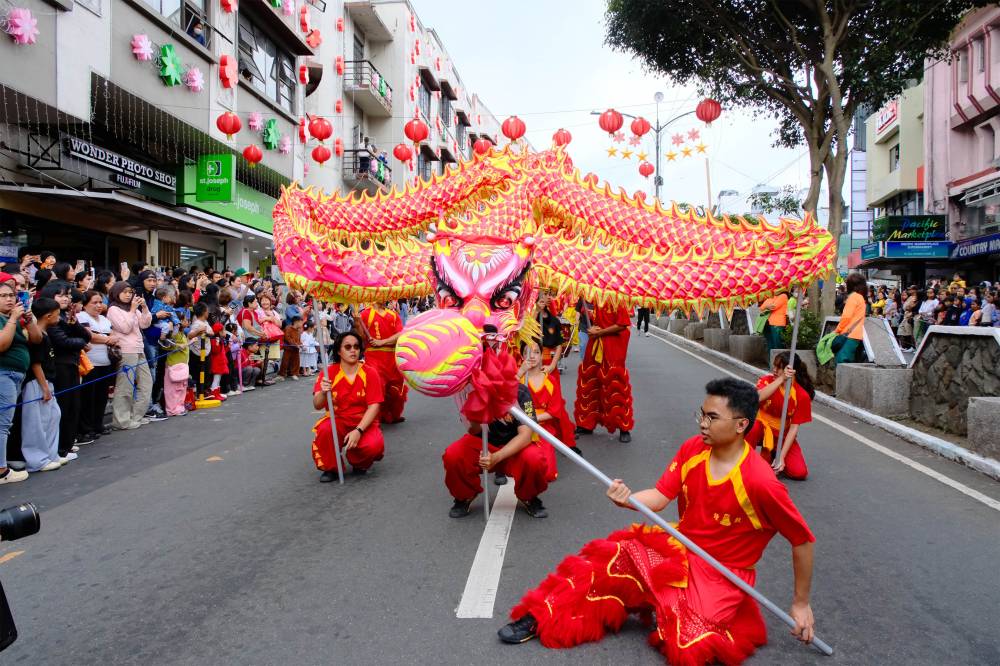
BAGUIO CITY—A 1991 review of assessor’s office records found that most—if not all—properties along Session Road were owned by Chinese Filipino families.
The Gold Ore’s Nov. 30, 1991 story, “Chinese Now Own All of Session Road,” noted how Indian bazaars that once dominated the strip after World War II had given way to Chinese-run enterprises.
Businesses owned by families of Chinese descent occupied about 70 percent of the 57,435 square meters of commercial space downtown.
Residents were largely unfazed. One said he preferred the affordable goods sold by Chinese Filipino merchants. Many of these businessmen, the paper stressed, were “Chinese only by genealogy” and lifelong Filipino citizens.
Deep roots
Baguio’s modern Tsinoys trace their lineage to the Spanish era, when Sangleys traded with Benguet communities from the 16th to 19th centuries. Chinese laborers were recruited as early as 1572 for Spanish gold expeditions in Benguet.
In “Baguio Chinese Narratives,” historian Anavic Bagamaspad wrote that Chinese porcelain jars found in remote indigenous homes attest to centuries-old trade links.
Despite the US Chinese Exclusion Act of 1902, Chinese workers became essential to Baguio’s construction during the American period, helping build Kennon Road and later prospering during the 1930s mining boom.
Entrepreneurs such as Leung Kwan Ling of Baguio Grocery expanded into mining towns in Itogon and Atok, at one point monopolizing supply trade there. In a 2008 Inquirer report, his grandson Michael del Rosario recalled how the family fled to Kapangan during the Japanese occupation.
He later organized reunions honoring generations of employees—many of indigenous and Chinese descent—who sustained family businesses like the Mountain Supply Store.
Other pioneers included Joaquin Yu of Lucban Lumber Company and Tang Eng Lay of Benguet Lumber Company. Chinese farmers also invested in highland agriculture, helping transform Benguet into the country’s leading vegetable supplier.

War and aftermath
During the Japanese occupation, members of Baguio’s Chinese community joined or quietly supported resistance forces, including those based in Kapangan’s Camp Utopia. After liberation, they filled economic gaps left by repatriated Japanese settlers.
Early migrants were predominantly Cantonese; postwar arrivals were largely from Fukien province.
Today’s Baguio Tsinoys are culturally rooted in the city, said hotelier Peter Ng, who rose from taxi driver to owner of Hotel Supreme.
As Bagamaspad wrote, Baguio’s Chinese youth demonstrate full political loyalty to the Philippines while engaging with their heritage in flexible, symbolic ways.