










How diesel overtook gasoline in prices

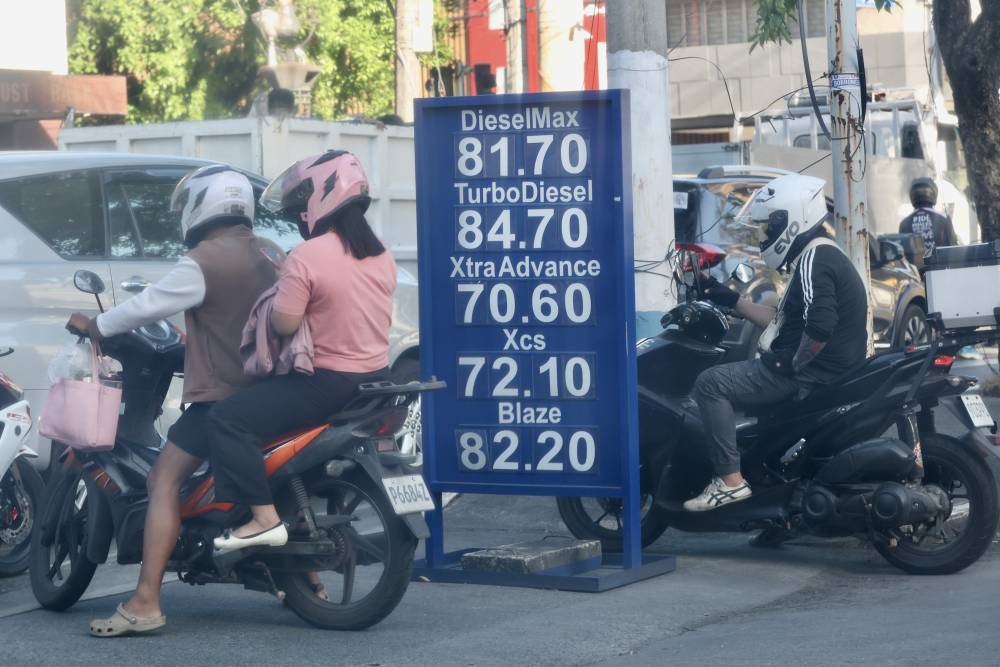
For jeepney and delivery truck drivers, trips to petrol stations have been jarring nowadays as diesel—which for the longest time had been cheaper than gasoline in the Philippines—is already becoming the costlier fuel between the two.
Since the war in the Middle East broke out on Feb. 28 when the United States and Israel attacked Iran, local diesel prices have surged by as much as P49.35 per liter versus P31.5 for gasoline during the period of March 3 to March 17.
Fuel stations have been seeing long lines, especially a day before the scheduled price adjustments.
Energy officials said these adjustments have made fuel prices the most expensive yet in the history of the local market.
Industry players interviewed by the Inquirer still pinned the blame on the escalation of the conflict in the Middle East, affecting global supply and demand dynamics.
Different demand profile
Brigitte Carmel Lim, senior vice president and COO of Top Line, said logistics, shipping, buses and other heavy industries rely on diesel. This means that robust economic activities and freight movement will translate to higher demand for diesel.
Top Line is a listed Cebu-based oil company engaged in commercial fuel trading, depot operations and fuel retailing in the Visayas region.
The situation in the Middle East has led to “limited supply,” making diesel prices “climb as fast as gasoline,” Lim said.
Since gasoline is being tapped more for passenger vehicles, its “demand profile is different and tends to be more stable compared to diesel,” she said.
Gasoline consumption is usually tied to private cars, motorcycles, tricycles and light utility vehicles.
Jetti Petroleum president Leo Bellas said geopolitical woes were crippling supply.
“The global demand for diesel is greater than gasoline, which is one of the primary reasons why its price is higher,” he said.
“While oil and refined products prices are subject to fluctuations and volatility depending on the situation, diesel is much more susceptible to supply concern, especially after sanctions were imposed by Western countries on Russia because of its war on Ukraine,” Bellas added.
The United States and the European Union imposed sanctions on Russia, including banning imports of crude oil and refined petroleum products from the country after it invaded Ukraine in 2022. As Russia is a major oil supplier, the sanctions led to disruptions in diesel supply.
Bellas said this had “disrupted flows and tightened supply availability” even before the current military conflict in the Middle East.
Worsened by Iran war
The Iran war worsened the oil situation as over 1,000 cargo ships have been reported blocked at the Strait of Hormuz, where 20 percent of the world’s oil passes through.
“[This] has severely disrupted the supply of feedstock to Asia, given the region’s heavy reliance on supply from the [Persian] Gulf. The shutting of the vital waterway has cut the exports of distillate—rich Middle East crude—resulting to the price of diesel rising much faster than oil and gasoline,” Bellas said.
According to government data, 97 percent of imports of liquid petroleum products—such as diesel, gasoline and kerosene—are from refineries in Asian countries.
Energy Secretary Sharon Garin noted that the crude oil they process is sourced from other regions, including the Middle East. Compounding the situation in the Middle East is the damage to oil infrastructure caused by bombardments.

As the war shows no signs of abating, many countries, including some allies of the Philippines, have shut down their oil exports of petroleum products.
“Whether diesel will become more expensive than gasoline in the coming weeks will depend on how the conflict affects supply routes, but continued volatility in global markets could keep the price gap narrow,” Lim said.
Bellas noted that under normal circumstances, gasoline prices appear more expensive than diesel.
If the excise on petroleum products is suspended, the price of diesel and gasoline would be slashed by P6 and P10 per liter, respectively.
Based on data from the Department of Energy, diesel prices at the pump in early January, which ranged from P47.77 to P71.90 per liter, have leaped to P94 and P115—an increase of about 60 percent.
Gasoline rose from P50 to P74.02 a liter in the first days of January, to above P90 per liter this week, which is about 23 percent higher.
As the oil price adjustments took a bite from drivers’ profit, commuters would need to spend more for transportation.
The planned provisional fare increases for buses and jeepneys starting March 19 have been halted.
The government, however, would roll out fuel subsidies for public utility vehicles as well as those affected by the fuel price increase in the agriculture sector, particularly farmers and fishers.