









Hundreds of migrants vanishing in Mediterranean

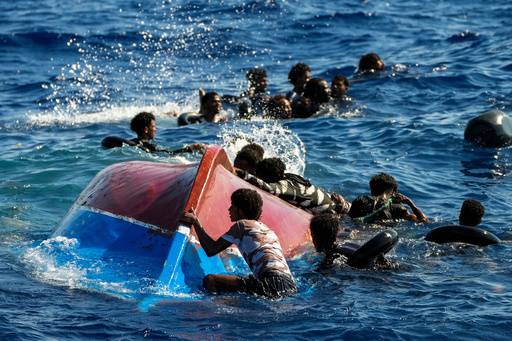
ROME—Bodies washing ashore day after day. Phone calls from relatives going unanswered. Migrants’ tents abandoned overnight.
Migrants trying to reach Europe are vanishing in droves in what are known as “invisible shipwrecks” but governments responsible for search and rescue are withholding information about what they know.
The beginning of 2026 ranks as the deadliest start to any year for people trying to cross the Mediterranean—an unprecedented 682 confirmed missing as of March 16—according to the United Nations’ International Organization for Migration (IOM). But the real death toll is almost certainly much higher.
Human rights groups are increasingly struggling to verify tolls as Italy, Tunisia and Malta have quietly restricted information on migrant rescues and shipwrecks along the deadliest migration route in the world. The news barely makes headlines, in part because the lack of transparency prevents journalists from confirming reports.
‘Strategy of silence’
“It’s a strategy of silence,” said Matteo Villa, a researcher focusing on migration and data at the Italian Institute for International Political Studies think tank.
The organization Refugees in Libya and other human rights groups have been sounding the alarm since late January, reporting more than 1,000 people missing after Cyclone “Harry” hit the region. But authorities have not confirmed, denied or corrected those reports.
In the weeks that followed the cyclone, more than 20 decomposing bodies washed ashore in Italy and Libya while other human remains were spotted floating in the middle of the sea.
For the families of missing migrants, not knowing their fate is excruciating.
‘Invisible shipwrecks’
“Europe should know that these people who got drowned in the sea have family members, have dreams, have passions,” said Josephus Thomas, a migrant from Sierra Leone and community leader in Tunisia’s coastal town of El Amra.
Even the UN’s migration agency is increasingly unable to verify cases of migrants who die in what is known as “invisible shipwrecks” because of the growing lack of information.
Wave of funding cuts
Last year, at least 1,500 people were reported missing whose fates IOM could not confirm, said Julia Black, who leads the organization’s Missing Migrants Project. The issue persists in 2026.
“We started a new secondary data set of what we are calling unverifiable cases because it’s just become so many,” Black said. For this year, they already have more than 400 missing they could not verify.
Many humanitarian organizations that previously filled some of the information gaps are no longer able to do so because of the global wave of funding cuts and government-imposed restrictions across the region.
“We’ve seen the restriction of access for humanitarian actors, which is not right. And now we’re seeing even the restriction of information,” Black said.
AP repeatedly asked authorities in Tunisia, Italy and Malta why they aren’t sharing information related to migrant rescues at sea and what their policies are. Not one responded.
No central system
Over the years, authorities in the Mediterranean have gradually reduced information related to migrants. But their silence was even more pronounced in late January after Cyclone “Harry” unleashed heavy rainfall, winds of 100 kph (62 mph), and 9-meter-tall waves.
Hundreds of people had departed from Tunisia’s coastal region of Sfax and disappeared, according to information the group Refugees in Libya gathered from migrants in Tunisia and their relatives abroad.
The group acknowledged it was difficult to be precise “because there is no central system recording departures, losses, or recoveries,” but it warned that the death toll was likely even higher.
“We are looking at boats that never counted how many kids are inside,” Refugees in Libya founder David Yambio told AP.
AP sent five email requests to the Italian coast guard seeking information on the boats reported missing and search efforts but received no response.