


ICC prosecutor shrugs off Du30 defense hitting media, witnesses

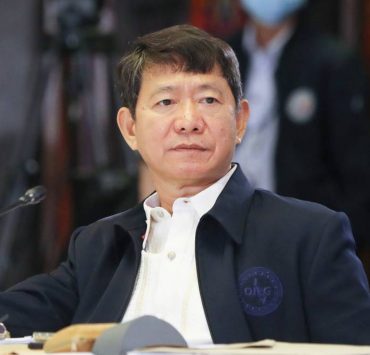
THE HAGUE, THE Netherlands—The strength of the case against former President Rodrigo Duterte at the pre-trial stage does not depend on whether media reports or witnesses’ statements about his drug war are corroborated, but on whether the prosecution has presented ”something substantial” based on an independent investigation.
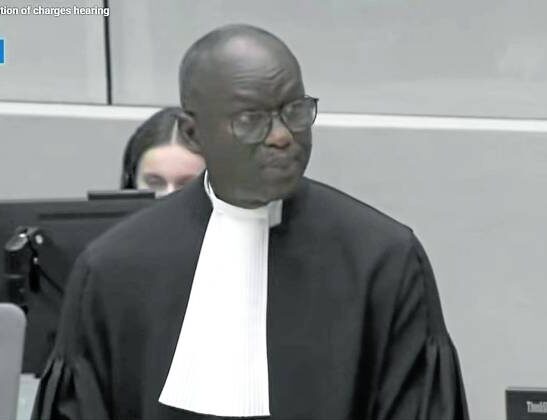
This was according to Deputy Prosecutor Mame Mandiaye Niang of the International Criminal Court, explaining the standards his team set out to meet during the recent confirmation of charges hearing of the detained Philippine leader.
The ICC Pre-Trial Chamber (PTC) I, which heard arguments from both the prosecution and the defense during the four-day proceedings, will be deciding within 60 days whether the charges against Duterte, for committing murder as a crime against humanity over the thousands killed in his antidrug campaign, should proceed to trial.
“I think that it is quite common now and tempting for many people to use the courtroom and even out of the courtroom… to discredit witnesses and the media. But at the end of the day, what is really important is that we independently produce our cases,” Niang said.
“At this stage, it’s about presenting something substantial…. to believe that what we allege has happened. It’s not about proof beyond reasonable doubt,” he said in an exclusive interview with the Inquirer.
Blaming media
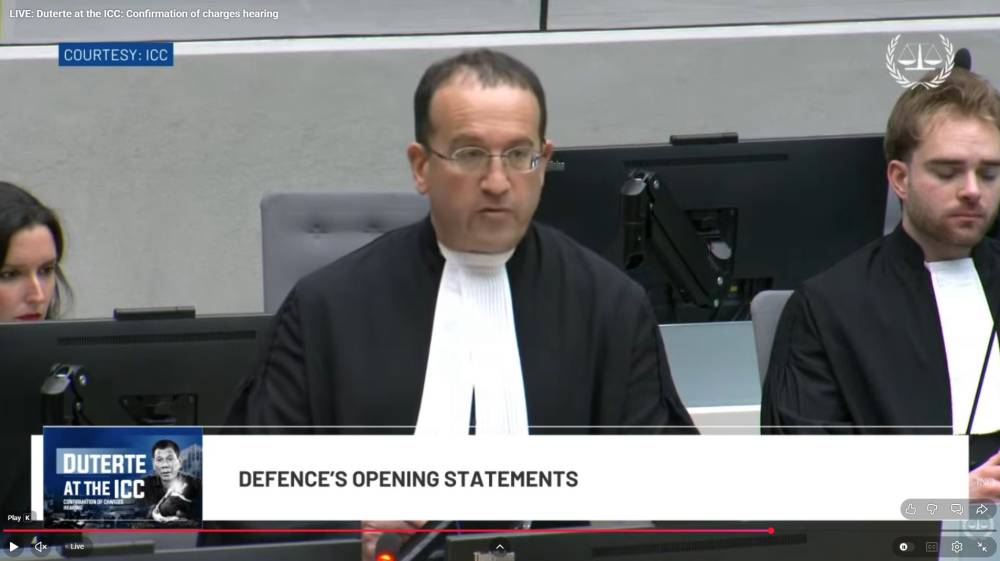
The Senegalese prosecutor was asked to comment on the argument raised by defense lead counsel Nicholas Kaufman, who criticized the way media had reported on Duterte during his presidency.
Kaufman also questioned the credibility of “insider” witnesses against his client, describing them as “self-confessed murderers” and “ruthless criminals.”
In his presentation, Kaufman said the Philippine media became “fixated on the salacious elements” of Duterte’s public statements about his antidrug campaign.
“Now, if there’s one thing that I’ve learned from the domestic media coverage of this case, it is that journalists and their editors have a tendency to fixate on the salacious elements of a person’s speeches, while ignoring the less interesting parts,” he then said.
‘Bootstrapping’
Kaufman also argued that the witnesses’ testimonies cited by the prosecution remained “uncorroborated.” He cited accounts of the supposed phone calls with Duterte, the police “planting” of firearms in crime scenes, and the reported identities and age of some victims.
“The prosecution relies almost exclusively on the account of P3 (a code for a name currently redacted in published case documents). And this is rather ironic. Does the prosecutor claim that P3 is corroborated by P8 when the source of P8’s information is in fact P3 himself? Bootstrapping logic, once again,” the defense counsel told the chamber.
Other prosecution witnesses cited during the confirmation of charges hearing were identified as P1, P1160, P1201, P1207 and P1131.
In closing his arguments, Kaufman assailed the prosecution’s “dependence” on the testimony of specific individuals to give the impression that the drug war killings were the result of an “enduring organizational policy.”
‘Wait for the trial’
But for Niang, such flaws claimed by the defense had no bearing at this stage because the prosecutors only had to show that the accusations against Duterte were “solid” and “not just flimsy.”
“You know many of the so-called deficiencies the defense has alleged, particularly the witnesses, whether they are not corroborated, whether they are not lying, that’s not the point. You see, those witnesses are not even here,” he said in the interview.
“If you say a witness is lying, you’ll have to wait for the trial… because the witness may have some additional reason to explain,” he added.
The PTC I is expected to come out with a written decision by April or May. It may also ask the prosecution to amend the charges and provide further evidence.